
 Sudden cardiac arrest can occur unexpectedly in people of all ages, including children and teenagers. When the heart suddenly stops pumping effectively, blood flow to the brain and other vital organs is interrupted.
Cardiopulmonary resuscitation (CPR) and automated external defibrillators (AEDs) are essential tools used during these emergencies. CPR helps maintain blood circulation, while an AED can deliver a controlled electrical shock that may help restore a normal heart rhythm.
Across Canada—including Vancouver and communities throughout British Columbia—schools, workplaces, and community facilities increasingly include CPR training and AED programs to improve emergency preparedness.
First Aid and Workplace Relevance in Canada
Teachers, coaches, and school staff often receive first aid, CPR, and AED training so they can respond quickly if a student experiences a medical emergency.
Programs supported by organizations such as British Columbia Emergency Health Services (BCEHS) and community health foundations help bring emergency response training and AED equipment into schools.
Prepared staff and accessible emergency equipment can play a critical role in supporting student safety during school activities.
A Realistic Scenario from a South Okanagan School
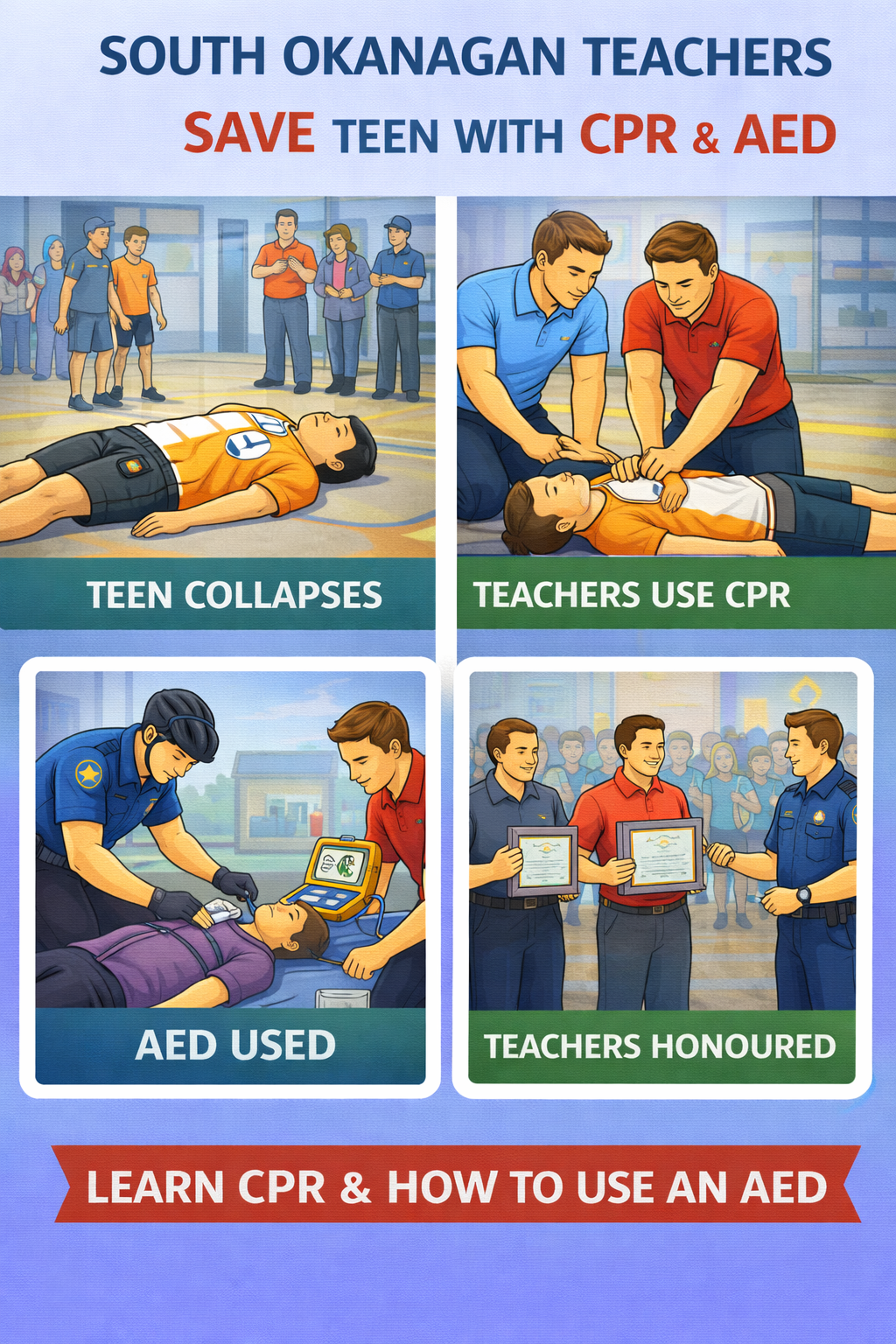
Two high school teachers in the South Okanagan region of British Columbia were recognized for their life-saving actions after responding to a medical emergency involving a student.
During an activity in the school gymnasium, a 13-year-old student named Dilshaan Dhaliwal suddenly collapsed due to cardiac arrest.
Teachers Steve Podmorow and Mike Russo immediately recognized that the situation was serious. Both had received CPR training through a program supported by British Columbia Emergency Health Services and the Advanced Coronary Treatment (ACT) Foundation.
Using their training, the teachers began CPR while others retrieved the school’s automated external defibrillator.
The AED had been donated through the ACT Foundation’s school program, which provides emergency equipment and training to educational institutions.
Following the device’s instructions, the teachers used the AED while continuing CPR until paramedics arrived.
Emergency responders transported the student to a hospital for further treatment, and reports later indicated that he was expected to recover.
In recognition of their quick actions, Podmorow and Russo received the Vital Link Award from British Columbia Emergency Health Services during a ceremony attended by students, teachers, and emergency responders.
Paramedics and emergency dispatch personnel who supported the response were also acknowledged.
Although praised for their actions, the teachers emphasized that their response was simply the result of training and teamwork during an emergency.
Signs of Sudden Cardiac Arrest in Young People
Sudden cardiac arrest can occur without warning, including during physical activity or sports.
Possible warning signs include:
-
Sudden collapse
-
Unresponsiveness
-
No normal breathing
-
Gasping or irregular breathing
-
Weak or absent pulse
-
Sudden dizziness or confusion before collapse
When these signs occur, emergency services should be contacted immediately.
Causes of Cardiac Arrest in Youth
Although rare, cardiac arrest can occur in young people due to several underlying conditions.
Possible contributing factors may include:
-
Undiagnosed heart conditions
-
Heart rhythm disturbances (arrhythmias)
-
Structural abnormalities of the heart
-
Intense physical exertion combined with underlying health issues
Medical evaluation is usually required to determine the exact cause.
First Aid Response and Immediate Management
When someone collapses and is unresponsive, immediate action from bystanders or trained staff may help support vital circulation.
General emergency response steps may include:
-
Call emergency services immediately.
-
Check responsiveness and breathing.
-
Begin CPR if the person is unresponsive and not breathing normally.
-
Retrieve and use an AED if available.
-
Continue CPR until paramedics arrive.
AED devices provide voice instructions to guide responders during the process.
Prevention and School Safety Considerations
Schools can improve emergency preparedness through training, equipment, and safety planning.
Helpful safety measures may include:
-
Providing CPR and AED training for school staff
-
Installing AEDs in gyms, hallways, and athletic facilities
-
Developing clear emergency response plans
-
Promoting first aid awareness among staff and students
Prepared staff and accessible equipment can help improve outcomes during emergencies.
Frequently Asked Questions
What is an AED?
An automated external defibrillator (AED) is a portable device that analyzes heart rhythms and can deliver a shock to restore a normal rhythm during certain cardiac emergencies.
Why is CPR important during cardiac arrest?
CPR helps maintain blood circulation and oxygen delivery to the brain and organs until advanced medical care is available.
Can sudden cardiac arrest occur in teenagers?
Although uncommon, cardiac arrest can occur in young people due to underlying heart conditions or rhythm disturbances.
Why are AEDs placed in schools?
AEDs allow teachers, coaches, and staff to respond quickly to cardiac emergencies during school activities or sports events.
Can non-medical professionals safely use an AED?
Yes. AED devices are designed to guide users through each step with clear voice instructions.
Educational Note
This article is intended for general first aid awareness and public education. Learning CPR and how to use an AED can help individuals respond quickly during emergencies while waiting for professional medical assistance.
About The Author

Mark Kascha
First Aid Instructor Trainer with 30+ years of experience in CPR, emergency response, and safety training across Canada.
👉 [View full credentials]🔗 View LinkedIn Profile
Last reviewed: March 2026