
Understanding Pedestrian Injuries and Road Safety
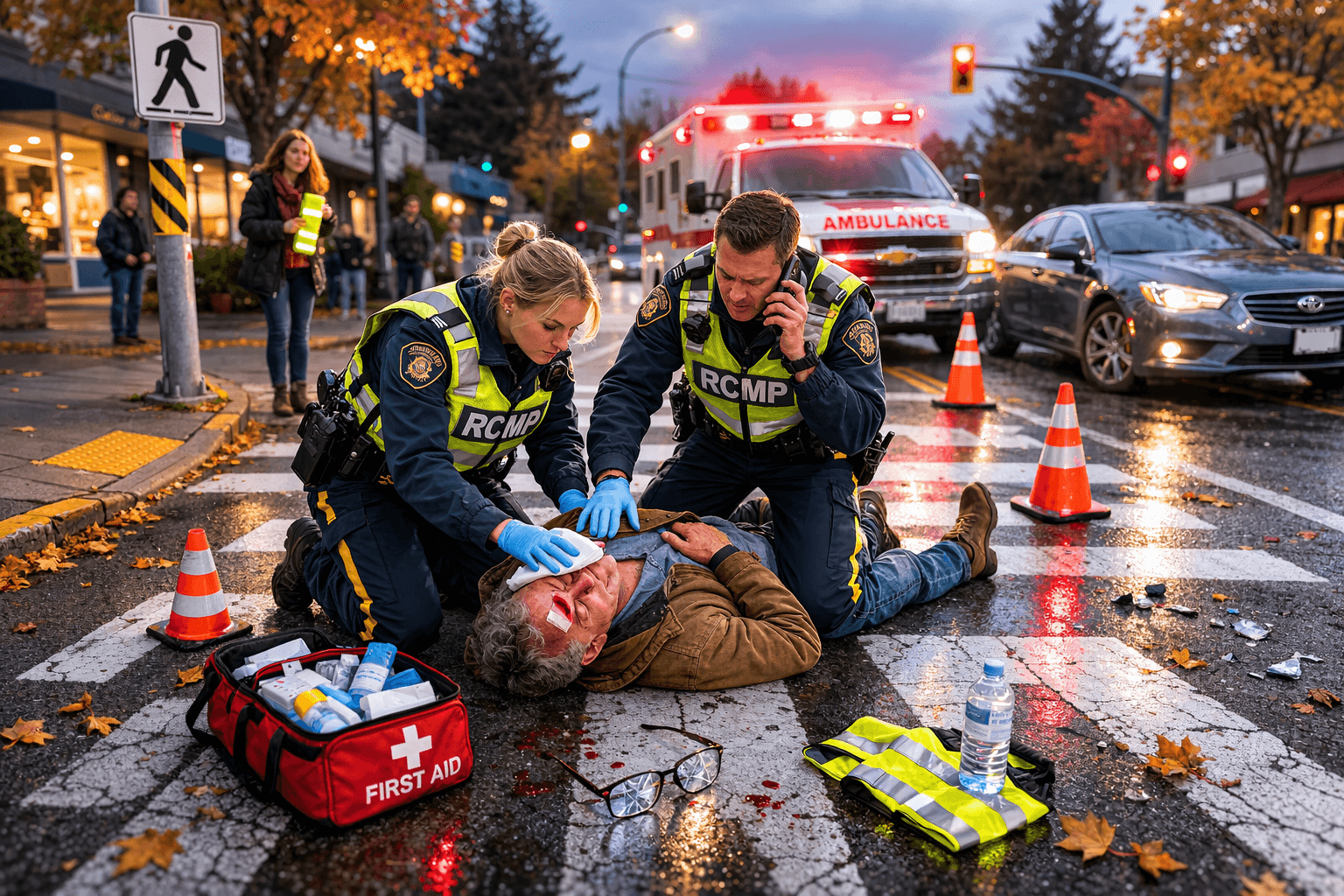 Pedestrian-related incidents can occur quickly, even in controlled areas such as marked crosswalks. Injuries may range from minor cuts and bruises to more serious trauma depending on the impact.
In these situations, immediate first aid and quick response from bystanders or trained personnel can help stabilize the injured person until paramedics arrive.
First Aid & Workplace Relevance in Vancouver and the Lower Mainland
Across Sidney, Victoria, Vancouver, Richmond, and the Lower Mainland, pedestrian safety is a key concern—especially during fall and winter when visibility is reduced due to rain and shorter daylight hours.
Workers, pedestrians, and drivers all benefit from awareness of road safety practices and basic first aid knowledge, particularly in busy urban and roadside environments.
Real Incident Overview
In downtown Sidney, British Columbia, RCMP officers and representatives from ICBC were conducting a pedestrian safety initiative, handing out reflectors to increase visibility during darker seasons.
Shortly after receiving a reflector and speaking with officers, a man entered the crosswalk at Beacon Avenue and Third Street. Moments later, he was struck by a vehicle that had been waiting at the intersection.
Officers who had just interacted with the man responded immediately. They provided first aid at the scene and called for additional emergency responders.
According to Corporal Chris Manseau, it was an unusual situation, as officers had just finished speaking with the pedestrian moments before the incident occurred.
Paramedics assessed and treated the man at the scene. He sustained minor injuries, including a cut above one eye, and his glasses were damaged in the collision. Fortunately, the injuries were not more severe.
The incident occurred during a safety campaign focused on encouraging pedestrians to use crosswalks, wear visible clothing, and make eye contact with drivers.
Common Injuries in Pedestrian Incidents
Pedestrian collisions may result in:
-
Cuts and lacerations
-
Bruising or swelling
-
Head injuries
-
Fractures or sprains
-
Shock or disorientation
Even minor injuries should be assessed, as symptoms can develop later.
Signs That First Aid Is Needed
After a collision, a person may show:
-
Bleeding or visible wounds
-
Dizziness or confusion
-
Pain in the head, neck, or limbs
-
Difficulty standing or walking
-
Signs of shock (pale or clammy skin)
Prompt attention helps reduce further risk.
First Aid Response for Pedestrian Accidents
If someone is struck by a vehicle:
-
Ensure the area is safe (watch for traffic)
-
Call 911 immediately
-
Check responsiveness and breathing
-
Control any bleeding with direct pressure
-
Keep the person still and calm
-
Monitor for changes until help arrives
Avoid moving the person unless necessary for safety.
Prevention and Road Safety Considerations
To improve pedestrian safety:
-
Use marked crosswalks
-
Make eye contact with drivers before crossing
-
Wear bright or reflective clothing
-
Stay alert, especially in low-visibility conditions
-
Follow traffic signals and road rules
For workplaces, promoting pedestrian safety awareness can reduce risks for employees and the public.
Frequently Asked Questions
Why is visibility important for pedestrians?
Better visibility helps drivers see pedestrians earlier, especially in low-light conditions.
What should I do if someone is hit by a car?
Call 911, ensure safety, and provide first aid if trained.
Are crosswalks always safe?
They are safer, but awareness and caution are still necessary.
Why should pedestrians make eye contact with drivers?
It helps confirm that the driver sees them before crossing.
What injuries are common in minor collisions?
Cuts, bruises, and minor head injuries are common but still require attention.
Educational Note
This article is intended for general first aid awareness and workplace safety education in Canada. Learning first aid and safety practices can help individuals respond effectively in everyday emergencies.
About The Author

Mark Kascha
First Aid Instructor Trainer with 30+ years of experience in CPR, emergency response, and safety training across Canada.
👉 [View full credentials]🔗 View LinkedIn Profile
Last reviewed: March 2026