
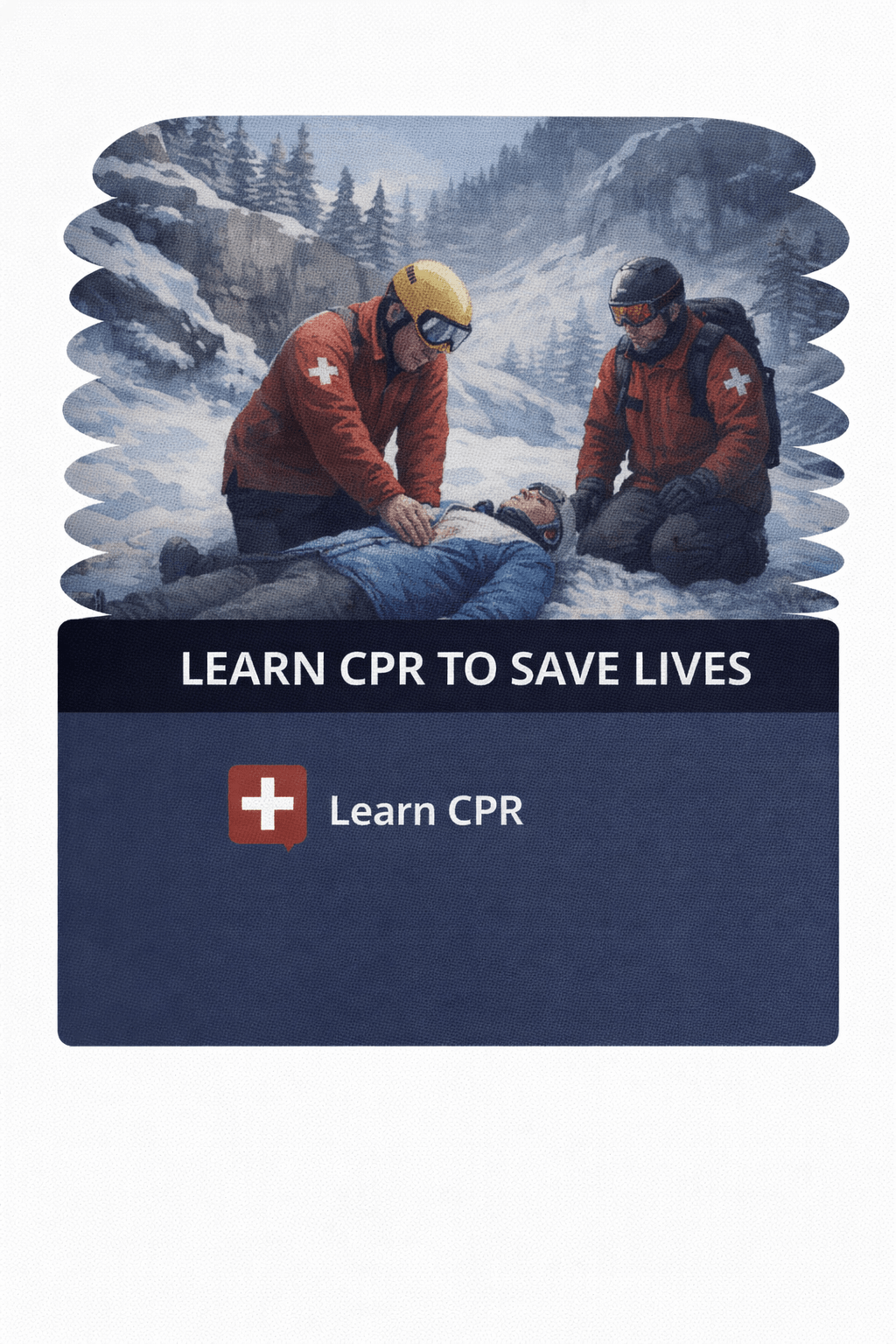
 Skiing and snowboarding are popular activities across British Columbia, especially in destinations like Whistler and the North Shore mountains near Vancouver. While these environments are well-managed, they still involve natural hazards such as steep terrain, cliffs, and changing snow conditions.
When a serious fall or accident occurs, immediate first aid and cardiopulmonary resuscitation (CPR) may be required if a person becomes unresponsive or stops breathing.
First Aid Preparedness for School and Group Activities
School trips and group outings to ski resorts are common across Abbotsford, Surrey, and the Lower Mainland. These trips are typically supervised, but emergencies can still occur in outdoor environments.
Ski patrol teams at resorts in British Columbia are trained to respond quickly with first aid and CPR. However, early recognition and prompt action remain critical when someone is injured on the slopes.
Scenario: Skiing Incident at Whistler
A school group from Mennonite Educational Institute Secondary in Abbotsford travelled to Whistler for a day of skiing and snowboarding. The plan was for students and staff to enjoy the slopes and regroup later in the afternoon.
When the group gathered at the designated meeting time, one student was missing. Staff and ski patrol initiated a search of the area.
Later that evening, search teams located a 14-year-old student at the base of a cliff. Emergency responders, including ski patrol members, assessed the situation and found the student unresponsive.
They immediately began cardiopulmonary resuscitation (CPR) while continuing rescue efforts. Despite these attempts, the student could not be revived.
Authorities later worked to understand the circumstances surrounding the incident. The school community also focused on supporting students and families, including providing access to counselling services.
This tragic event highlights the importance of safety awareness and emergency preparedness during outdoor recreational activities.
Recognizing When CPR May Be Needed
CPR may be required when a person:
-
Is unresponsive
-
Is not breathing normally
-
Shows no signs of circulation
-
Collapses after a fall or injury
-
Has pale or bluish skin
When these signs are present, emergency services should be contacted immediately and CPR may be started by trained responders.
How CPR Supports the Body During Emergencies
When the heart stops pumping effectively, oxygen cannot circulate through the body. CPR helps by:
-
Providing chest compressions to circulate blood
-
Supporting oxygen delivery to the brain and vital organs
-
Maintaining circulation until advanced care arrives
-
Helping improve the chances of survival
CPR is a key part of the chain of survival in life-threatening emergencies.
Ski Safety and Prevention
Mountain environments require awareness and preparation. Safety measures for skiing and snowboarding may include:
-
Staying on designated runs and trails
-
Being aware of terrain features such as cliffs and drop-offs
-
Wearing appropriate protective equipment, including helmets
-
Skiing within personal ability levels
-
Following instructions from ski patrol and resort staff
Prepared participants help reduce the risk of accidents on the slopes.
First Aid Response on Ski Hills
When an emergency occurs on a ski hill, trained responders may:
-
Secure the area to ensure safety
-
Assess responsiveness and breathing
-
Begin CPR if the person is unresponsive and not breathing normally
-
Coordinate transport with ski patrol and paramedics
-
Continue care until advanced medical support is available
Quick response times are essential in mountain environments.
Frequently Asked Questions
Why is CPR important in skiing accidents?
CPR helps maintain circulation and oxygen flow if a person stops breathing after a serious fall or injury.
Are ski patrol teams trained in CPR?
Yes. Ski patrol members are trained in CPR and first aid to respond to emergencies on the slopes.
What should someone do if a person is found unresponsive on a ski hill?
Emergency services or ski patrol should be alerted immediately. Trained individuals may begin CPR if needed.
Do helmets prevent all ski injuries?
Helmets can reduce the risk of certain head injuries but cannot prevent all accidents.
Should students and participants learn first aid?
Many organizations encourage first aid and CPR training because emergencies can occur during recreational activities.
Educational Note
This article is intended for general public education about CPR awareness and outdoor safety. Learning recognized first aid and CPR skills can help individuals respond more confidently during emergencies.
About The Author

Mark Kascha
First Aid Instructor Trainer with 30+ years of experience in CPR, emergency response, and safety training across Canada.
👉 [View full credentials]🔗 View LinkedIn Profile
Last reviewed: March 2026