
Understanding Fire Emergencies and First Aid
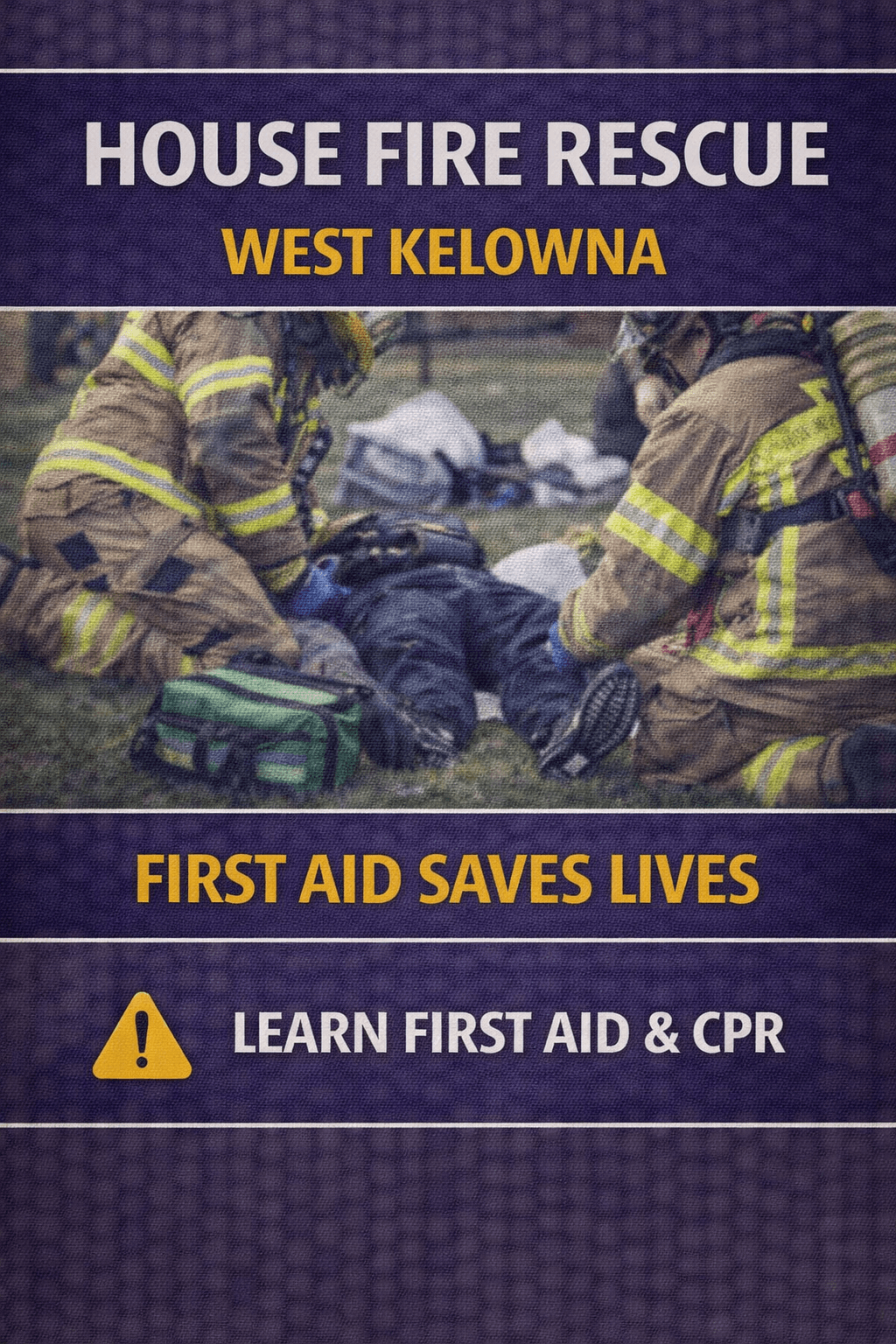 House fires can develop quickly and create dangerous conditions such as smoke inhalation, burns, and breathing difficulties. In many cases, firefighters not only extinguish the flames but also provide initial medical assistance and first aid to people rescued from the building.
Across British Columbia and the Lower Mainland—including West Kelowna, Kelowna, Vancouver, and surrounding communities—fire departments often receive medical response training so they can assist injured individuals until paramedics arrive.
First Aid Preparedness During Fire Incidents
When emergency crews arrive at a fire scene, they must first ensure that people inside the building are safely evacuated. Once victims are removed from the structure, responders may begin providing immediate care.
Common first aid priorities after a fire rescue may include:
-
Providing oxygen or airway support if needed
-
Monitoring for smoke inhalation symptoms
-
Treating burns or other injuries
-
Preparing patients for transport by ambulance
Early assistance can help stabilize individuals while advanced medical care is arranged.
Fire at a West Kelowna Home
Emergency crews responded to a house fire on Guidi Road in West Kelowna shortly before 8:30 a.m.
When firefighters arrived, they entered the building to search for occupants who were still inside.
During the rescue operation, crews located two individuals trapped in a second-floor bedroom.
Firefighters Carry Victims to Safety
Inside the room, firefighters found a disoriented adult and an unresponsive child. Both were quickly carried out of the burning home and brought to the front lawn so responders could begin first aid.
Firefighters and emergency responders immediately started providing care while paramedics were on their way to the scene.
According to West Kelowna Fire Rescue, both individuals responded to the treatment provided by emergency crews.
Additional Occupants Safely Evacuated
In total, five people were involved in the incident.
Two adults and one child were able to exit the house on their own before firefighters arrived. After being assessed by emergency responders, they were also transported to hospital along with the two individuals rescued from the bedroom.
All were taken to hospital for further medical evaluation.
Investigation Into the Cause of the Fire
Authorities reported that the cause of the fire had not yet been determined at the time of the initial response. Fire investigators began examining the scene to determine how the fire started.
Investigations into residential fires typically review several factors, including:
-
Electrical systems and appliances
-
Heating equipment
-
Cooking equipment
-
Smoke alarm operation
-
Structural conditions within the home
Understanding the cause helps fire departments improve prevention strategies.
Why First Aid Training Is Important
During many emergencies, the first few minutes are critical. Trained responders—such as firefighters, paramedics, or bystanders—may provide first aid while waiting for additional emergency support.
First aid training programs often emphasize:
-
Recognizing life-threatening emergencies
-
Calling emergency services immediately
-
Assisting individuals who are unresponsive or injured
-
Supporting breathing and circulation until medical professionals arrive
Across Kelowna, West Kelowna, and the Okanagan region, first aid and CPR training programs are widely encouraged for workplaces and community members.
Fire Safety and Preparedness at Home
Although fires can be unpredictable, several safety measures may help reduce risks in residential buildings:
-
Installing and maintaining smoke alarms
-
Creating a family fire escape plan
-
Practicing evacuation routes with household members
-
Keeping emergency contact numbers accessible
-
Learning basic first aid and CPR
Preparedness helps households respond quickly if a fire emergency occurs.
Frequently Asked Questions
What types of injuries can occur during house fires?
House fires may cause smoke inhalation, burns, breathing difficulties, or injuries while escaping the building.
Why do firefighters sometimes provide first aid?
Firefighters are often the first responders at emergency scenes and may provide immediate care before paramedics arrive.
What is smoke inhalation?
Smoke inhalation occurs when a person breathes in smoke or toxic gases from a fire, which can affect breathing and oxygen levels.
Why are people transported to hospital after fire rescues?
Medical evaluation helps ensure that injuries such as smoke inhalation or burns are properly assessed.
Can community members learn first aid and CPR?
Yes. First aid and CPR training courses are widely available throughout British Columbia.
Educational Note
This article is intended for general public education about first aid awareness and emergency preparedness. Certified first aid and CPR training programs provide practical instruction that helps individuals recognize emergencies and respond safely.
About The Author

Mark Kascha
First Aid Instructor Trainer with 30+ years of experience in CPR, emergency response, and safety training across Canada.
👉 [View full credentials]🔗 View LinkedIn Profile
Last reviewed: March 2026