
CPR and AED Awareness in Youth Sports: Lessons from a Hockey Rink Emergency
Understanding Sudden Cardiac Emergencies in Sports
 Sports activities such as hockey are widely enjoyed by youth across Canada, including Vancouver and throughout British Columbia. While sports participation offers many health benefits, unexpected medical emergencies can sometimes occur during intense physical activity or following impact injuries.
Public sports facilities, arenas, and recreation centres often prepare for these situations by ensuring staff and volunteers are trained in CPR (cardiopulmonary resuscitation) and automated external defibrillator (AED) use. These emergency response tools can help support a person experiencing sudden cardiac arrest until paramedics arrive.
First Aid and Workplace Safety Relevance in Vancouver and British Columbia
In Vancouver and across BC, many recreation centres, ice rinks, and sports organizations promote first aid, CPR, and AED training for staff, coaches, and volunteers. Public access defibrillators are increasingly placed in sports arenas, gyms, and community centres to improve emergency readiness.
Workplace safety programs in British Columbia also emphasize emergency preparedness in recreational environments. Knowing how to recognize cardiac arrest and respond quickly can make a significant difference during critical moments.
Scenario: Emergency During a Youth Hockey Game
In a reported incident during a youth hockey game, 14-year-old Kenzie Lahey collapsed on the ice after being struck by a puck. Witnesses described how he grabbed his chest, dropped to his knees, and then fell to the ice.
The referee quickly stopped play and called for assistance. Kenzie’s mother rushed onto the ice and was joined by several bystanders, including an off-duty respiratory therapist and a physician who was attending the game.
At first, some believed he might be experiencing a seizure. However, as the situation developed, responders began performing CPR while others attempted to locate a defibrillator at the rink.
Although the arena had an AED available, the device’s battery was not charged. Fortunately, a nearby ambulance had a working defibrillator. Emergency responders used the device to deliver two shocks, which helped restore a regular heart rhythm.
Kenzie was stabilized and transported to IWK Health Centre for further care. After medical treatment and monitoring, he was able to return home a few days later.
Following the incident, his family highlighted the importance of maintained and accessible AEDs in public sports facilities, emphasizing that properly functioning equipment can be crucial during cardiac emergencies.
Recognizing Signs of Sudden Cardiac Arrest
Cardiac arrest during sports is uncommon but can occur without warning. Signs that may indicate a sudden cardiac emergency include:
-
Sudden collapse during physical activity
-
Unresponsiveness
-
No normal breathing or only gasping breaths
-
No detectable pulse
-
Seizure-like movements immediately after collapse
Recognizing these signs quickly helps bystanders understand that emergency response may be required.
First Aid Awareness: CPR and AED Use
When sudden cardiac arrest is suspected, early action can support survival until professional medical responders arrive.
First aid training programs commonly teach responders to:
-
Call emergency services immediately
-
Begin chest compressions if the person is unresponsive and not breathing normally
-
Retrieve and use an available AED as soon as possible
-
Continue CPR and follow AED prompts until emergency responders arrive
AED devices are designed to guide users with voice instructions, making them accessible for trained staff and bystanders.
Prevention and Safety Considerations in Sports Facilities
Many sports organizations and recreation facilities take steps to improve emergency preparedness. Safety practices often include:
-
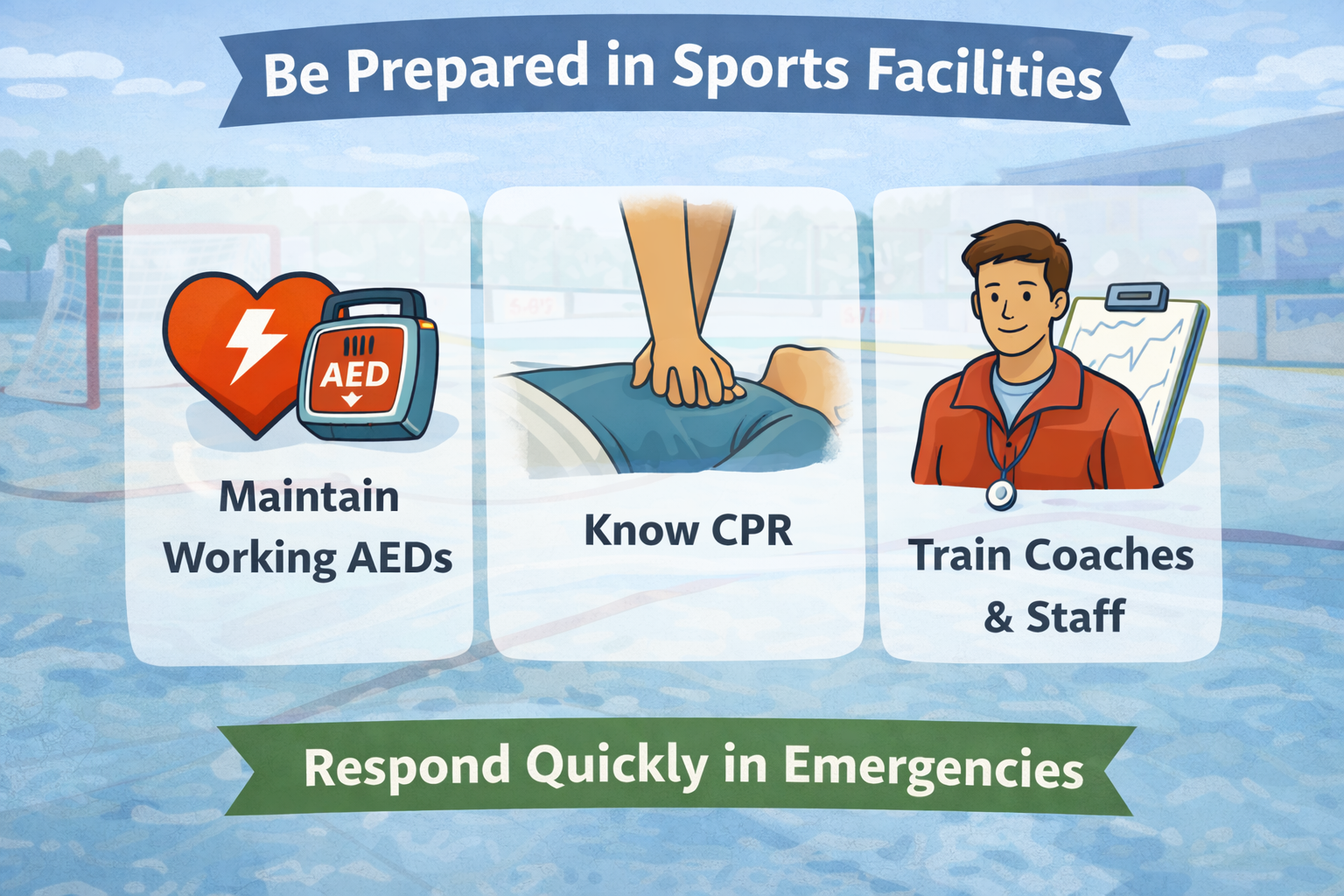
Maintaining working AEDs in accessible locations
-
Ensuring equipment batteries and pads are regularly checked
-
Training coaches, staff, and volunteers in CPR and AED use
-
Developing emergency response plans for games and practices
-
Clearly marking AED locations within facilities
Across Canadian sports arenas and recreation centres, these measures help improve readiness for unexpected medical emergencies.
Frequently Asked Questions
What is an AED and why is it important in sports facilities?
An automated external defibrillator (AED) is a device that analyzes heart rhythm and may deliver an electrical shock when needed. AEDs are important in sports venues because they allow responders to quickly assist someone experiencing cardiac arrest.
Can cardiac arrest happen to young athletes?
Although uncommon, cardiac arrest can occur in young athletes due to underlying heart conditions or rare impact-related events. Immediate emergency response is essential when a collapse occurs.
Why is equipment maintenance important for AEDs?
AEDs rely on batteries and pads that must be checked regularly. Ensuring equipment is charged and operational helps facilities remain prepared for emergencies.
What should coaches or staff do if an athlete suddenly collapses?
Coaches and staff should activate emergency response procedures, contact emergency services, and provide assistance according to their training while waiting for paramedics.
Why are CPR and AED training recommended for sports volunteers?
Volunteers and staff are often the first people present when an emergency occurs during sports activities. Training helps them recognize emergencies and respond confidently.
Educational Note
This article is intended for general first aid and emergency preparedness education. Cardiac emergencies require trained medical response, and emergency services are equipped to provide advanced care. Learning CPR and AED awareness can help communities respond more effectively during unexpected incidents.
About The Author

Mark Kascha
First Aid Instructor Trainer with 30+ years of experience in CPR, emergency response, and safety training across Canada.
👉 [View full credentials]🔗 View LinkedIn Profile
Last reviewed: March 2026