
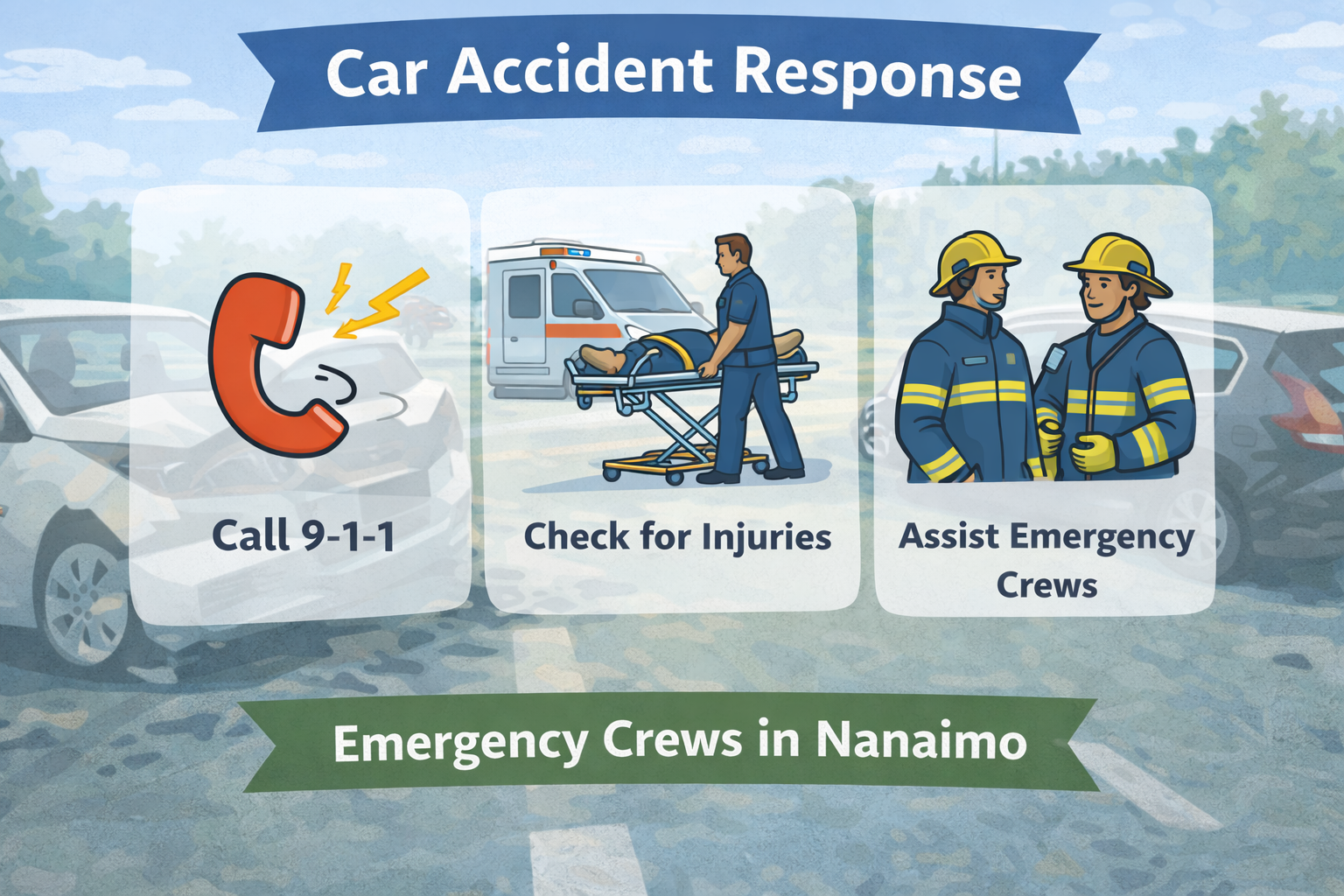
 Motor vehicle collisions can occur unexpectedly, even on familiar roads or near community facilities. Intersections in busy areas—such as recreation centres, schools, and shopping districts—often experience increased traffic flow during evenings and weekends. These environments can increase the risk of accidents involving multiple vehicles.
Across British Columbia, including Vancouver and surrounding communities, road safety awareness and basic first aid knowledge are important public safety skills. When collisions occur, bystanders and trained responders may provide initial assistance while waiting for emergency services.
First Aid and Workplace Safety Relevance in Vancouver and British Columbia
In Vancouver and throughout BC, many workplaces encourage staff to complete first aid training and emergency response education. Employees in public facilities, recreation centres, transportation services, and construction sites may encounter road incidents near their workplaces.
Understanding how to respond safely—such as contacting emergency services, ensuring the scene is secure, and assisting injured individuals within one’s level of training—can help support emergency response efforts until paramedics arrive.
Road safety awareness is also an important part of community safety education in British Columbia.
Scenario: Three-Vehicle Collision Near Nanaimo Aquatic Centre
In a reported incident in Nanaimo, British Columbia, a three-vehicle collision occurred near the intersection of Wakesiah Avenue and Third Street, close to the Nanaimo Aquatic Centre.
The crash took place shortly before 8 p.m., prompting a response from Nanaimo Fire Rescue, Nanaimo RCMP, and the B.C. Ambulance Service.
Emergency crews assessed the individuals involved in the collision. One passenger from a Chevrolet Trailblazer was transported to Nanaimo Regional General Hospital for further medical evaluation after sustaining injuries.
Paramedics also assessed the driver of a Honda Civic, who did not require further medical care at the scene according to reports. The Civic sustained damage during the crash, while the Trailblazer was no longer drivable following the incident. A third vehicle involved reportedly did not experience significant damage.
Emergency responders secured the intersection while crews worked to assess the situation and clear the roadway.
Common Signs of Injury After a Vehicle Collision
Even when injuries are not immediately obvious, individuals involved in a vehicle collision may experience symptoms that require medical evaluation. Possible signs of injury can include:
-
Pain or tenderness in the neck, back, or limbs
-
Dizziness or confusion
-
Difficulty moving or standing
-
Cuts, bruises, or swelling
-
Shortness of breath or chest discomfort
Because some injuries may appear later, emergency responders often recommend medical assessment following a significant collision.
First Aid Awareness at the Scene of a Collision
When a traffic collision occurs, the priority is ensuring safety for everyone involved and contacting emergency services. Bystanders should avoid placing themselves in danger from moving vehicles or hazardous conditions.
General first aid awareness may include:
-
Calling emergency services immediately
-
Checking whether anyone appears injured or requires assistance
-
Avoiding moving injured individuals unless there is immediate danger
-
Helping direct emergency responders to the scene
-
Remaining nearby to provide information about the incident if requested
These actions can help support emergency crews while they manage the situation.
Prevention and Road Safety Considerations
Road safety awareness plays an important role in reducing vehicle collisions. Drivers can help lower risks by following safe driving practices, including:
-
Observing posted speed limits, especially near intersections and public facilities
-
Remaining attentive to traffic signals and pedestrian crossings
-
Avoiding distractions while driving
-
Maintaining safe following distances between vehicles
-
Adjusting driving behaviour based on weather, lighting, and road conditions
Across British Columbia communities, road safety campaigns often emphasize defensive driving and awareness in busy urban areas.
Frequently Asked Questions
Why are intersections common locations for vehicle collisions?
Intersections involve vehicles travelling from multiple directions and require drivers to follow signals, signs, and turning movements. Increased traffic flow can raise the risk of collisions if drivers are distracted or misjudge timing.
Should someone involved in a collision still be checked by paramedics even if they feel fine?
Emergency responders often assess individuals involved in collisions because some injuries may not be immediately noticeable. Evaluation helps determine whether further medical attention may be needed.
What should a bystander do after witnessing a vehicle crash?
Bystanders can assist by contacting emergency services, ensuring the area is safe, and providing information to responders if needed. They should avoid interfering with emergency operations.
Why do emergency crews sometimes close intersections after collisions?
Securing the area allows responders to safely assist injured individuals, assess vehicles, and remove debris from the roadway.
How can drivers reduce the risk of multi-vehicle accidents?
Safe driving habits such as maintaining awareness, following traffic rules, and keeping adequate distance between vehicles can help reduce collision risks.
Educational Note
This article is intended for general first aid and public safety awareness. Motor vehicle collisions can involve complex situations, and trained emergency responders are equipped to manage these incidents. Learning basic first aid principles and road safety awareness can help individuals respond more effectively when unexpected events occur.
About The Author

Mark Kascha
First Aid Instructor Trainer with 30+ years of experience in CPR, emergency response, and safety training across Canada.
👉 [View full credentials]🔗 View LinkedIn Profile
Last reviewed: March 2026