
An automated external defibrillator (AED) is a portable device designed to help restore a normal heart rhythm during certain cardiac emergencies, particularly sudden cardiac arrest. The device analyzes the heart’s rhythm and, when appropriate, delivers an electrical shock to help the heart restart an effective beat.
Across Canada, including Vancouver and British Columbia, AEDs are increasingly available in public locations such as community centres, schools, airports, workplaces, and sports facilities. These devices are designed so that trained responders and members of the public can use them safely during emergencies while waiting for paramedics to arrive.
Early access to AEDs, combined with CPR, is an important part of improving survival during cardiac emergencies.
First Aid and Workplace Safety Relevance in Vancouver and British Columbia
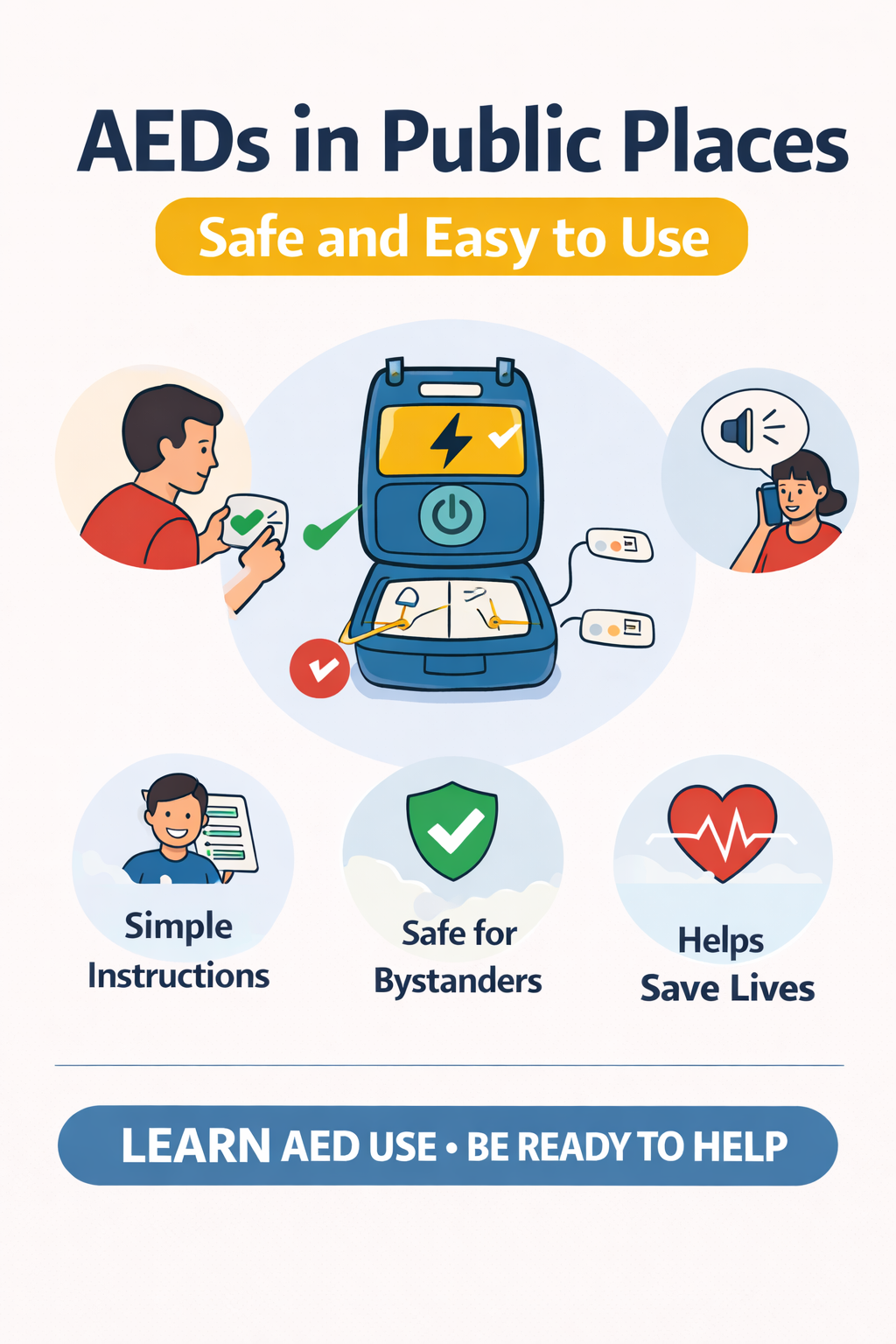 Many workplaces and public buildings throughout Vancouver and British Columbia now include AEDs as part of their emergency preparedness plans. In addition, first aid and CPR training programs often include instruction on how to recognize cardiac arrest and use an AED.
Safety training programs commonly teach participants how to:
-
Recognize signs of sudden cardiac arrest
-
Call emergency services
-
Begin CPR
-
Use an AED safely
-
Continue care until emergency responders arrive
The increased availability of AEDs in schools, workplaces, and public spaces helps ensure that life-saving equipment is accessible when needed.
Increasing AED Access in Public Spaces
In many communities, public access to AEDs has expanded significantly in recent years. Emergency response organizations and safety training providers often emphasize that these devices are designed to be easy to use, even for individuals with limited medical training.
Chris Landry of Island First Aid Services has noted that AEDs have already helped save lives in communities where they are available. During cardiac emergencies, every minute matters. Waiting for emergency responders to arrive without taking action can reduce the chances of survival.
By providing step-by-step voice instructions, AEDs help guide bystanders through the process of assisting someone experiencing sudden cardiac arrest.
How an AED Works
An AED works by analyzing the heart’s electrical activity through adhesive pads placed on the person’s chest. If the device detects a heart rhythm that may respond to defibrillation, it may prompt the user to deliver a shock.
Modern AEDs are designed with built-in safety features:
-
The device analyzes the heart rhythm automatically
-
It will only recommend a shock when appropriate
-
Voice prompts guide the user through each step
-
The device cannot deliver a shock if it is not needed
Because of these safety systems, AEDs are considered safe for use by trained responders and bystanders during emergencies.
Guidance During AED Use
First aid training courses often teach several general steps when using an AED during a cardiac emergency:
-
Call emergency services immediately
-
Turn on the AED and follow the voice prompts
-
Place the adhesive pads on the person’s bare chest as shown in the diagrams on the pads
-
Allow the device to analyze the heart rhythm
-
Follow the device instructions regarding shocks and CPR
Many AED models also provide guidance for CPR, helping responders maintain the correct rhythm and depth of chest compressions.
These built-in prompts are designed to support bystanders during stressful emergency situations.
Why Public Awareness of AEDs Matters
Even though AEDs are widely available in many public buildings, some people may hesitate to use them because they are unsure how the devices work. Increasing public awareness helps communities respond more confidently during cardiac emergencies.
Training programs, workplace safety courses, and community education initiatives help ensure that more people understand:
-
Where AEDs are located
-
How they operate
-
When they should be used
-
How they work alongside CPR and emergency services
Preparedness and awareness can help communities respond quickly during unexpected medical emergencies.
Frequently Asked Questions
What is sudden cardiac arrest?
Sudden cardiac arrest occurs when the heart suddenly stops beating effectively. This prevents blood from circulating to vital organs and requires immediate emergency care.
Are AEDs safe for the public to use?
Yes. AEDs are designed with built-in safety features that analyze the heart rhythm and only recommend a shock when appropriate. Voice prompts guide users step by step.
Where are AEDs commonly located?
AEDs are often placed in public buildings such as schools, recreation centres, airports, workplaces, and sports facilities so they can be accessed quickly during emergencies.
Do AEDs replace CPR?
AEDs and CPR work together during cardiac emergencies. CPR helps circulate blood, while an AED may help restore a normal heart rhythm when needed.
Do you need training to use an AED?
While many people learn AED use during CPR and first aid training, the devices are designed with simple instructions so bystanders can assist during emergencies if needed.
Educational Note
This article provides general educational information about automated external defibrillators and cardiac emergency awareness. First aid and CPR training help individuals understand how to respond during emergencies, but medical care should always be provided by qualified healthcare and emergency response professionals.
About The Author

Mark Kascha
First Aid Instructor Trainer with 30+ years of experience in CPR, emergency response, and safety training across Canada.
👉 [View full credentials]🔗 View LinkedIn Profile
Last reviewed: March 2026