
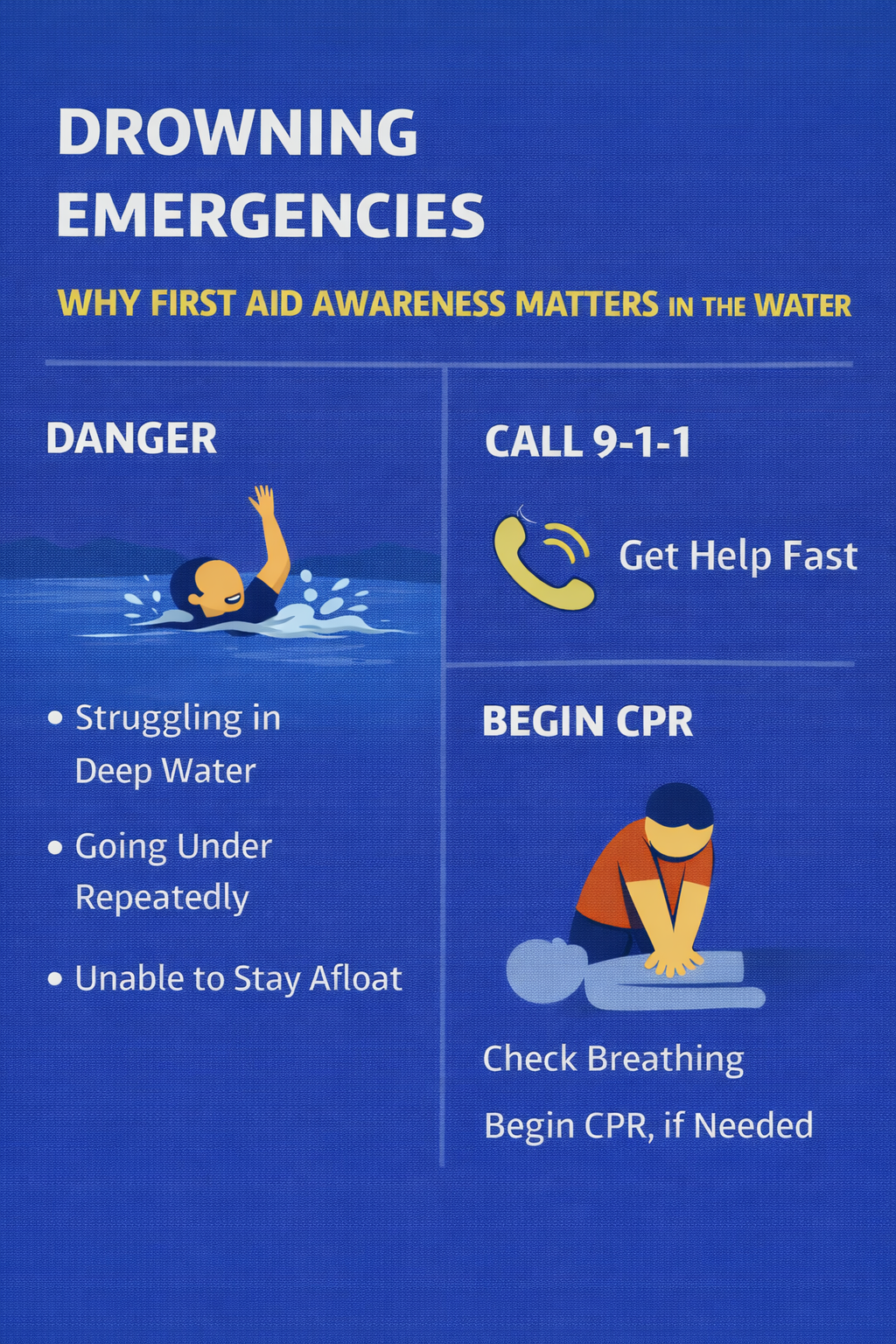
Drowning emergencies can develop quickly in oceans, lakes, or rivers when a person is unable to stay afloat or breathe effectively. Fatigue, waves, strong currents, or unexpected conditions can make it difficult for swimmers to remain above water.
If a person is pulled from the water and is not breathing normally, cardiopulmonary resuscitation (CPR) may be attempted to help maintain circulation and oxygen flow until emergency responders arrive.
Across Canada, including Vancouver and British Columbia, water safety education is often promoted because many communities are located near oceans, lakes, and rivers. Learning first aid and CPR can help individuals recognize emergencies and respond safely when someone is in distress in the water.
A Real-World Scenario
A young Canadian man was recognized for helping save a swimmer during a vacation abroad.
 Alexi Moskovski, a 23-year-old from Pierrefonds, Quebec, was vacationing in Cayo Largo, Cuba, with his parents and younger brother when an unexpected emergency occurred near the beach.
Moskovski was playing volleyball with a group of people he had met at the resort when he noticed someone struggling in the water. Another man nearby also recognized the situation and quickly ran toward the ocean. Moskovski followed him, along with another man named Marick.
By the time they reached the swimmer, the woman was estimated to be 300 to 400 metres from the shore and was struggling to stay afloat. Witnesses reported that she was having difficulty treading water and occasionally slipping beneath the surface.
Working together, the rescuers were able to reach the woman and help bring her safely back to shore.
Later, Moskovski was honoured for his actions with the Governor General’s Certificate of Commendation, which recognizes Canadians who demonstrate courage and selflessness in helping others.
The award was presented by Pierrefonds-Roxboro Mayor Monique Worth on behalf of Governor General David Johnston.
Incidents like this highlight how quickly water emergencies can develop and how bystanders sometimes become the first people to assist someone in distress.
Signs of a Drowning Emergency
Drowning incidents may appear less dramatic than many people expect. Individuals in distress may be unable to call out or wave for help.
Possible warning signs include:
-
Difficulty staying above water
-
Weak or uncoordinated movements while swimming
-
Submerging repeatedly beneath the surface
-
Struggling to tread water
-
Sudden exhaustion in deep water
Recognizing these signs early may allow bystanders to call for help or alert lifeguards quickly.
Risk Factors During Ocean and Beach Swimming
Swimming in open water environments can involve additional challenges compared to pools.
Common risk factors include:
-
Fatigue while swimming long distances
-
Strong waves or currents
-
Limited swimming experience in ocean conditions
-
Sudden weather or tide changes
-
Lack of nearby lifeguard supervision
Even confident swimmers may encounter difficulties when water conditions change unexpectedly.
First Aid Awareness During Water Emergencies
First aid training often includes basic guidance for responding to water emergencies.
General response steps may include:
-
Call emergency services (9-1-1 in Canada) or alert lifeguards immediately.
-
Avoid entering dangerous water conditions if the current or waves are strong.
-
If a person is safely brought to shore, check responsiveness and breathing.
-
If breathing is absent or abnormal, CPR may be started if it is safe to do so.
-
Continue CPR until emergency responders arrive.
In many situations, trained lifeguards or emergency responders will take over once they reach the scene.
Prevention and Water Safety Considerations
When visiting beaches or open water locations, several safety practices can help reduce risk.
Helpful precautions include:
-
Swim in designated areas with lifeguards when possible
-
Avoid swimming alone
-
Be aware of water conditions such as currents and waves
-
Stay within comfortable swimming distances
-
Learn first aid and CPR skills
Throughout British Columbia and Vancouver, water safety awareness is commonly promoted because of the region’s many beaches, lakes, and recreational water areas.
FAQ
What are common signs that someone may be drowning?
A person may struggle to stay afloat, repeatedly submerge beneath the water, or appear unable to move effectively while swimming.
Why can drowning occur even when someone is a strong swimmer?
Fatigue, strong currents, waves, or unexpected water conditions can overwhelm even experienced swimmers.
What should someone do if they notice a swimmer in distress?
Emergency services or lifeguards should be alerted immediately. Entering the water to assist should only be done if it is safe.
Why is CPR important during water emergencies?
If a person stops breathing after being submerged, CPR may help maintain circulation and oxygen flow until emergency responders arrive.
Why do many safety programs encourage CPR training?
Training helps people recognize emergencies and understand how to respond safely while waiting for professional responders.
Educational Note
This article is intended for general first aid awareness and water safety education. Learning CPR and first aid through certified training programs can help individuals recognize emergencies and respond safely until emergency services arrive.
About The Author

Mark Kascha
First Aid Instructor Trainer with 30+ years of experience in CPR, emergency response, and safety training across Canada.
Last reviewed: March 2026
 Support local, Canadian-owned businesses, with no connections to American corporations or partnerships.