A sudden cardiac emergency occurs when the heart stops pumping effectively, preventing blood and oxygen from reaching vital organs. When this happens, a person may collapse, lose consciousness, and stop breathing normally.
Cardiopulmonary resuscitation (CPR) and the use of an automated external defibrillator (AED) can help maintain circulation and restore a normal heart rhythm until advanced medical care arrives.
Across British Columbia, including Vancouver and the Lower Mainland, CPR and AED training are widely promoted in workplaces, public facilities, and transportation hubs. Locations such as border crossings, airports, offices, and shopping centres often keep AEDs available so trained individuals can respond quickly during medical emergencies.
A Real-World Scenario
 A medical emergency occurred at the Huntingdon border crossing near Abbotsford, British Columbia, when a Canadian man became seriously ill while preparing to travel into the United States.
The 56-year-old man from Kamloops and his wife had arrived at the border in a motorhome as they prepared for a planned four-month winter trip. During a secondary screening inspection, the man suddenly collapsed and began experiencing difficulty breathing.
U.S. Customs and Border Protection (CBP) officers on site quickly recognized the emergency and began providing assistance.
Supervisory CBP officer Nicholas Sowell, along with officers Douglas Stuit and Randy Mulanax, immediately began CPR. Another officer, Heather Hentz, contacted emergency services to request paramedics.
While CPR was being performed, an officer retrieved an AED located at the port of entry. Officers continued providing care alongside a responding Sumas Police Department officer until emergency medical technicians arrived.
Once paramedics reached the scene, the AED was used several times before the man was transported by ambulance to PeaceHealth St. Joseph Medical Center in Bellingham, Washington.
According to officials, the quick and coordinated response by the officers helped stabilize the man after he experienced a heart attack.
This incident highlights how trained responders and accessible emergency equipment can make a critical difference during cardiac emergencies.
Signs of a Cardiac Emergency
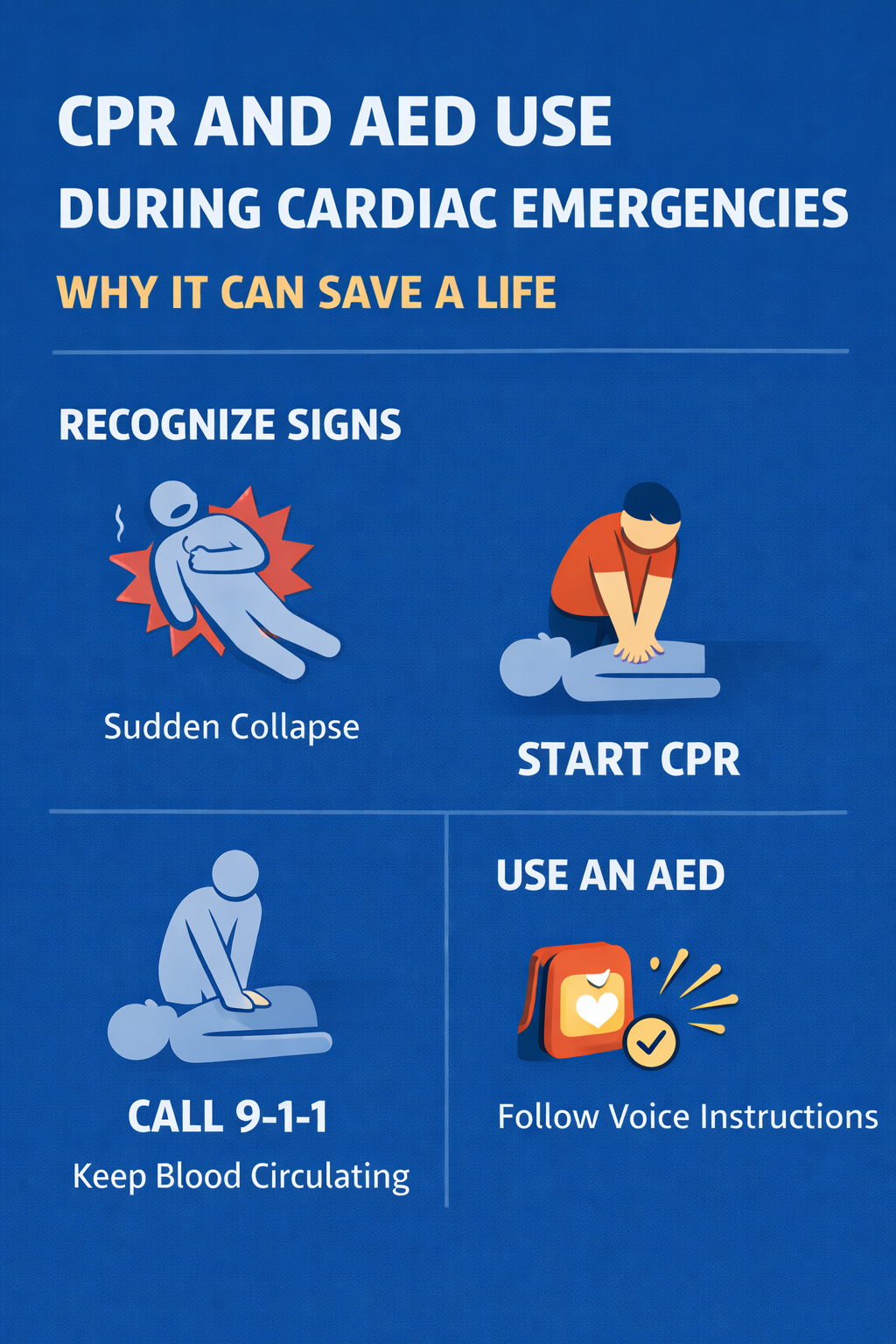
Cardiac arrest can occur suddenly and without warning. Recognizing the early signs allows bystanders to act quickly.
Possible signs include:
-
Sudden collapse
-
Loss of consciousness
-
No normal breathing or only gasping
-
No visible signs of circulation or movement
When these signs are present, immediate emergency response is essential.
What CPR Does During Cardiac Arrest
CPR is designed to help circulate oxygen-rich blood through the body when the heart is no longer pumping effectively.
Chest compressions help:
-
Maintain blood flow to the brain and heart
-
Slow the progression of organ damage
-
Support circulation until defibrillation or advanced care is available
While CPR alone may not restart the heart, it helps preserve vital organ function while waiting for emergency responders.
The Role of Automated External Defibrillators (AEDs)
An automated external defibrillator (AED) is a portable device that analyzes the heart’s rhythm and, when appropriate, delivers an electrical shock to help restore a normal heartbeat.
AEDs are designed for public use and provide voice instructions to guide users through the process.
Many workplaces and public locations in Canada now install AEDs, including:
-
Airports and transportation hubs
-
Border crossings
-
Community centres
-
Office buildings
-
Sports facilities
-
Shopping centres
Having an AED nearby can significantly improve the chances of survival during sudden cardiac arrest.
Prevention and Workplace Emergency Preparedness
Cardiac emergencies can happen unexpectedly in almost any location — including workplaces, public facilities, and travel checkpoints.
Emergency preparedness may include:
-
CPR and AED training for staff
-
Installing AED devices in accessible locations
-
Clear procedures for contacting 9-1-1
-
Regular workplace safety training
-
Awareness of medical emergency signs
Many organizations across Vancouver and British Columbia encourage employees to complete CPR training so they can assist coworkers, visitors, or members of the public if an emergency occurs.
FAQ
What is the difference between CPR and an AED?
CPR provides chest compressions that help circulate blood, while an AED analyzes heart rhythm and may deliver a controlled electrical shock to restore a normal heartbeat.
Where are AEDs commonly located?
AEDs are often placed in public areas such as airports, offices, recreation facilities, transportation hubs, and community centres so they are available during emergencies.
What should a bystander do if someone collapses suddenly?
Emergency services should be contacted immediately. If the person is not breathing normally, CPR may be started while another bystander retrieves an AED if available.
Can people without medical training use an AED?
AEDs are designed to guide users with simple voice instructions, allowing trained or untrained bystanders to assist during emergencies.
Why is CPR training recommended in workplaces?
Training helps employees recognize cardiac emergencies and respond safely while waiting for professional responders.
Educational Note
This article is intended for general first aid awareness and public safety education. Learning CPR and AED use through certified training programs can help individuals recognize cardiac emergencies and respond safely until professional emergency services arrive.
About The Author

Mark Kascha
First Aid Instructor Trainer with 30+ years of experience in CPR, emergency response, and safety training across Canada.
Last reviewed: March 2026
 Support local, Canadian-owned businesses, with no connections to American corporations or partnerships.