
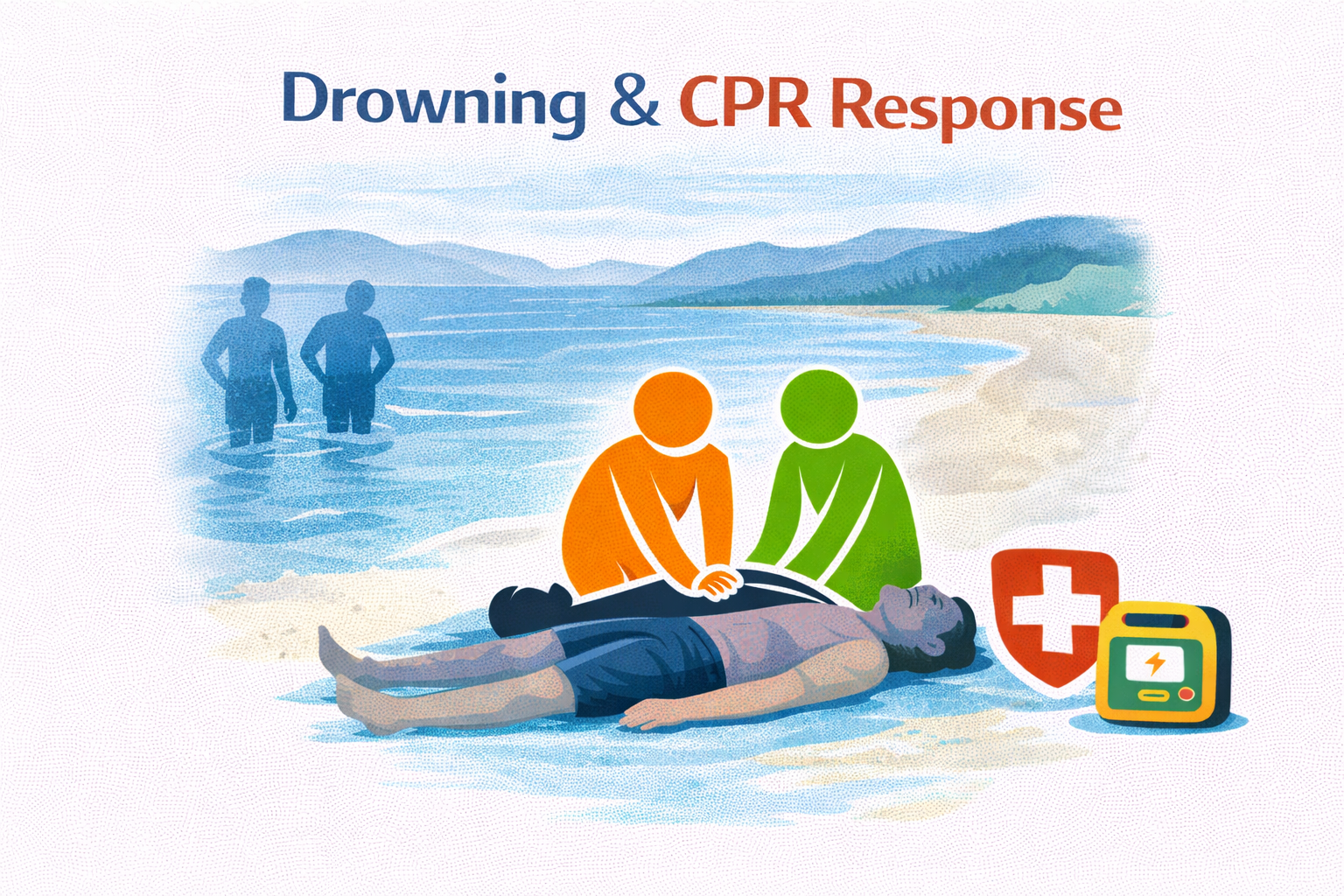
 Drowning can occur in a variety of natural water environments such as lakes, rivers, and coastal areas. Even experienced swimmers may encounter unexpected challenges including fatigue, sudden water depth changes, cold water, or medical issues while swimming.
In Vancouver and across British Columbia, lakes and waterfront parks are popular destinations for recreation during warmer months. Locations similar to Kelowna’s Okanagan Lake beaches attract many visitors for swimming, boating, and relaxation. Because these settings can be busy and emergency responders may take several minutes to arrive, CPR (cardiopulmonary resuscitation) awareness and water safety knowledge are important community safety skills.
Early rescue and rapid bystander intervention can help support someone experiencing a drowning emergency until professional help arrives.
A Realistic Scenario: Emergency at a Lakeside Beach
In a reported incident at a lakeside park, emergency services were called after beachgoers noticed a swimmer in distress in the water.
Witnesses reported hearing a call for help when someone noticed that a man appeared to be struggling while swimming. Several nearby individuals quickly entered the water to assist.
The swimmer was located beneath the surface and pulled to shore by members of the public. Once on land, bystanders immediately began CPR while others contacted emergency services.
Paramedics and emergency crews arrived shortly afterward and continued life-saving efforts before transporting the individual to hospital for further treatment.
Situations like this demonstrate how quick action by nearby individuals can provide crucial assistance during water-related emergencies.
Signs of Drowning or Severe Water Distress
Recognizing the signs of drowning can help people respond quickly when someone is in trouble in the water.
Possible warning signs include:
-
Unresponsiveness in or near the water
-
Difficulty breathing or absence of breathing
-
Gasping or irregular breathing
-
Bluish or pale skin tone
-
Weak or absent pulse
-
Confusion or unusual behaviour after being rescued
Drowning often occurs quietly, which means it may not always involve splashing or loud calls for help.
Causes and Risk Factors in Lake Environments
Natural bodies of water can present hazards that increase the risk of drowning.
Common contributing factors include:
-
Sudden drop-offs in water depth
-
Cold water temperatures
-
Fatigue while swimming long distances
-
Limited visibility underwater
-
Alcohol or substance use near water
-
Lack of lifeguard supervision in some areas
Environmental conditions in lakes can change quickly, which makes caution and supervision important during water activities.
First Aid Response: CPR and Emergency Assistance
When someone is removed from the water and appears unresponsive or not breathing normally, trained individuals may begin CPR while waiting for paramedics.
First aid training typically teaches responders to:
-
Ensure the area is safe before approaching
-
Remove the person from the water if it can be done safely
-
Call emergency services immediately
-
Check responsiveness and breathing
-
Begin CPR if the person is unresponsive and not breathing normally
-
Continue care until emergency responders arrive
In some public areas, automated external defibrillators (AEDs) may also be available to assist with cardiac emergencies.
Early CPR helps maintain circulation and oxygen delivery to the brain and vital organs.
Prevention and Water Safety Awareness
Many drowning incidents can be reduced through water safety awareness and preparedness.
Important safety reminders include:
-
Swim with others rather than alone
-
Stay within designated swimming areas
-
Be aware of water conditions and depth changes
-
Avoid alcohol or substances before swimming
-
Learn CPR and first aid skills
Workplaces and communities across British Columbia often encourage CPR and first aid training to help individuals respond effectively during emergencies.
FAQ
Can drowning happen even if someone knows how to swim?
Yes. Fatigue, medical conditions, or environmental factors such as cold water or currents can cause difficulties even for strong swimmers.
Why is CPR important during drowning emergencies?
CPR helps maintain circulation and oxygen delivery to vital organs when breathing or heart function has stopped.
Can drowning occur without loud splashing or shouting?
Yes. Many drowning incidents are quiet and may involve subtle signs such as gasping or difficulty staying above water.
Why are lakes sometimes more dangerous than pools?
Lakes may have uneven bottoms, sudden depth changes, colder water, and limited visibility, which can make swimming more challenging.
Why should people learn CPR and first aid?
Training helps individuals recognize life-threatening emergencies and provide supportive care while waiting for professional medical responders.
Educational Note:
This article is intended for general first aid awareness and public safety education. Learning CPR and first aid skills can help individuals recognize emergencies and provide supportive care until trained emergency services arrive.
About The Author

Mark Kascha
First Aid Instructor Trainer with 30+ years of experience in CPR, emergency response, and safety training across Canada.
Last reviewed: March 2026
 Support local, Canadian-owned businesses, with no connections to American corporations or partnerships.