
 Medical emergencies can occur in many environments, including workplaces, public facilities, and institutional settings. When a person becomes unresponsive and stops breathing normally, immediate emergency response is essential to help maintain circulation and oxygen delivery to vital organs.
Cardiopulmonary resuscitation (CPR) is a life-support technique used in situations where someone has no detectable pulse or normal breathing. Early CPR can help support the body until paramedics arrive and advanced medical care becomes available.
Across Canada—including Vancouver and communities throughout British Columbia—CPR and first aid training are commonly included in workplace safety programs to ensure staff can respond quickly during unexpected emergencies.
First Aid and Workplace Relevance in Canada
Many workplaces and public institutions in Canada train employees to recognize medical emergencies and provide first aid. Staff working in correctional facilities, security roles, healthcare settings, and other high-responsibility environments often receive CPR certification and emergency response training.
Having trained personnel nearby allows early intervention when someone collapses or shows signs of medical distress.
Prompt action, clear communication with emergency services, and coordinated response are important parts of workplace emergency preparedness.
A Realistic Scenario from Nova Scotia
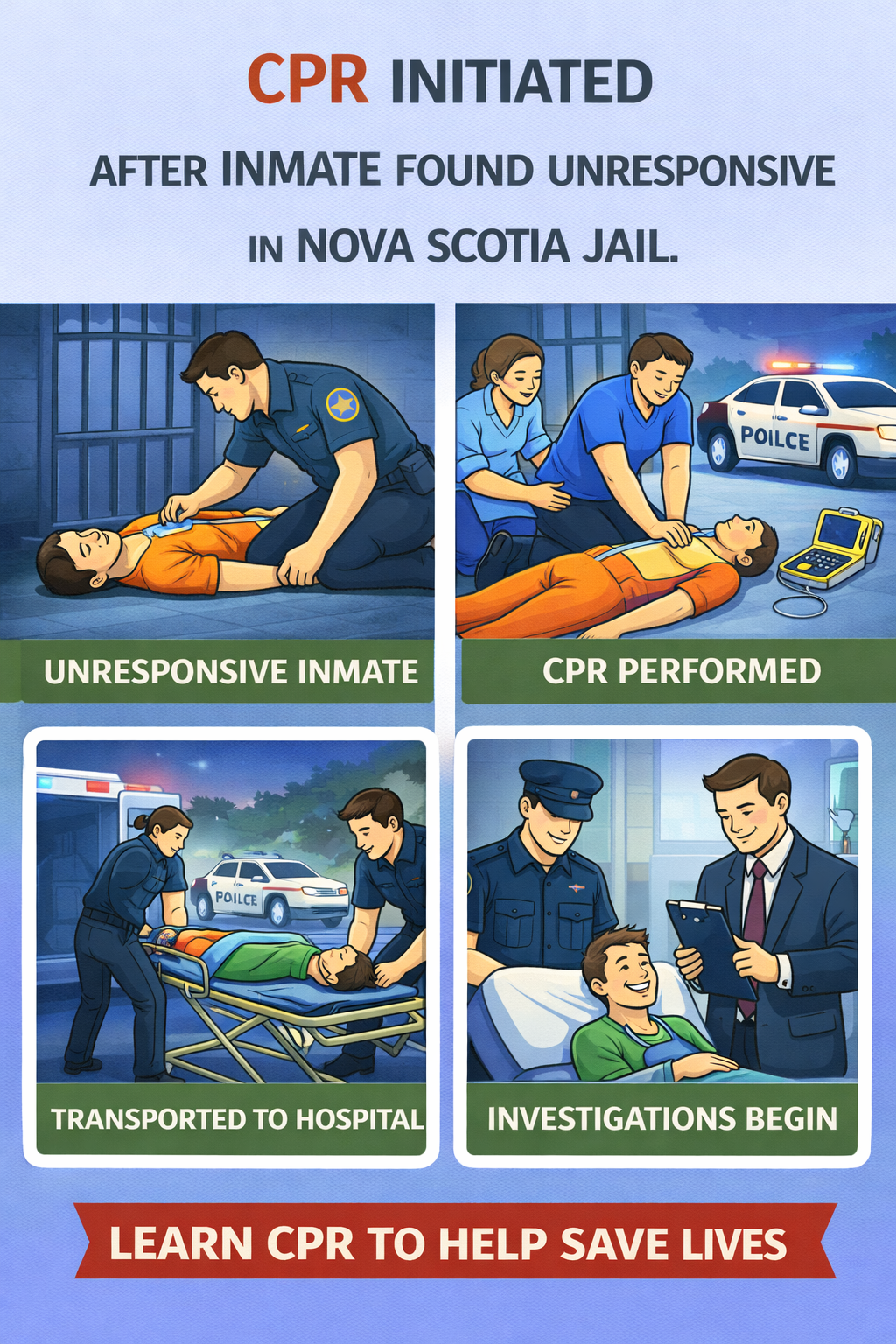
An incident at a correctional facility in Burnside, Nova Scotia, involved emergency response efforts after an inmate was discovered unresponsive.
According to reports from the provincial Justice Department, the 29-year-old man was found in medical distress around 9:30 p.m.
Staff members quickly assessed the situation and began performing CPR while emergency medical services were contacted.
Paramedics soon arrived and transported the individual to Dartmouth General Hospital for further medical care.
Despite the resuscitation efforts and medical treatment, the man was later declared deceased at the hospital. Family members were present during the hospital visit.
Provincial Justice Minister Mark Furey expressed condolences to the individual’s family and loved ones following the incident.
Authorities stated that Halifax Regional Police, the Justice Department, and the provincial medical examiner’s office would investigate the circumstances surrounding the death and determine the cause through further examination.
Although the outcome was tragic, the situation illustrates how trained staff can respond quickly with life-support measures when a person becomes unresponsive.
Signs That Someone May Be Experiencing Medical Distress
Recognizing medical distress early can help bystanders and trained staff respond quickly.
Possible warning signs include:
-
Sudden collapse
-
Unresponsiveness
-
No normal breathing
-
Gasping or irregular breathing
-
Weak or absent pulse
-
Pale or bluish skin colour
Emergency services should be contacted immediately when these signs appear.
Possible Causes of Sudden Collapse
A person may become unresponsive for several reasons. In many cases, the cause is not immediately known until medical evaluation is completed.
Possible contributing factors may include:
-
Cardiac arrest or severe heart rhythm disturbances
-
Breathing failure
-
Severe medical conditions
-
Trauma or underlying health complications
-
Drug or medication reactions
Emergency responders focus on restoring breathing and circulation while identifying the cause of the emergency.
First Aid Response and Immediate Management
If someone is found unresponsive, early action may help support vital functions while waiting for professional responders.
General emergency response steps may include:
-
Call emergency services immediately.
-
Check responsiveness and breathing.
-
Begin CPR if the person is unresponsive and not breathing normally.
-
Follow instructions from emergency dispatchers if available.
-
Continue CPR until paramedics arrive.
These steps help maintain circulation and oxygen flow to the brain during critical moments.
Prevention and Workplace Safety Considerations
Organizations and institutions can improve emergency preparedness through training and planning.
Important safety measures may include:
-
Providing regular CPR and first aid training for staff
-
Establishing clear emergency response procedures
-
Ensuring access to first aid equipment and AEDs where appropriate
-
Encouraging ongoing refresher training
Prepared staff and effective emergency protocols help support safer environments.
Frequently Asked Questions
Why do staff perform CPR when someone is unresponsive?
CPR helps maintain blood flow and oxygen delivery to the brain and organs when a person’s heart is not pumping effectively.
Who is trained to perform CPR in workplaces?
Many employees in roles such as security, healthcare, corrections, and workplace safety positions receive CPR and first aid training.
What happens when emergency services arrive?
Paramedics assess the individual, continue advanced medical treatment, and transport the person to a healthcare facility if necessary.
Why is CPR training important in institutional settings?
Training helps staff respond quickly to medical emergencies and provide early assistance before professional medical teams arrive.
Can sudden medical emergencies happen without warning?
Yes. Conditions such as cardiac arrest or breathing failure can occur unexpectedly, which is why emergency preparedness and CPR training are important.
Educational Note
This article is intended for general first aid awareness and public education. Learning CPR and basic emergency response skills can help individuals respond quickly during medical emergencies while waiting for professional medical assistance.
About The Author

Mark Kascha
First Aid Instructor Trainer with 30+ years of experience in CPR, emergency response, and safety training across Canada.
👉 [View full credentials]🔗 View LinkedIn Profile
Last reviewed: March 2026