 Medical emergencies involving infants can occur suddenly and may require immediate assistance. When a baby stops breathing or becomes unresponsive, rapid intervention can help restore breathing and circulation until professional medical care arrives.
Cardiopulmonary resuscitation (CPR) is a life-support technique that may be used when someone has no pulse or is not breathing normally. Specialized CPR methods are used for infants and children because their bodies and airways are smaller and more delicate.
Across Canada—including Vancouver and communities throughout British Columbia—many workplaces and community organizations promote first aid and CPR training, including courses that teach infant and child emergency response.
First Aid and Workplace Relevance in Canada
Although CPR is often associated with healthcare workers, many people trained in first aid—including police officers, firefighters, childcare workers, and workplace first aid attendants—may need to respond to medical emergencies involving children.
Emergency preparedness training helps responders recognize life-threatening symptoms quickly and begin supportive care until paramedics arrive.
In many Canadian communities, infant and child CPR training is encouraged for parents, caregivers, and workers in public-facing environments.
A Realistic Scenario from a Grocery Store Parking Lot
A police officer in Ontario was recognized for his quick actions after helping save a newborn during a medical emergency in a grocery store parking lot.
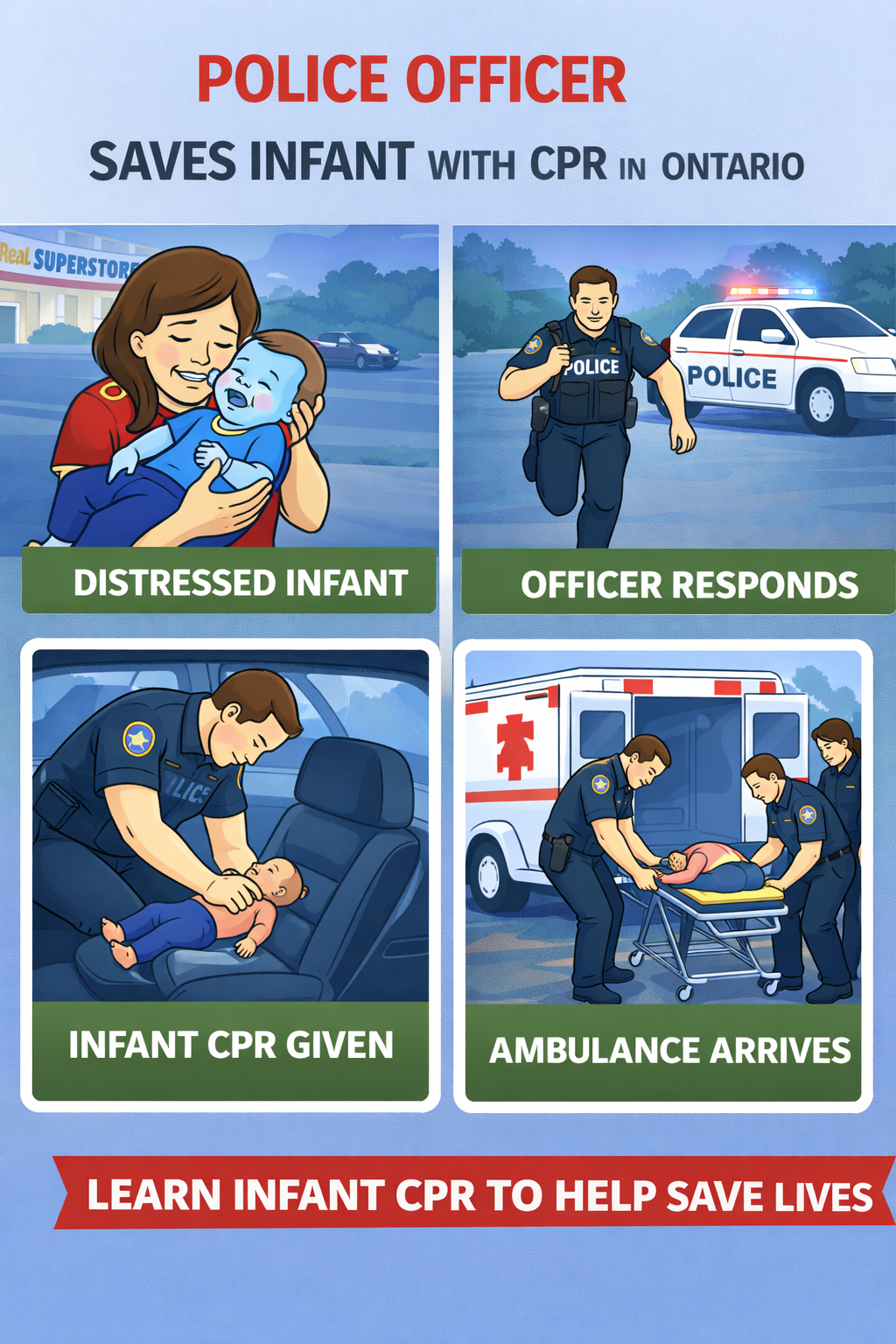
The incident occurred when a mother was shopping with her two children at a Real Canadian Superstore. As she returned to the parking lot, she noticed that her six-week-old son, Evan, began showing alarming symptoms.
According to reports, the infant began foaming at the mouth and his skin colour changed to a bluish tone, indicating a lack of oxygen.
At the same time, Halton Regional Police Constable Rick Buys was conducting a nearby traffic stop when he heard a 911 call about a child in distress. He immediately drove to the location.
When he arrived in the parking lot, the infant’s mother approached him holding the baby and asking for help.
Constable Buys quickly assessed the infant and noticed that Evan was not breathing and had no detectable pulse. Acting immediately, he placed the child on the back seat of his police cruiser and began performing CPR.
Within minutes, emergency medical services arrived to assist. By that time, the infant began regaining colour and soon started coughing and crying—an encouraging sign that breathing had returned.
The child was transported to a hospital in Oakville and later taken to The Hospital for Sick Children in Toronto for further medical evaluation.
The officer’s quick response and CPR training played an important role in stabilizing the infant until advanced medical care became available.
Signs of a Serious Medical Emergency in Infants
Infants can show different symptoms than adults during medical distress. Caregivers and responders should watch for warning signs that require immediate attention.
Possible signs include:
-
Blue or pale skin colour
-
Difficulty breathing or no breathing
-
Unresponsiveness
-
Weak or absent pulse
-
Unusual sounds such as gasping
-
Sudden limpness or lack of movement
When these symptoms occur, emergency services should be contacted immediately.
Possible Causes of Infant Breathing Emergencies
Infants may stop breathing or become unresponsive for several reasons.
Possible causes can include:
-
Airway obstruction
-
Sudden illness or infection
-
Severe allergic reactions
-
Heart rhythm disturbances
-
Medical conditions affecting breathing
Emergency responders focus first on restoring breathing and circulation while identifying the cause of the emergency.
First Aid Response and Immediate Management
If an infant becomes unresponsive and is not breathing normally, quick action can help support oxygen flow until emergency responders arrive.
General emergency response steps may include:
-
Call emergency services immediately.
-
Check responsiveness and breathing.
-
Begin infant CPR if the baby is unresponsive and not breathing normally.
-
Follow instructions provided by emergency dispatchers.
-
Continue care until paramedics arrive.
Infant CPR uses gentler compressions and techniques designed for a baby’s smaller body.
Prevention and Child Safety Awareness
While not all medical emergencies can be prevented, caregivers and families can improve preparedness through education and safety awareness.
Helpful measures may include:
-
Learning infant first aid and CPR
-
Monitoring infants closely during feeding and sleep
-
Ensuring safe sleep and childcare environments
-
Recognizing early signs of breathing difficulty
-
Seeking medical attention when infants show unusual symptoms
Prepared caregivers and trained responders can help improve outcomes during emergencies involving children.
Frequently Asked Questions
What is infant CPR?
Infant CPR is a modified version of cardiopulmonary resuscitation designed for babies under one year of age. It uses gentle chest compressions and rescue breaths suited to an infant’s body.
Why do infants sometimes turn blue during breathing emergencies?
A bluish skin colour may occur when oxygen levels in the blood drop. This can happen if breathing stops or becomes severely impaired.
Who should learn infant CPR?
Parents, caregivers, childcare providers, teachers, and anyone responsible for supervising infants may benefit from learning infant CPR.
Can police officers perform CPR?
Yes. Many police officers receive first aid and CPR training so they can assist during medical emergencies before paramedics arrive.
Why is early CPR important for infants?
Early CPR helps circulate oxygenated blood to the brain and organs when breathing or heart function stops.
Educational Note
This article is intended for general first aid awareness and public education. Learning CPR and infant emergency response techniques can help caregivers and community members respond more confidently while waiting for professional medical assistance.
About The Author

Mark Kascha
First Aid Instructor Trainer with 30+ years of experience in CPR, emergency response, and safety training across Canada.
Last reviewed: March 2026
 Support local, Canadian-owned businesses, with no connections to American corporations or partnerships.