 All-terrain vehicles (ATVs), often called quads, are commonly used in rural areas across Canada for transportation, recreation, and farm work. While these vehicles are designed for rough terrain, they can present safety risks when operated near waterways, wetlands, or uneven ground.
Across Canada, including British Columbia and communities around Vancouver, safety training programs often highlight the importance of first aid awareness and emergency preparedness when operating vehicles in outdoor or rural environments. Knowing how to respond during an emergency—especially one involving water—can help support rescue efforts until professional responders arrive.
First Aid and Workplace Safety Relevance in Vancouver and British Columbia
In British Columbia workplaces and outdoor recreation settings, first aid and CPR training are frequently encouraged for individuals who work in environments where emergency medical services may take time to reach the scene.
Industries such as agriculture, forestry, outdoor recreation, and rural operations often rely on basic first aid knowledge, including recognizing signs of distress and responding to emergencies involving water or breathing difficulties.
These skills can help individuals provide immediate assistance while arranging transportation to a medical facility or waiting for emergency services.
Scenario: ATV Incident Near Hudson Bay
In a reported rural incident in the northwest area near Hudson Bay, Saskatchewan, a young child was injured following an ATV crash involving multiple riders.
According to reports from the RCMP, seven individuals were travelling together using three ATVs. These four-wheeled vehicles, commonly referred to as quads, are frequently used for transportation in rural regions.
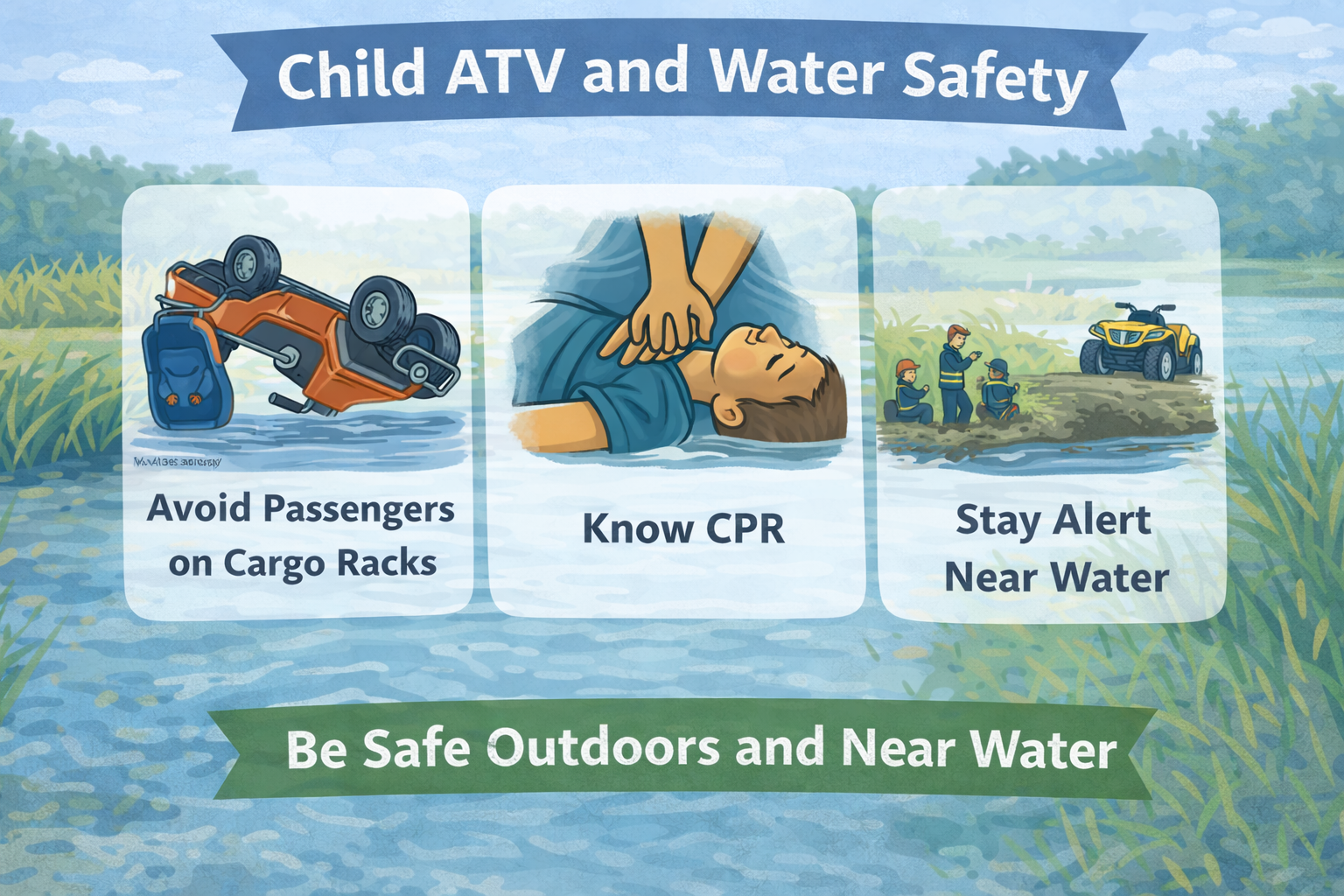
One of the ATVs had a child car seat attached to the rear cargo rack using straps. A three-year-old child was seated in the car seat while the father was operating the vehicle.
During the trip, the ATV rolled and came to rest upside down in a slough, a shallow wetland area. The child remained strapped into the car seat and was briefly submerged underwater.
Members of the group quickly pulled the child from the seat. At the time of rescue, the child was unresponsive.
Bystanders began CPR and transported the child to a healthcare facility in Hudson Bay. From there, the child was later transported by air ambulance to Saskatoon for additional medical monitoring and follow-up care.
Authorities reported that alcohol was not considered a factor in the incident, and the investigation continued while the child recovered.
Recognizing Signs of Water-Related Emergencies
Water incidents involving children can develop quickly. Signs that someone may be experiencing a serious emergency after being underwater can include:
-
Lack of responsiveness
-
Difficulty breathing or irregular breathing
-
Persistent coughing or gasping
-
Pale or bluish skin tone
-
Confusion or unusual behaviour after being removed from the water
Recognizing these signs quickly can help ensure that emergency assistance is provided as soon as possible.
First Aid Awareness in Water Emergencies
When someone is removed from the water and appears unresponsive, rapid action is important while waiting for professional medical help.
First aid training programs commonly teach responders to:
-
Call emergency services immediately
-
Check for responsiveness and breathing
-
Begin CPR if the person is unresponsive and not breathing normally
-
Continue providing assistance until trained medical responders arrive
-
Ensure the individual receives medical evaluation after a water incident
These steps are part of standard emergency response procedures taught in first aid and CPR courses.
Prevention and ATV Safety Considerations
Outdoor vehicle use requires careful planning, particularly when children are involved. Safety practices commonly recommended in ATV environments include:
-
Ensuring vehicles are designed for the number of passengers being carried
-
Avoiding attaching child seats or additional passengers to cargo racks
-
Operating ATVs at safe speeds and avoiding unstable terrain
-
Maintaining distance from water edges, wetlands, or steep slopes
-
Supervising children closely during outdoor activities involving vehicles
Across Canada’s rural and recreational environments, ATV safety awareness is an important part of injury prevention.
Frequently Asked Questions
What is a slough?
A slough is a shallow wetland or marsh-like area that may contain standing or slow-moving water. These areas can be difficult to navigate safely with vehicles.
Why are ATVs sometimes unstable on uneven terrain?
ATVs are designed for off-road use but can still tip over if they encounter steep slopes, soft ground, or sudden changes in terrain.
Why is CPR important during water emergencies?
CPR helps circulate oxygenated blood when a person is not breathing normally. Early assistance can help support vital functions until emergency responders arrive.
Are ATVs designed for passengers?
Many ATVs are designed for a single rider. Carrying passengers on cargo racks or outside designated seating areas can increase the risk of instability.
Why is first aid training helpful in rural areas?
In remote environments, emergency services may take longer to arrive. First aid knowledge helps individuals provide immediate assistance during critical moments.
Educational Note
This article is intended for general first aid and safety awareness education. Water and vehicle-related emergencies can involve complex risks, and trained emergency responders are equipped to provide advanced care. Learning first aid and CPR principles can help individuals respond more effectively when unexpected incidents occur.
About The Author

Mark Kascha
First Aid Instructor Trainer with 30+ years of experience in CPR, emergency response, and safety training across Canada.
Last reviewed: March 2026
 Support local, Canadian-owned businesses, with no connections to American corporations or partnerships.