 Medical emergencies can occur unexpectedly in many environments, including homes, workplaces, and public spaces. When someone becomes unresponsive or stops breathing normally, quick recognition and immediate assistance from bystanders can help support circulation and breathing until professional responders arrive.
Across British Columbia—including communities such as Abbotsford and Vancouver—first aid awareness and CPR training are commonly included in workplace safety programs. These skills help individuals respond calmly and effectively during unexpected situations.
First Aid and Workplace Relevance in British Columbia
Workplaces and public safety organizations throughout British Columbia often train employees in basic first aid and cardiopulmonary resuscitation (CPR). Police officers, firefighters, and other emergency personnel regularly rely on these skills when responding to calls involving injured or unresponsive individuals.
Even outside formal workplaces, CPR knowledge can be valuable in homes, community environments, or public spaces. Early assistance from bystanders or trained personnel can help stabilize someone experiencing a medical emergency until paramedics arrive.
A Realistic Scenario from Abbotsford
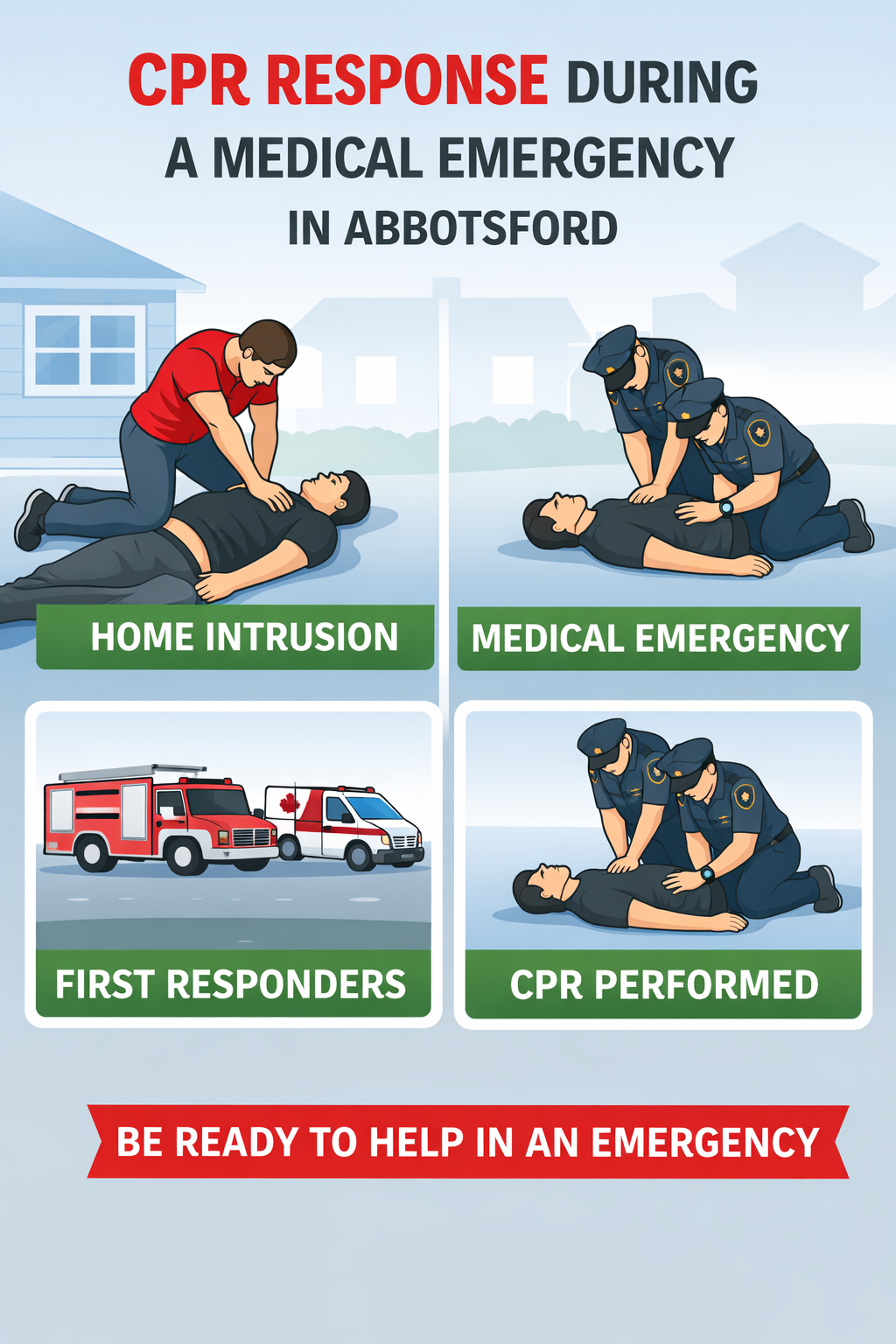
In central Abbotsford, police responded to a report of an attempted home invasion on McKenzie Road. When officers arrived at the residence, they found that a homeowner had already restrained a 19-year-old male suspect on the floor while waiting for police assistance.
After the suspect was taken into custody, officers noticed that the individual appeared to be experiencing medical distress. Responders quickly assessed the situation and began CPR when it appeared that the individual was not breathing normally.
Police officers continued providing assistance until Abbotsford Fire Rescue Service and BC Ambulance Service arrived on the scene to take over medical care. The individual was transported to a healthcare facility for further treatment.
Authorities later noted that the Independent Investigations Office (IIO) reviewed the circumstances surrounding the incident to determine whether police actions were connected to the injuries. Based on available reports, no direct link was identified, and the investigation continued under the Abbotsford Police Department’s major crime unit.
While the circumstances of the event remain under investigation, the situation demonstrates how CPR training can be used in a variety of unexpected emergencies.
Signs That Someone May Be Experiencing Medical Distress
Recognizing when someone may require urgent assistance is an important first step in emergency response. Possible signs of severe medical distress can include:
-
Unresponsiveness
-
Absence of normal breathing
-
Sudden collapse
-
Gasping or irregular breathing
-
Confusion or loss of consciousness
-
Pale or bluish skin tone
These signs may indicate that immediate assistance and emergency services are needed.
Possible Causes of Sudden Collapse
A person may suddenly become unresponsive for many different reasons. Some possible causes may include:
-
Cardiac arrest or severe heart rhythm disturbances
-
Breathing obstruction or respiratory failure
-
Drug or substance reactions
-
Traumatic injuries
-
Severe medical conditions affecting the brain or heart
In emergency situations, the exact cause may not be immediately known. The priority is to recognize the signs and provide basic life-support measures until trained medical professionals arrive.
First Aid Response and Immediate Management
When someone becomes unresponsive and is not breathing normally, bystanders may take several general first aid steps while waiting for emergency services.
Typical response actions may include:
-
Call emergency services immediately.
-
Check responsiveness and breathing.
-
Begin CPR if the person is unresponsive and not breathing normally.
-
Send someone to locate an AED if one is available nearby.
-
Continue CPR until paramedics or trained responders arrive.
These steps help support circulation and oxygen delivery to vital organs during a critical period before advanced medical care is available.
Prevention and Community Safety Awareness
While not all emergencies can be prevented, communities and workplaces can improve readiness through education and planning.
Helpful safety practices may include:
-
Encouraging CPR and first aid training for employees and community members
-
Installing AEDs in workplaces and public buildings
-
Promoting emergency response awareness in homes and neighbourhoods
-
Developing clear procedures for contacting emergency services
Preparedness helps individuals respond more confidently if a sudden medical emergency occurs.
Frequently Asked Questions
Why do police officers learn CPR?
Police officers are often first on the scene during emergencies. CPR training allows them to assist individuals experiencing cardiac arrest or other medical distress while waiting for paramedics to arrive.
What happens when someone becomes unresponsive?
When a person becomes unresponsive, it may indicate a serious medical emergency. Emergency responders typically assess breathing and circulation to determine the most appropriate next steps.
Why is early CPR important?
CPR helps maintain blood flow to the brain and vital organs when the heart stops beating effectively. Early assistance can improve the chances of survival until professional medical care is available.
What role do AEDs play during cardiac emergencies?
Automated external defibrillators (AEDs) are designed to analyze heart rhythms and deliver a shock when certain life-threatening arrhythmias occur. When used quickly, AEDs can help restore a normal heart rhythm in some cases.
Can CPR be performed by bystanders?
Many communities encourage members of the public to learn CPR. Trained bystanders can begin basic life-support measures while emergency services are on the way.
Educational Note
This article is intended for general first aid awareness and public education. Learning CPR and basic emergency response skills can help individuals respond more confidently during unexpected medical emergencies while waiting for professional assistance.
About The Author

Mark Kascha
First Aid Instructor Trainer with 30+ years of experience in CPR, emergency response, and safety training across Canada.
Last reviewed: March 2026
 Support local, Canadian-owned businesses, with no connections to American corporations or partnerships.