Scuba diving and other water activities offer unique recreational experiences but can also involve risks, particularly in large lakes or open water environments. Drowning occurs when a person cannot breathe due to submersion, preventing oxygen from reaching the lungs and brain.
In some water emergencies, cardiopulmonary resuscitation (CPR) may be attempted if a person is removed from the water and is not breathing normally. CPR helps maintain circulation while emergency responders continue advanced care.
Across Canada, including Vancouver and British Columbia, water safety and first aid awareness are often emphasized for people who participate in recreational activities such as boating, diving, and swimming.
A Real-World Scenario
 A tragic diving incident occurred at Lake Diefenbaker in Saskatchewan, a popular recreational area for boating and scuba diving.
A 46-year-old man was scuba diving with three friends near the Danielson Provincial Park boat launch when the group lost contact with him while they were approximately 180 metres offshore.
After realizing that he was missing, emergency services were contacted. RCMP officers, local emergency medical services, and STARS air ambulance crews responded to the scene.
Rescuers located the man in the water shortly afterward and brought him to shore. Emergency responders attempted life-saving measures, including CPR, but despite these efforts, the man could not be resuscitated.
According to RCMP, investigators indicated that the death was not considered suspicious, and there was no evidence suggesting drugs or alcohol were contributing factors.
Incidents like this highlight the importance of safety awareness and emergency preparedness during recreational activities in open water.
Signs of a Drowning Emergency
Drowning emergencies can develop quickly, particularly in open water environments.
Possible warning signs include:
-
A person disappearing beneath the water
-
Difficulty staying afloat
-
Weak or uncoordinated movements
-
Unresponsiveness when removed from the water
-
Lack of normal breathing
Recognizing these signs early can help ensure emergency services are contacted quickly.
Risks Associated With Scuba Diving and Open Water
While scuba diving is generally safe when proper training and equipment are used, several factors may increase risk.
Potential contributing factors include:
-
Equipment malfunction
-
Disorientation underwater
-
Fatigue or exhaustion
-
Strong currents or limited visibility
-
Medical emergencies while diving
Divers are typically trained to follow safety procedures designed to reduce these risks.
First Aid Awareness During Water Emergencies
First aid training provides general guidance for responding to drowning emergencies.
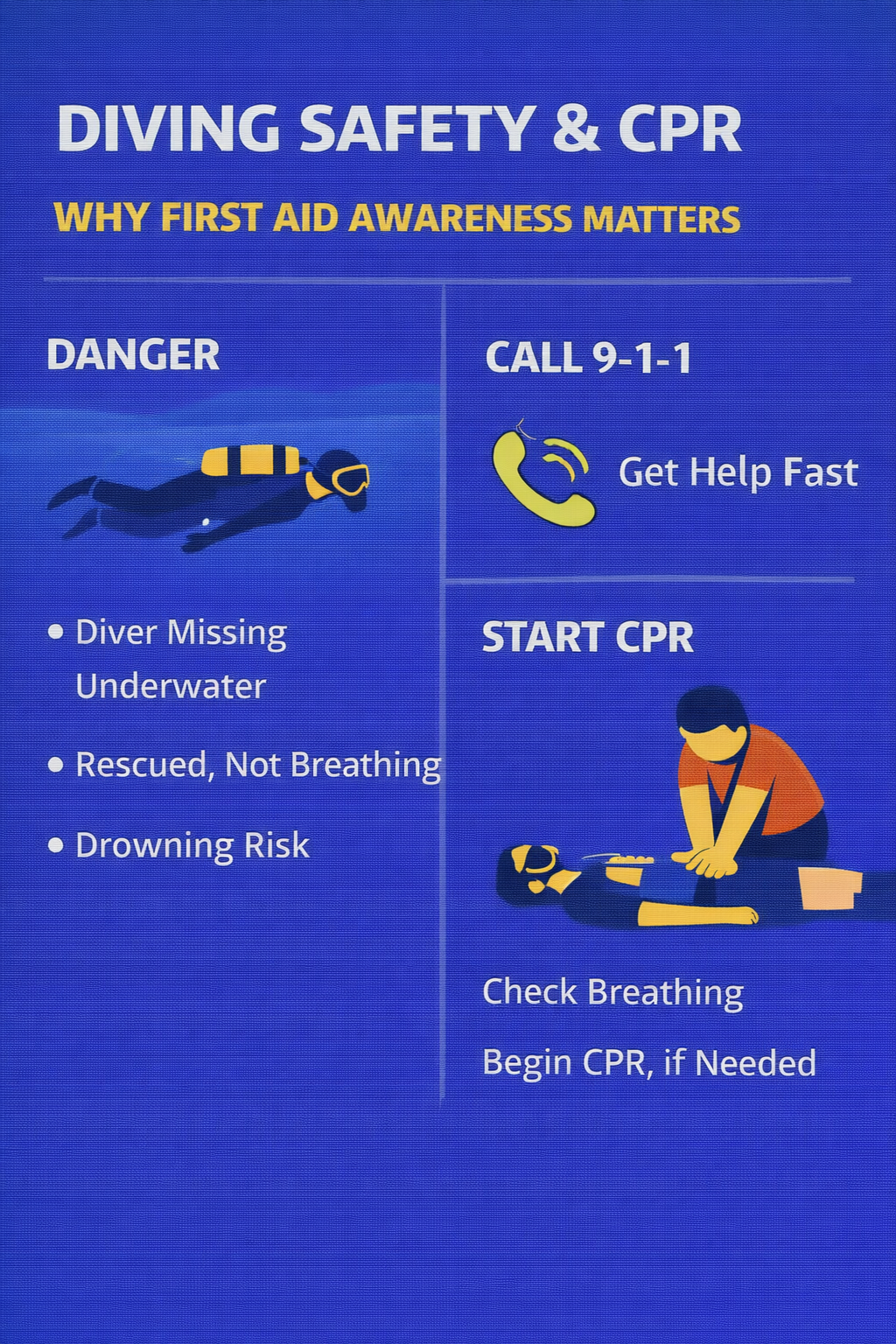
Typical response steps may include:
-
Call emergency services (9-1-1 in Canada).
-
Ensure the area is safe before attempting a rescue.
-
If the person is removed from the water, check responsiveness and breathing.
-
If breathing is absent or abnormal, CPR may be started if it is safe to do so.
-
Continue CPR until emergency responders arrive.
Prompt response may help support the person while professional rescuers provide advanced care.
Prevention and Water Safety Considerations
People who participate in diving or water recreation can reduce risks by following safety guidelines.
Helpful precautions include:
-
Diving with trained partners or groups
-
Using properly maintained diving equipment
-
Monitoring water conditions and visibility
-
Staying within trained depth limits
-
Learning first aid and CPR skills
Across British Columbia and Vancouver, water safety education is commonly promoted because many residents and visitors participate in recreational water activities.
FAQ
What should someone do if a diver goes missing underwater?
Emergency services should be contacted immediately, and trained rescue personnel should conduct the search whenever possible.
Why is CPR used during drowning emergencies?
If a person stops breathing after being submerged, CPR may help maintain circulation until emergency responders arrive.
Is scuba diving generally safe?
When proper training, equipment, and safety procedures are followed, scuba diving is considered a safe recreational activity.
Why is first aid training recommended for water recreation?
Training helps individuals recognize emergencies and understand safe response steps while waiting for professional responders.
Are large lakes more challenging for water rescues?
Yes. Distance from shore, changing water conditions, and limited visibility can make rescues more difficult.
Educational Note
This article is intended for general first aid awareness and water safety education. Learning CPR and first aid through certified training programs can help individuals recognize emergencies and respond safely until emergency services arrive.
About The Author

Mark Kascha
First Aid Instructor Trainer with 30+ years of experience in CPR, emergency response, and safety training across Canada.
Last reviewed: March 2026
 Support local, Canadian-owned businesses, with no connections to American corporations or partnerships.