 Cardiopulmonary resuscitation (CPR) is an emergency response technique used when a person is not breathing normally or their heart may have stopped. It helps circulate oxygenated blood through the body until professional medical care arrives. Across British Columbia, including Vancouver and Greater Victoria, CPR training is widely promoted through workplace safety programs and community first aid courses because early assistance can make a critical difference during medical emergencies.
While CPR is often associated with cardiac events, it may also be attempted in other serious emergencies where someone becomes unresponsive. Understanding when CPR may be needed is part of public first aid education and workplace emergency preparedness.
A Realistic Emergency Response Scenario
In a reported incident in Esquimalt, British Columbia, emergency crews responded to an apartment building on the 600-block of Grenville Avenue after reports of a violent disturbance late in the evening.
Police officers arriving at the scene encountered a chaotic situation where one man was unresponsive and suffering from severe injuries. Officers began CPR while waiting for paramedics to arrive. Emergency medical personnel later transported the individual to a healthcare facility, where he later died from his injuries.
A second individual at the scene was also injured but survived and was expected to recover.
Authorities later charged a 49-year-old man in connection with the incident. While the investigation and legal proceedings were handled by law enforcement, the event also highlighted the role that immediate emergency response — including CPR — can play when someone is found unresponsive.
When CPR May Be Needed
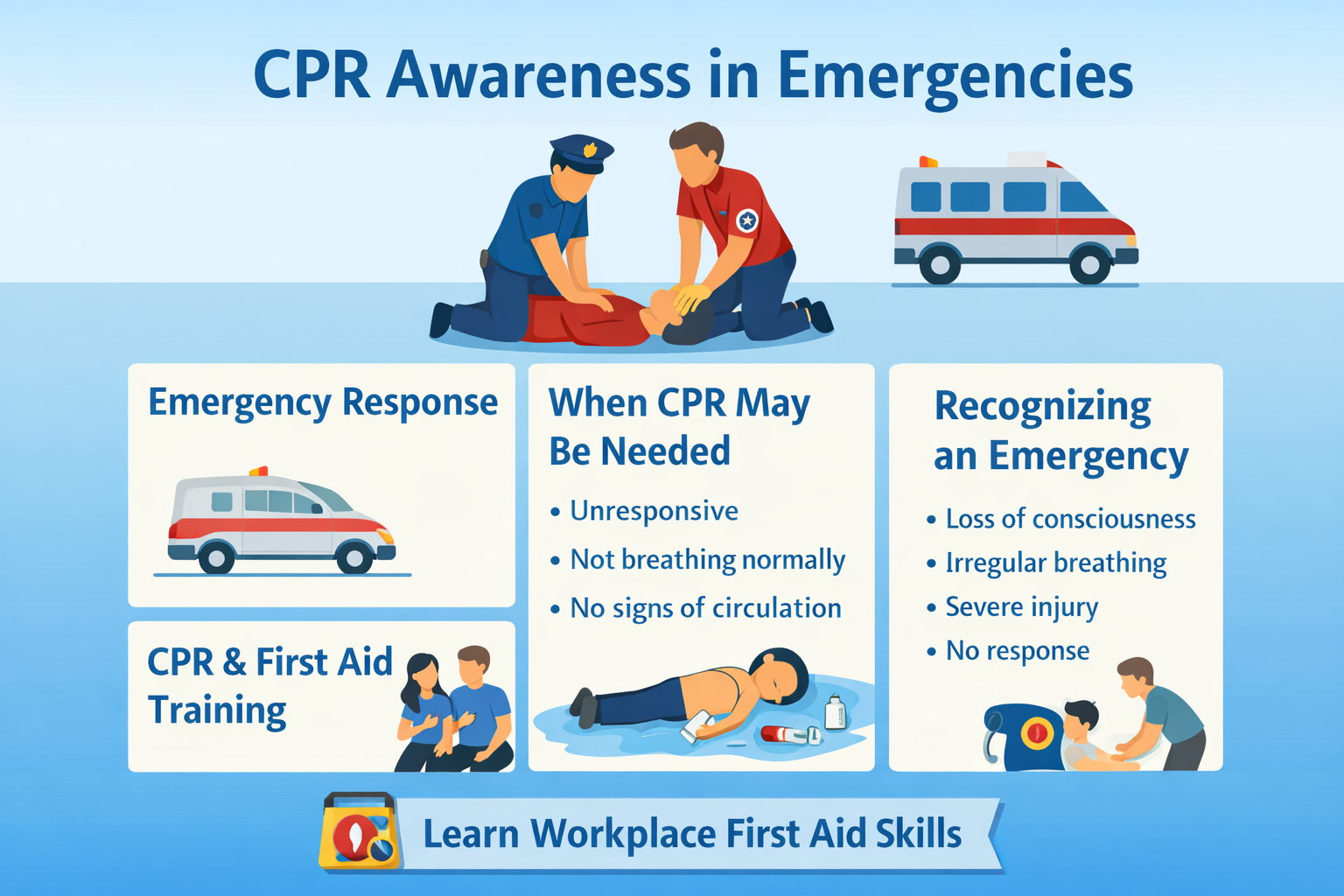
CPR may be considered when a person:
-
Is unresponsive and does not wake when spoken to or gently shaken
-
Is not breathing normally or is only gasping
-
Shows no obvious signs of circulation
Situations that can lead to someone becoming unresponsive may include medical emergencies, injuries, drowning incidents, or other serious events. In many communities across Vancouver and British Columbia, emergency dispatchers may guide callers through CPR steps while paramedics are on their way.
Recognizing a Medical Emergency
A person who requires urgent assistance may show signs such as:
-
Loss of consciousness
-
Slow, irregular, or absent breathing
-
Severe injury or trauma
-
Pale or bluish skin tone
-
No response to voice or touch
Recognizing these signs quickly and contacting emergency services immediately is an important step in the chain of survival.
Emergency Response and First Aid Awareness
In emergencies, trained responders or bystanders may begin CPR while waiting for paramedics. In British Columbia, emergency dispatch centres can often provide guidance to callers until professional help arrives.
First aid education emphasizes several key priorities during emergencies:
-
Ensuring personal safety before helping others
-
Calling emergency services immediately
-
Providing assistance within one’s level of training
-
Continuing care until trained responders arrive
Many workplaces in Vancouver and across BC encourage staff to take certified first aid and CPR training as part of occupational health and safety preparedness.
Prevention and Workplace Safety Considerations
Although violent incidents are unpredictable, workplaces and residential buildings can support safety awareness through preparedness planning.
Considerations may include:
-
Workplace emergency response training
-
Clear procedures for contacting emergency services
-
First aid training for staff and supervisors
-
Awareness of building safety protocols
-
Access to first aid supplies or automated external defibrillators (AEDs) in some workplaces
Community education about CPR and emergency response helps create safer environments both in workplaces and public spaces.
Frequently Asked Questions
What does CPR do during an emergency?
CPR helps move oxygenated blood through the body when the heart may have stopped or when breathing has stopped. This temporary circulation helps support vital organs until professional medical care arrives.
Who can perform CPR in an emergency?
Anyone trained in CPR may attempt to assist if it is safe to do so. In many situations, emergency dispatchers can provide guidance to callers while paramedics are on the way.
Is CPR only used during heart attacks?
No. CPR may be attempted in many situations where someone becomes unresponsive and is not breathing normally, including medical emergencies, drowning, or serious injuries.
Why is CPR training recommended for workplaces?
Workplaces may experience medical emergencies or injuries. CPR training helps staff recognize emergencies and respond appropriately until emergency services arrive.
Does CPR guarantee survival?
CPR does not guarantee survival, but early assistance can improve the chances of maintaining circulation until professional medical care is available.
Educational Note
This article is intended for general public education about first aid awareness and emergency response. Learning first aid and CPR can help individuals recognize emergencies and provide assistance safely until trained medical responders arrive.
About The Author

Mark Kascha
First Aid Instructor Trainer with 30+ years of experience in CPR, emergency response, and safety training across Canada.
Last reviewed: March 2026
 Support local, Canadian-owned businesses, with no connections to American corporations or partnerships.