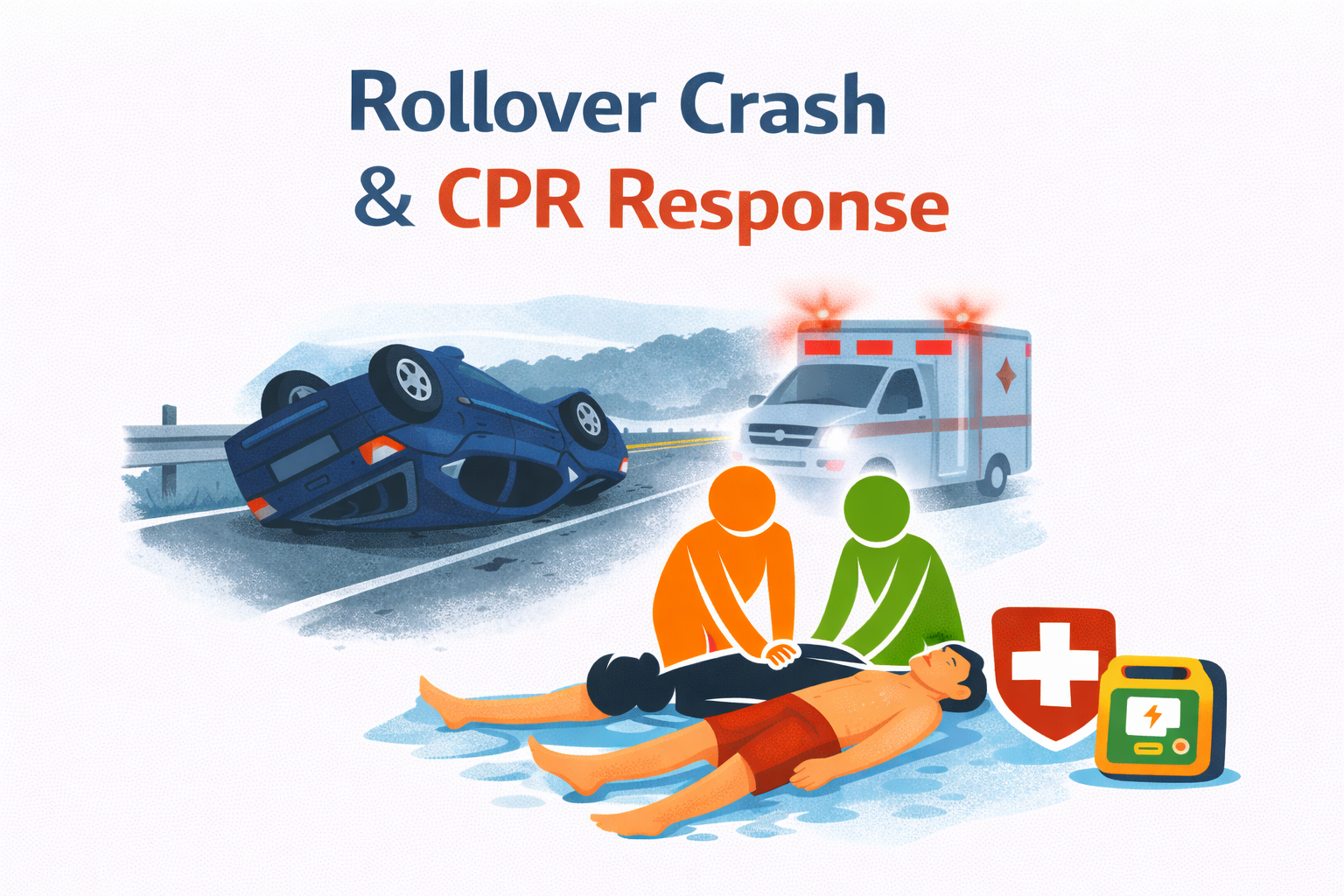
 Rollover vehicle crashes are among the more serious types of traffic incidents because the vehicle may flip onto its side or roof, increasing the risk of severe injury to occupants. These collisions often require rapid response from emergency crews and specialized rescue equipment.
In Vancouver and across British Columbia, highways such as Highway 1 through the Fraser Valley and Abbotsford carry heavy traffic throughout the day and night. When crashes occur on these roads, first aid awareness and CPR knowledge can play an important role in supporting injured individuals until paramedics arrive.
Emergency responders often rely on coordinated efforts between firefighters, police, and ambulance services to manage these incidents safely.
A Realistic Scenario: Rollover Crash on Highway 1
In a reported incident in Abbotsford, emergency services responded to a rollover collision on Highway 1 near the Whatcom Road exit during the early morning hours.
Responders arriving at the scene found a vehicle resting upside down in the highway median. Firefighters, RCMP officers, and paramedics worked together to secure the crash site and assist the occupants.
Video footage from the scene showed paramedics providing emergency medical care inside one of the ambulances, including what appeared to be chest compressions during resuscitation efforts. One of the individuals involved in the crash was transported to Abbotsford Regional Hospital for further treatment.
Authorities did not confirm the exact nature of the injuries at the time, and the circumstances of the crash remained under investigation.
Incidents like this highlight how rapid emergency response and life-saving techniques such as CPR may be used during serious traffic collisions.
Signs of Serious Injury After a Vehicle Rollover
Vehicle rollovers can cause significant trauma due to the force and motion involved during the crash.
Possible signs of serious injury may include:
-
Loss of consciousness or unresponsiveness
-
Difficulty breathing or abnormal breathing
-
Severe bleeding or visible injuries
-
Confusion or disorientation
-
Chest or head trauma
-
Pale or clammy skin indicating possible shock
Emergency responders assess these symptoms quickly to determine the most appropriate care.
Causes and Risk Factors in Rollover Crashes
Several factors can increase the risk of rollover incidents, particularly on highways.
Common contributing factors may include:
-
Sudden steering maneuvers at high speed
-
Collisions with other vehicles or roadside objects
-
Slippery road conditions or poor weather
-
Vehicle instability or mechanical issues
-
Driver distraction or fatigue
Rollover crashes often require specialized rescue procedures to safely access and assist the vehicle occupants.
First Aid Response and CPR Awareness
When serious injuries occur at a crash scene, trained responders focus on scene safety and immediate medical assessment.
First aid training typically teaches individuals to:
-
Ensure the crash scene is safe before approaching
-
Call emergency services immediately
-
Avoid moving injured individuals unless necessary for safety
-
Monitor breathing and responsiveness
-
Begin CPR if a person is unresponsive and not breathing normally, if trained to do so
-
Continue care until emergency responders arrive
In some locations, automated external defibrillators (AEDs) may also be available to assist with cardiac emergencies.
Early intervention can help support circulation and oxygen delivery to vital organs while professional medical care is on the way.
Prevention and Road Safety Considerations
Reducing serious highway crashes requires attention from both drivers and transportation safety programs.
Important road safety reminders include:
-
Maintaining safe speeds appropriate for road conditions
-
Avoiding distractions such as mobile devices while driving
-
Wearing seat belts properly
-
Allowing sufficient following distance between vehicles
-
Remaining alert during nighttime or long-distance driving
Workplace safety programs in British Columbia often include first aid and CPR training to help employees respond appropriately if an emergency occurs while travelling or working near roadways.
FAQ
What is a rollover crash?
A rollover crash occurs when a vehicle tips onto its side or roof during a collision or sudden maneuver. These incidents can increase the likelihood of serious injury due to the forces involved.
Why might CPR be performed after a vehicle collision?
CPR may be used if someone becomes unresponsive and is not breathing normally. The technique helps circulate oxygenated blood to vital organs until advanced medical care arrives.
Why do several emergency services respond to highway crashes?
Serious collisions often require multiple responders. Police manage traffic and investigations, firefighters assist with rescue and vehicle stabilization, and paramedics provide medical care.
Why are rollover crashes considered dangerous?
Rollover crashes can involve multiple impacts and sudden movements inside the vehicle, which can increase the risk of injuries to occupants.
Why is CPR training recommended for the public and workplaces?
CPR training helps individuals recognize cardiac emergencies and respond appropriately while waiting for emergency medical professionals.
Educational Note:
This article is intended for general first aid awareness and public safety education. Learning CPR and first aid skills can help individuals recognize emergencies and provide supportive assistance until trained emergency services arrive.
About The Author

Mark Kascha
First Aid Instructor Trainer with 30+ years of experience in CPR, emergency response, and safety training across Canada.
Last reviewed: March 2026
 Support local, Canadian-owned businesses, with no connections to American corporations or partnerships.