
Understanding Cardiac Emergencies During Sports
Cardiac arrest can occur suddenly, even during recreational or competitive sports. When a person collapses, becomes unresponsive, and is not breathing normally, immediate CPR and access to an AED can be critical.
Quick response in these situations can help maintain circulation and improve survival outcomes.
First Aid & Workplace Relevance in Vancouver and the Lower Mainland
Across Vancouver, Burnaby, Surrey, and the Lower Mainland, sports facilities, recreation centres, and community events are common settings where medical emergencies may occur.
This highlights the importance of:
-
CPR and AED training for staff, coaches, and volunteers
-
Having accessible defibrillators in sports venues
Workplace and community training ensures that responders are ready when incidents happen.
Real Incident Overview
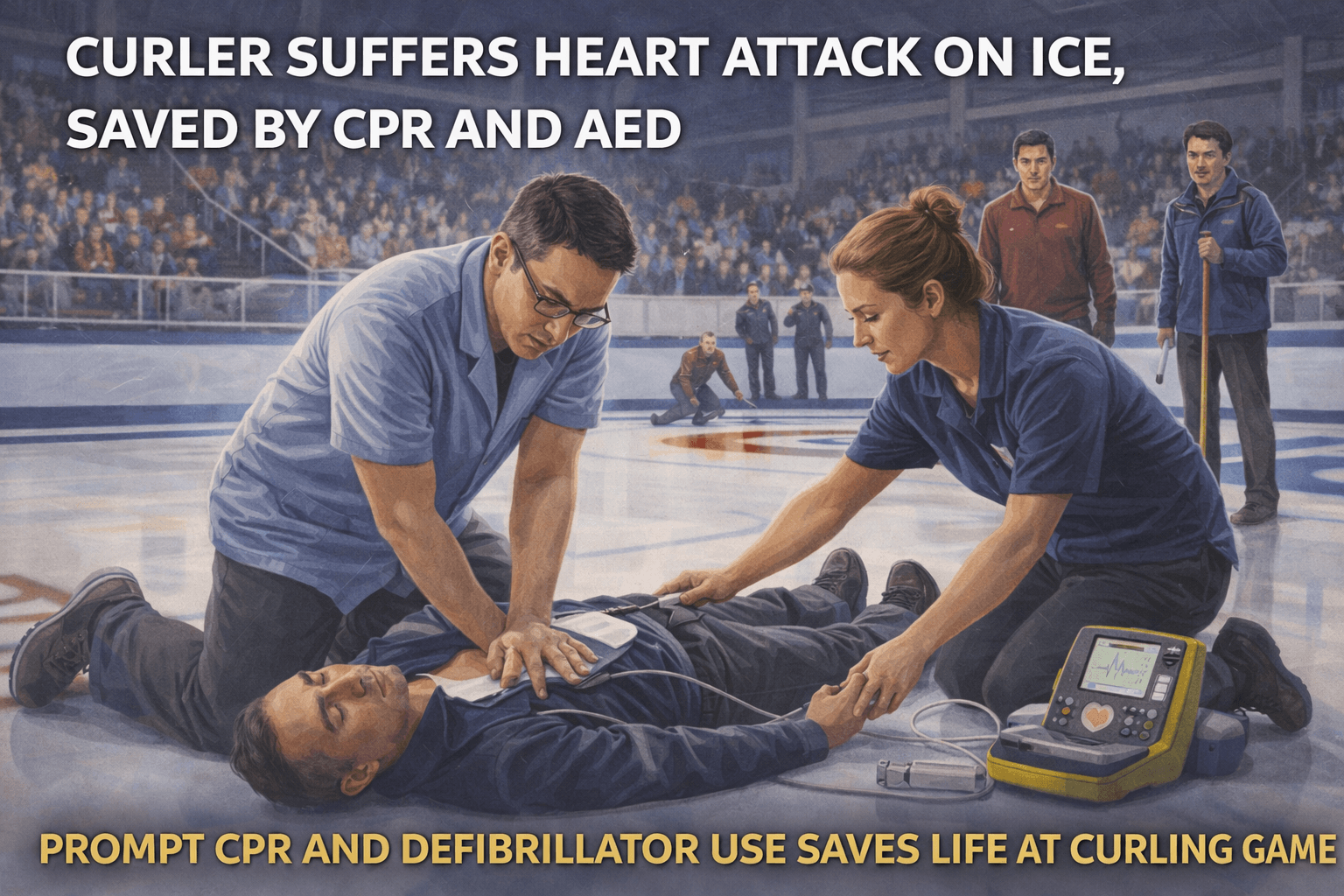 During the Traveler’s Provincial Curling Championship in Moncton, a well-known curler from the Saint John region experienced a sudden medical emergency mid-game.
According to teammate Adib Saman, the player had just completed his first shot and appeared fine. As he prepared for his next move, he suddenly collapsed on the ice.
Initially, those nearby thought it might be a minor injury, such as a knee issue. However, it quickly became clear that the situation was more serious as he remained motionless and unresponsive.
Fortunately, trained medical personnel were present at the event. A doctor and a nurse who were participating in the tournament responded immediately and began providing first aid care.
With prompt CPR and the use of a nearby automated external defibrillator (AED), the man regained consciousness. Before being transported to a healthcare facility, he was able to briefly respond to those around him, providing reassurance to teammates and spectators.
The Role of CPR and AED Use
This incident demonstrates how CPR and AEDs work together:
-
CPR helps maintain blood flow to vital organs
-
AEDs can help restore a normal heart rhythm
-
Early use of both increases the chance of survival
Having both trained responders and accessible equipment played a key role in this outcome.
Signs of Cardiac Arrest
A person experiencing cardiac arrest may:
-
Collapse suddenly
-
Be unresponsive
-
Not breathe normally
-
Show no signs of movement or awareness
Recognizing these signs quickly allows for faster intervention.
First Aid Response: Cardiac Emergency in Sports Settings
If someone collapses during a sporting event:
-
Call 911 immediately
-
Check responsiveness and breathing
-
Begin CPR (chest compressions)
-
Retrieve and use an AED if available
-
Continue care until help arrives
Coordinated action among bystanders can improve response effectiveness.
Why AED Access Matters in Public Spaces
This incident reinforces:
-
The importance of AED availability in sports facilities
-
The value of trained individuals in public settings
-
The need for clear emergency response plans
Prepared venues can respond more effectively to unexpected emergencies.
Prevention and Safety Considerations
To improve safety in sports and recreation settings:
-
Ensure AEDs are accessible and clearly marked
-
Train staff and participants in CPR and AED use
-
Include emergency response planning for events
-
Encourage awareness of personal health conditions
Prepared environments support faster response times.
Frequently Asked Questions
Can cardiac arrest happen during sports?
Yes. It can occur even in active individuals.
Why are AEDs important in sports facilities?
They help restore heart rhythm during certain cardiac emergencies.
Do you need training to use an AED?
AEDs are designed to guide users with clear instructions.
What should bystanders do first?
Call 911 and begin CPR if the person is unresponsive.
Should all recreation centres have AEDs?
Many facilities include AEDs as part of their safety planning.
Educational Note
This article is intended for general first aid awareness and workplace safety education in Canada. CPR and AED training can help individuals respond effectively during emergencies.
About The Author

Mark Kascha
First Aid Instructor Trainer with 30+ years of experience in CPR, emergency response, and safety training across Canada.
Last reviewed: March 2026
 Support local, Canadian-owned businesses, with no connections to American corporations or partnerships.