 Cardiac arrest can occur suddenly and without warning, even during routine daily activities. When the heart stops pumping effectively, blood circulation to the brain and other vital organs stops.
Cardiopulmonary resuscitation (CPR) is a first aid technique used when a person becomes unresponsive and is not breathing normally. In Canada, including Vancouver and British Columbia workplaces, CPR and AED training are widely taught as part of occupational safety, community preparedness, and public health education.
Early recognition of cardiac arrest and immediate CPR can help maintain circulation until emergency medical services arrive.
A Medical Emergency During a First Aid Lesson
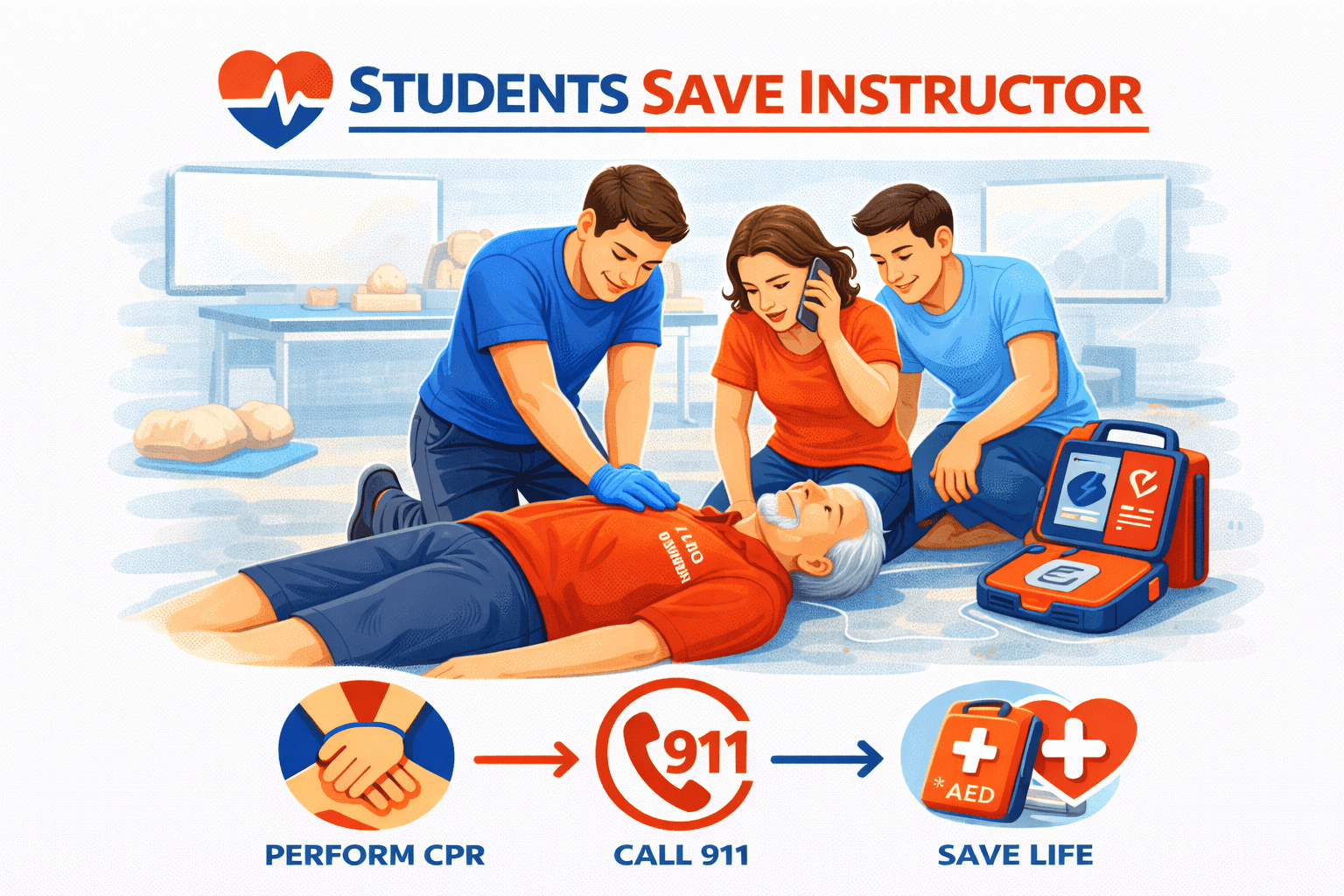
David Knowles, a 77-year-old first aid instructor and retired nurse from England, was teaching a CPR class to members of his church group when he suddenly began to feel unwell.
He reportedly became dizzy and weak shortly after starting his lesson on CPR.
At first, some students believed he might be demonstrating a training scenario. However, Knowles quickly instructed them on what to do before losing consciousness.
Within moments, he went into cardiac arrest during the class.
Students Put Their Training Into Action
The students recognized the seriousness of the situation and immediately began responding.
One student called emergency services, while others started CPR chest compressions. Their quick action helped maintain circulation while waiting for paramedics to arrive.
Emergency responders continued advanced medical care and transported Knowles to a hospital.
Recovery After Emergency Treatment
Following the incident, Knowles was placed into a medically induced coma as doctors monitored his condition and supported his recovery.
Several weeks later, he was discharged from hospital and continued recovering at home.
Knowles later expressed gratitude to his students, explaining that their quick response and willingness to act likely saved his life.
Why CPR Training Matters
This incident highlights an important reality: emergencies can occur anywhere, including during training sessions themselves.
Across Canada, cardiac arrest is one of the leading causes of sudden medical emergencies outside hospitals. Because emergency responders may take several minutes to arrive, bystanders often play a critical role in the early stages of care.
Learning CPR helps people recognize cardiac emergencies and respond until professional help arrives.
Frequently Asked Questions
What is cardiopulmonary resuscitation (CPR)?
CPR is a first aid technique used when someone becomes unresponsive and is not breathing normally. It involves chest compressions that help maintain blood circulation until emergency responders arrive.
What is cardiac arrest?
Cardiac arrest occurs when the heart suddenly stops pumping effectively. Without immediate help, it can quickly become life-threatening.
Why is early CPR important?
Early CPR helps maintain circulation to the brain and other vital organs while waiting for emergency medical services.
What is an automated external defibrillator (AED)?
An AED is a portable device that analyzes heart rhythms and may deliver an electrical shock to help restore a normal heartbeat in certain cardiac emergencies.
Where can Canadians learn CPR and AED skills?
CPR and AED training are widely available through certified first aid training providers, workplace safety programs, and community organizations across Canada.
Educational Note
This article is intended for general public education about first aid awareness and emergency preparedness. CPR training helps individuals understand how to recognize emergencies and provide assistance while waiting for trained emergency medical services.
About The Author

Mark Kascha
First Aid Instructor Trainer with 30+ years of experience in CPR, emergency response, and safety training across Canada.
Last reviewed: March 2026
 Support local, Canadian-owned businesses, with no connections to American corporations or partnerships.