 Cardiopulmonary resuscitation (CPR) is an emergency first aid technique used when a person’s heart stops beating or when breathing becomes ineffective. CPR helps maintain blood circulation and oxygen flow to the brain and other vital organs until advanced medical care can be provided.
Across Abbotsford, Vancouver, Surrey, and communities throughout the Lower Mainland of British Columbia, emergency responders such as police officers, firefighters, and paramedics are trained in CPR. These skills allow them to provide immediate care during situations where a person is found unconscious or in cardiac arrest.
First Aid Awareness in British Columbia Communities
In many emergencies, the first few minutes are critical. Police officers and other first responders often arrive quickly at the scene of medical incidents and may begin first aid before paramedics arrive.
For this reason, CPR training is widely encouraged not only for emergency personnel but also for workplaces, community members, and families throughout British Columbia.
Scenario: Emergency Response in Abbotsford
An incident in Abbotsford, British Columbia, prompted an investigation after a man died following a medical emergency.
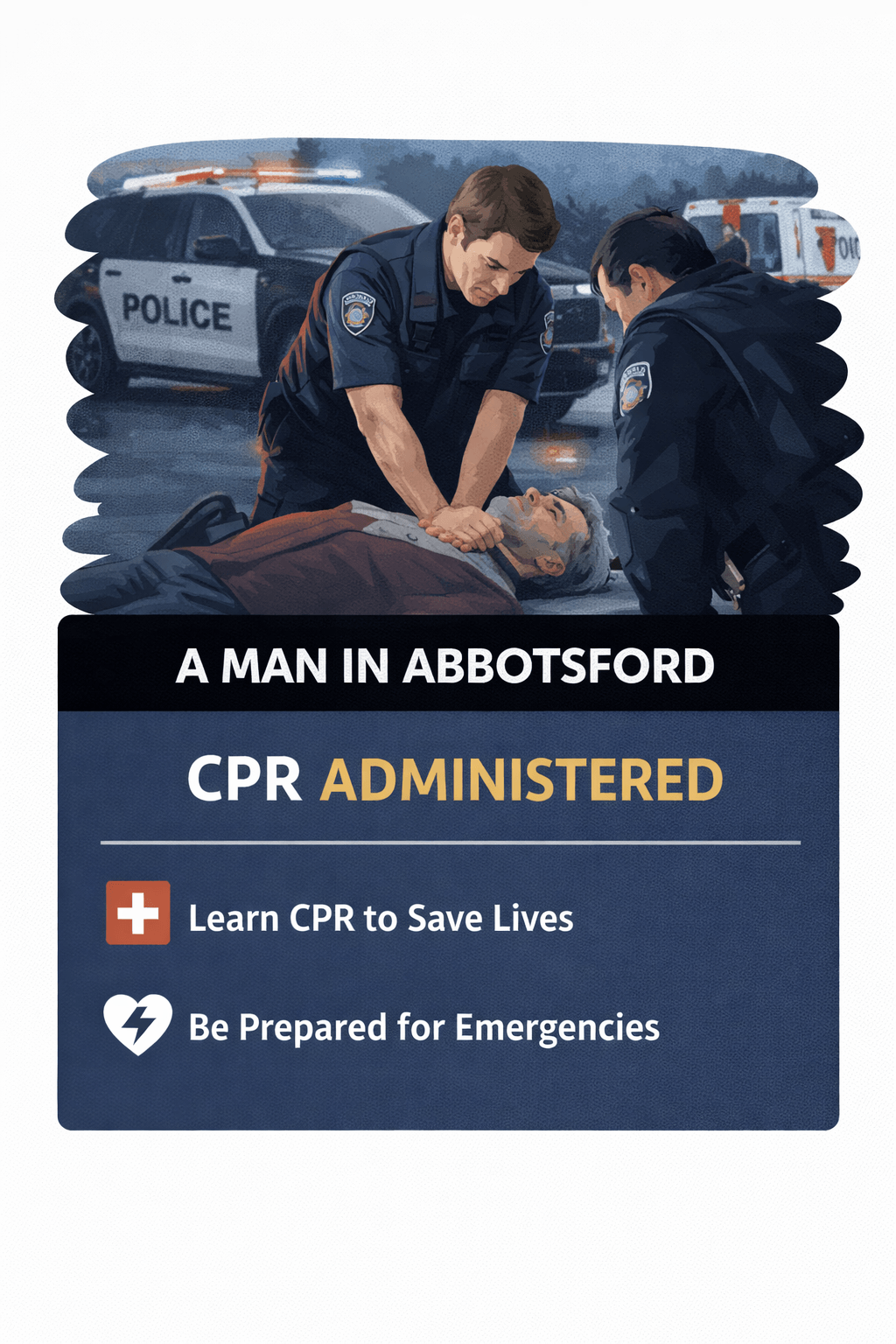
According to reports, police officers responded to a call regarding a disturbance along South Fraser Highway. When officers arrived, they found a 54-year-old man unconscious at the scene.
Recognizing the seriousness of the situation, officers immediately began cardiopulmonary resuscitation (CPR) while waiting for paramedics to arrive.
Emergency medical services later transported the man to hospital for further treatment. Despite the efforts of responders, the individual later died.
Because the incident involved police response, the Independent Investigations Office (IIO) of British Columbia reviewed the situation to determine whether the actions of police played a role in the death. After reviewing the circumstances, the IIO determined there was no connection between the man’s death and the actions or inaction of police officers.
Authorities later confirmed that the Integrated Homicide Investigation Team (IHIT) would examine the circumstances surrounding the incident.
The event highlights how emergency responders may provide immediate first aid when someone is found unconscious during a public emergency.
Recognizing When CPR May Be Needed
CPR may be required when a person becomes unresponsive and stops breathing normally. Signs that CPR may be needed can include:
-
Loss of consciousness
-
No visible breathing or only gasping breaths
-
No detectable pulse
-
Sudden collapse
-
Pale or bluish skin tone
When these signs occur, emergency services should be contacted immediately and CPR may be started by trained responders.
How CPR Supports the Body During Cardiac Arrest
When the heart stops pumping effectively, oxygen cannot circulate throughout the body. CPR helps support vital functions by:
-
Providing chest compressions that circulate blood
-
Helping oxygen reach the brain and other organs
-
Maintaining circulation until advanced medical care arrives
-
Supporting survival during cardiac arrest
Early CPR is a key step in the chain of survival during medical emergencies.
First Aid Response in Public Emergencies
People trained in CPR and first aid may assist during emergencies by:
-
Calling emergency services immediately
-
Checking for responsiveness and breathing
-
Beginning CPR if the person is unresponsive and not breathing normally
-
Continuing care until paramedics arrive
-
Following guidance provided by emergency dispatchers if available
Prompt action can help support a person experiencing a life-threatening medical emergency.
Community Preparedness and First Aid Training
Prepared communities are better able to respond when emergencies occur. Helpful safety measures include:
-
Encouraging CPR and first aid training in workplaces
-
Teaching emergency response skills in community programs
-
Increasing awareness about cardiac arrest and emergency response
-
Supporting public access to automated external defibrillators (AEDs)
Across Abbotsford and the Lower Mainland, many organizations offer CPR and first aid training to help residents feel more confident responding during emergencies.
Frequently Asked Questions
What is CPR used for?
CPR is used during emergencies when a person’s heart stops beating or breathing becomes ineffective. It helps maintain circulation until professional medical care is available.
Can police officers perform CPR?
Yes. Many police officers receive CPR and first aid training so they can assist individuals during medical emergencies.
Why is immediate CPR important?
Early CPR helps maintain oxygen flow to the brain and other vital organs during cardiac arrest.
What should someone do if they find an unconscious person?
Emergency services should be contacted immediately. A trained person may begin CPR if the individual is not breathing normally.
Should community members learn CPR?
Many safety organizations encourage CPR training because emergencies can occur unexpectedly in homes, workplaces, and public spaces.
Educational Note
This article is intended for general public education about CPR awareness and emergency preparedness. Participating in recognized first aid and CPR training can help individuals respond more confidently during medical emergencies.
About The Author

Mark Kascha
First Aid Instructor Trainer with 30+ years of experience in CPR, emergency response, and safety training across Canada.
Last reviewed: March 2026
 Support local, Canadian-owned businesses, with no connections to American corporations or partnerships.