 Sudden cardiac arrest can happen without warning, even during everyday activities such as recreational sports or visits to community facilities. When the heart stops pumping effectively, oxygen can no longer reach the brain and vital organs.
Cardiopulmonary resuscitation (CPR) is a first aid technique used when a person becomes unresponsive and is not breathing normally. Across Canada, including Vancouver and British Columbia, CPR and AED (automated external defibrillator) training are key components of workplace first aid programs and community safety education.
Quick action by bystanders and trained staff can help provide life-saving assistance during the critical minutes before paramedics arrive.
Emergency Preparedness in Recreation Facilities
Community arenas, sports complexes, and recreation centres across Canada increasingly install automated external defibrillators and train staff in emergency response procedures.
First aid training programs commonly teach participants to:
-
Recognize signs of cardiac arrest
-
Call emergency services immediately
-
Begin chest compressions
-
Retrieve and use an AED if available
-
Continue care until paramedics arrive
Having trained staff and accessible emergency equipment helps ensure that help can be provided quickly.
A Medical Emergency at Howard Darwin Centennial Arena
A medical emergency occurred at Nepean’s Howard Darwin Centennial Arena when a 56-year-old man experienced a serious cardiac event.
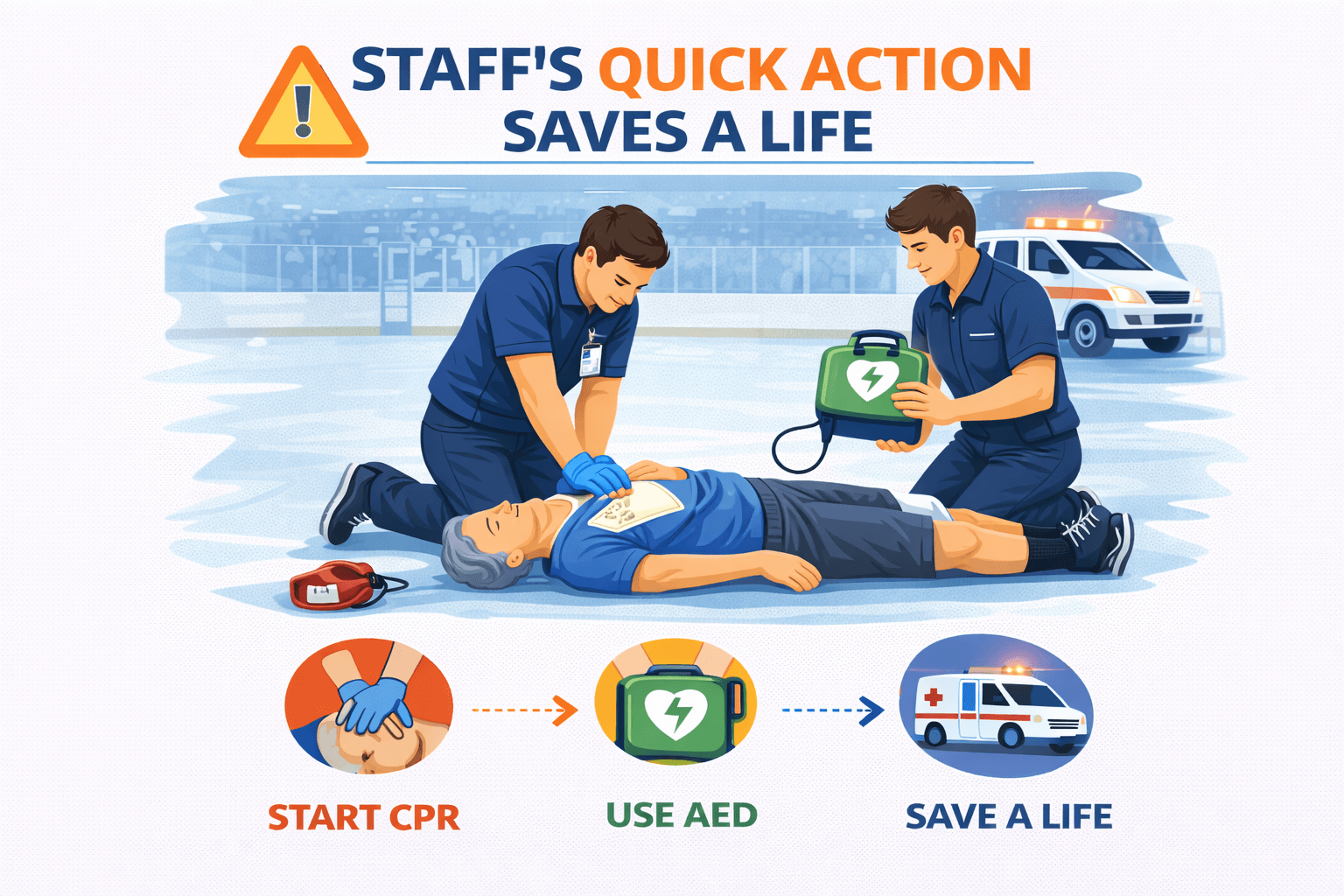
Arena staff and nearby civilians quickly recognized that the man was in distress. They immediately began providing CPR while another person retrieved an automated external defibrillator located within the facility.
Before paramedics arrived, the AED was applied and used to deliver a shock to help restore the man’s heart rhythm.
When emergency medical services reached the arena, the man had regained a pulse and was breathing on his own. Paramedics continued treatment and transported him to hospital for further care.
Hospital officials later reported that he was listed in serious but stable condition.
The quick actions of the arena staff and bystanders helped provide early life-saving care during the emergency.
Recognizing Signs of Cardiac Arrest
Cardiac arrest can occur suddenly and may include symptoms such as:
-
Sudden collapse
-
Loss of responsiveness
-
Abnormal or absent breathing
-
Pale or grey skin colour
Recognizing these warning signs quickly allows bystanders to contact emergency services and begin CPR.
Why CPR and AED Use Are Important
During cardiac arrest, the heart stops pumping blood effectively. Without circulation, oxygen supply to the brain and other organs begins to decrease within minutes.
CPR helps maintain blood circulation during this critical period. An AED can analyze the heart’s rhythm and deliver an electrical shock if needed to help restore a normal heartbeat.
Emergency response organizations across Canada emphasize that early CPR combined with rapid AED use can significantly improve survival outcomes in certain cardiac emergencies.
Prevention and Community Emergency Preparedness
Communities and recreation facilities can support emergency readiness by:
-
Installing AED devices in public locations
-
Training staff in CPR and first aid
-
Promoting awareness of cardiac emergency symptoms
-
Encouraging public participation in CPR training programs
Prepared facilities and trained individuals can help ensure faster response during emergencies.
Frequently Asked Questions
What is cardiopulmonary resuscitation (CPR)?
CPR is a first aid technique used when a person becomes unresponsive and stops breathing normally. It helps maintain blood circulation until professional medical care arrives.
What is an automated external defibrillator (AED)?
An AED is a portable device that analyzes heart rhythms and may deliver an electrical shock to help restore a normal heartbeat during certain cardiac emergencies.
Are AEDs commonly available in public places?
Yes. Many community centres, sports arenas, airports, and workplaces across Canada now maintain AED devices for emergency use.
Who can use an AED during an emergency?
AED devices are designed to guide users with voice prompts, allowing trained bystanders or staff to use them during emergencies.
Where can people learn CPR and AED skills in Canada?
Training programs are widely available through workplace safety providers, community organizations, and certified first aid training centres across Canada.
Educational Note
This article is intended for general first aid awareness and public safety education. Learning CPR and AED use can help individuals better understand how to respond during emergencies while waiting for trained emergency medical services.
About The Author

Mark Kascha
First Aid Instructor Trainer with 30+ years of experience in CPR, emergency response, and safety training across Canada.
Last reviewed: March 2026
 Support local, Canadian-owned businesses, with no connections to American corporations or partnerships.