
Road collisions involving cyclists and motor vehicles can lead to severe injuries because cyclists have limited physical protection. When a serious crash occurs, emergency responders may provide life-saving interventions such as cardiopulmonary resuscitation (CPR) if a person becomes unresponsive or stops breathing.
Across British Columbia, including Vancouver and surrounding communities, cycling is a common mode of transportation and recreation. As a result, road safety awareness and first aid preparedness are often emphasized in workplaces and community safety programs.
Knowing how to recognize an emergency and call for help quickly can be important when accidents occur on public roads.
A Real-World Scenario
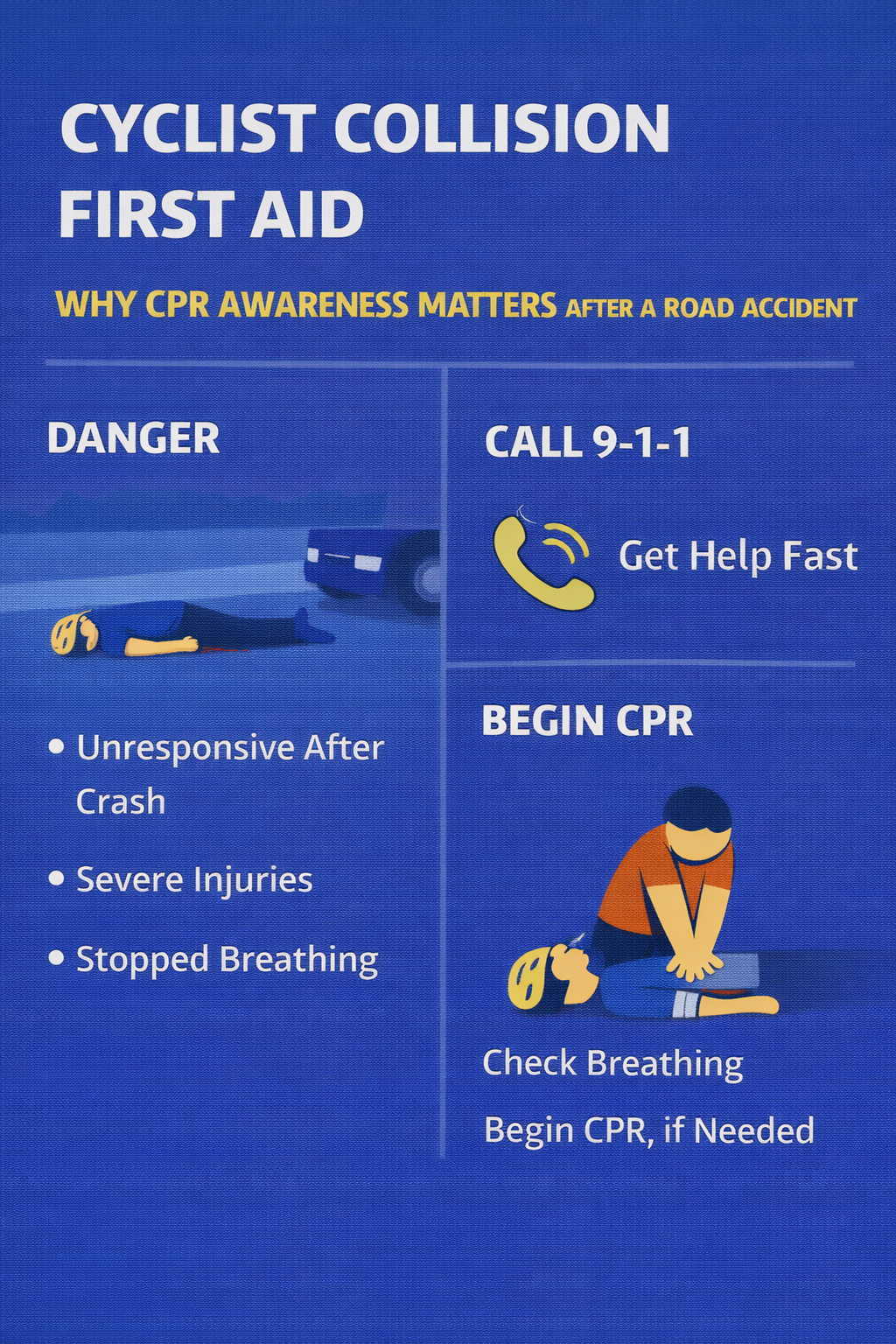 A tragic road collision occurred in Abbotsford, British Columbia, involving a cyclist and a commercial vehicle.
Emergency services were called to the intersection of Bourquin Crescent and Mill Lake Road at approximately 9:15 a.m. after reports of a crash involving a truck and a cyclist.
When police arrived at the scene, they found a 72-year-old male cyclist who had been seriously injured. Officers began CPR while awaiting additional emergency responders, but despite these efforts, the cyclist was later declared deceased at the scene.
The driver of the five-ton truck remained at the location following the incident. According to police, investigators initially indicated that speed and alcohol were not considered contributing factors.
Paramedics also provided care to the truck driver, who was reported to be shaken following the collision.
During the investigation, the nearby bus loop was temporarily closed while the coroner and crash investigators examined the scene. Transit operations were later moved temporarily to the parking lot of Sevenoaks Shopping Centre before normal service resumed.
Incidents like this highlight the importance of road safety awareness for both drivers and cyclists, as well as the role emergency responders play in providing immediate care during serious accidents.
Risks During Bicycle and Vehicle Collisions
Cyclists can be particularly vulnerable in collisions with motor vehicles due to the limited protection provided by bicycles.
Common risks during these incidents may include:
-
Head injuries
-
Trauma to the chest or abdomen
-
Severe bleeding
-
Loss of consciousness
-
Cardiac or respiratory arrest after major trauma
In these situations, emergency responders may attempt life-saving measures such as CPR if the person becomes unresponsive.
Recognizing a Serious Traffic Injury
When a major road collision occurs, bystanders may notice signs that indicate a serious medical emergency.
Possible warning signs include:
-
A person lying motionless after impact
-
Unresponsiveness or lack of breathing
-
Visible severe injuries or bleeding
-
Confusion or disorientation
-
Inability to move or stand
When these signs are present, contacting emergency services immediately is critical.
First Aid Awareness During Road Emergencies
First aid training teaches general steps that may help during serious road incidents until paramedics arrive.
Typical response steps include:
-
Call emergency services (9-1-1 in Canada).
-
Ensure the area is safe from traffic hazards before approaching.
-
Check responsiveness and breathing if it is safe to do so.
-
If the person is not breathing normally, CPR may be started by trained individuals.
-
Continue care until emergency responders arrive.
Prompt emergency response can help provide critical support during the first moments after an accident.
Prevention and Road Safety Considerations
Reducing the risk of collisions between cyclists and vehicles requires awareness from both drivers and cyclists.
Safety practices may include:
-
Following traffic signals and road rules
-
Maintaining visibility with lights and reflective gear
-
Drivers checking blind spots and intersections carefully
-
Using designated cycling lanes where available
-
Wearing a properly fitted bicycle helmet
Across Vancouver and British Columbia, cycling safety initiatives encourage both motorists and cyclists to remain aware of shared road environments.
FAQ
Why might CPR be performed after a traffic accident?
If a person stops breathing or becomes unresponsive after a collision, CPR may be used to help maintain circulation until paramedics arrive.
What should bystanders do if they witness a serious road crash?
Emergency services should be contacted immediately. If it is safe, bystanders may assist by keeping the area clear and providing basic first aid until responders arrive.
Are cyclists at higher risk during collisions with vehicles?
Yes. Cyclists have less physical protection than occupants of motor vehicles, which can increase the risk of serious injury during crashes.
Why is first aid training recommended for the public?
Training helps individuals recognize emergencies and understand safe response steps while waiting for professional responders.
How can drivers and cyclists reduce accident risks?
Following traffic laws, maintaining visibility, and staying aware of surroundings can help reduce the likelihood of collisions.
Educational Note
This article is intended for general first aid awareness and public safety education. Learning CPR and first aid through certified training programs can help individuals recognize emergencies and respond safely until emergency services arrive.
About The Author

Mark Kascha
First Aid Instructor Trainer with 30+ years of experience in CPR, emergency response, and safety training across Canada.
👉 [View full credentials]🔗 View LinkedIn Profile
Last reviewed: March 2026
 Support local, Canadian-owned businesses, with no connections to American corporations or partnerships.