
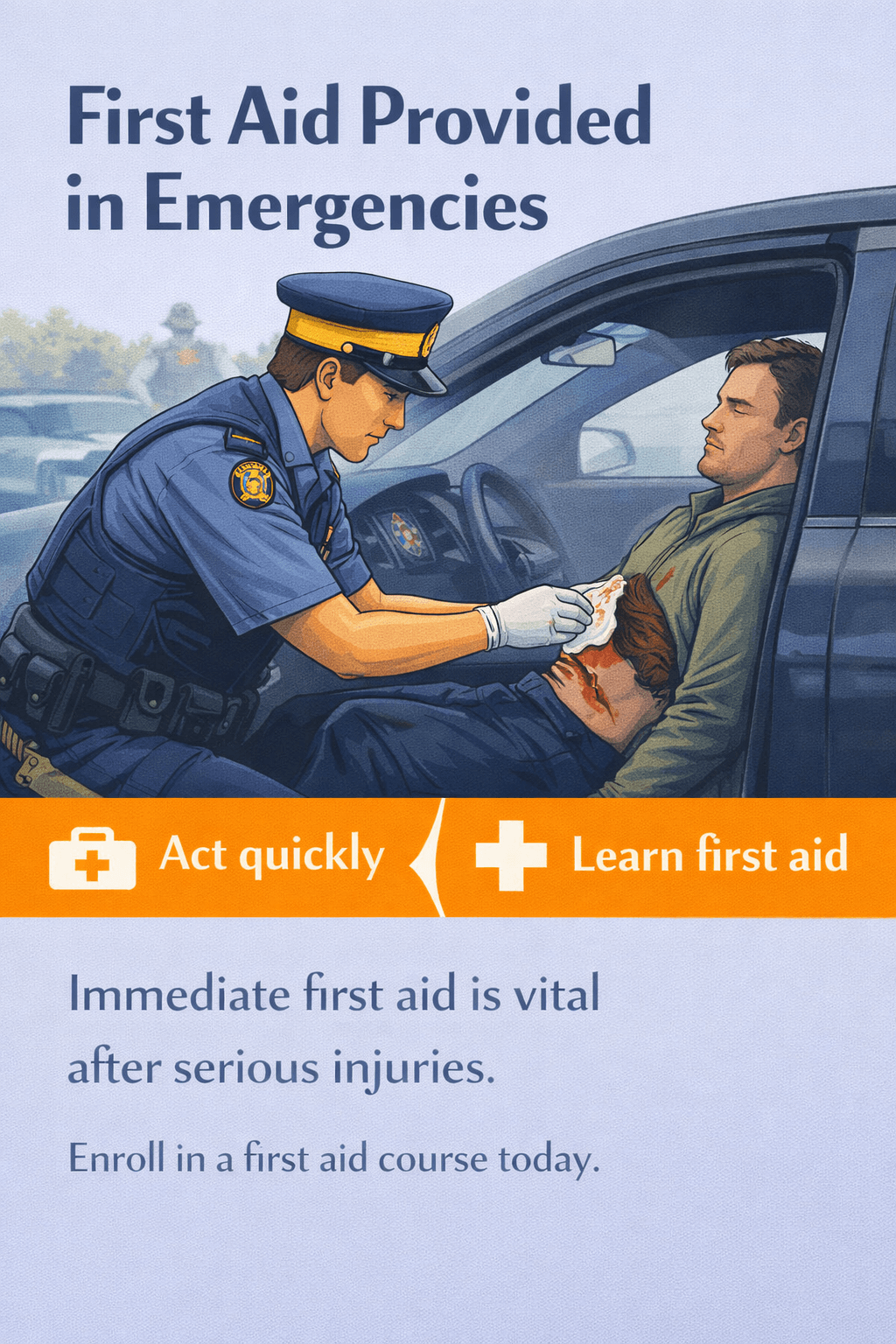
 First aid refers to the initial care provided to someone who has been injured or suddenly become ill before professional medical help arrives. In serious incidents, such as traffic collisions, workplace injuries, or violent events, early first aid can help stabilize a person and support their condition until paramedics take over.
Across British Columbia, including Vancouver, Burnaby, Surrey, and the Lower Mainland, police officers, firefighters, and many workplace staff receive first aid training so they can respond quickly when emergencies occur. Immediate assistance can help manage bleeding, maintain breathing, and support circulation during critical situations.
First Aid Response and Public Safety in British Columbia
Emergency responders in BC communities are often trained in first aid and CPR because they may arrive at a scene before paramedics. In situations involving serious injuries, providing early care can help maintain stability until advanced medical treatment becomes available.
Workplaces throughout the Vancouver region and across British Columbia also require trained first aid attendants to help respond to injuries and medical emergencies on-site.
Scenario: Emergency Response in South Slocan
An incident near South Slocan in British Columbia’s Kootenay region highlights how first aid is often part of emergency response procedures.
According to reports, officers from the RCMP Kootenay Boundary Regional Detachment were responding to a complaint involving gunshots and loud disturbances in the area.
When officers arrived, they located a vehicle and initiated a stop. During the interaction, a female passenger exited the vehicle while the driver remained inside. While officers were conducting checks related to the situation, an interaction occurred between the officers and the driver.
During this interaction, an officer discharged a firearm and the driver was injured.
Following the incident, officers immediately began providing first aid to the injured driver while waiting for emergency medical services to arrive. Paramedics later transported the individual to a healthcare facility for treatment.
Authorities confirmed that the man sustained serious injuries and that no other individuals were harmed during the incident.
As is standard procedure in British Columbia when police actions result in serious injury, the Independent Investigations Office (IIO) was notified and began reviewing the circumstances surrounding the event.
Why Immediate First Aid Is Important in Serious Injuries
In emergencies involving significant injuries, early first aid can help support the injured person while waiting for paramedics. Quick action may help:
-
Support breathing and circulation
-
Reduce further harm
-
Assist with bleeding control
-
Help maintain stability until advanced care arrives
Emergency responders and trained bystanders play an important role during the first few minutes following a serious incident.
First Aid Response During Traumatic Emergencies
Individuals trained in first aid may assist during serious injury situations by:
-
Calling emergency services immediately
-
Ensuring the scene is safe before approaching
-
Checking for responsiveness and breathing
-
Applying basic bleeding control techniques
-
Providing CPR if the person becomes unresponsive and not breathing normally
-
Staying with the injured person until paramedics arrive
These early actions help bridge the gap between the moment an incident occurs and the arrival of professional medical responders.
Prevention and Workplace Safety Awareness
While some emergencies cannot be predicted, preparedness can help communities respond more effectively. Important safety measures include:
-
Encouraging first aid and CPR training in workplaces
-
Ensuring emergency services can be contacted quickly
-
Promoting public awareness of emergency response steps
-
Supporting safety training for employees who work in public-facing roles
Prepared individuals and workplaces can help strengthen community safety throughout British Columbia.
Frequently Asked Questions
Why is first aid important during serious injuries?
First aid provides immediate care that helps support the injured person until professional medical treatment becomes available.
Do police officers receive first aid training?
Many police officers receive first aid and CPR training as part of their emergency response preparation so they can assist injured individuals at incident scenes.
What should someone do if they witness a serious injury?
The first step is to contact emergency services. If it is safe to do so, a trained person may provide basic first aid while waiting for paramedics.
Why is early bleeding control important?
Managing bleeding can help stabilize an injured person and reduce complications before advanced medical care arrives.
Should workplaces encourage first aid training?
Many workplaces in British Columbia encourage or require first aid training so employees can respond to medical emergencies on-site.
Educational Note
This article is provided for general public education about first aid awareness and emergency preparedness. Learning recognized first aid and CPR skills can help individuals respond more confidently during unexpected emergencies.
About The Author

Mark Kascha
First Aid Instructor Trainer with 30+ years of experience in CPR, emergency response, and safety training across Canada.
👉 [View full credentials]🔗 View LinkedIn Profile
Last reviewed: March 2026