
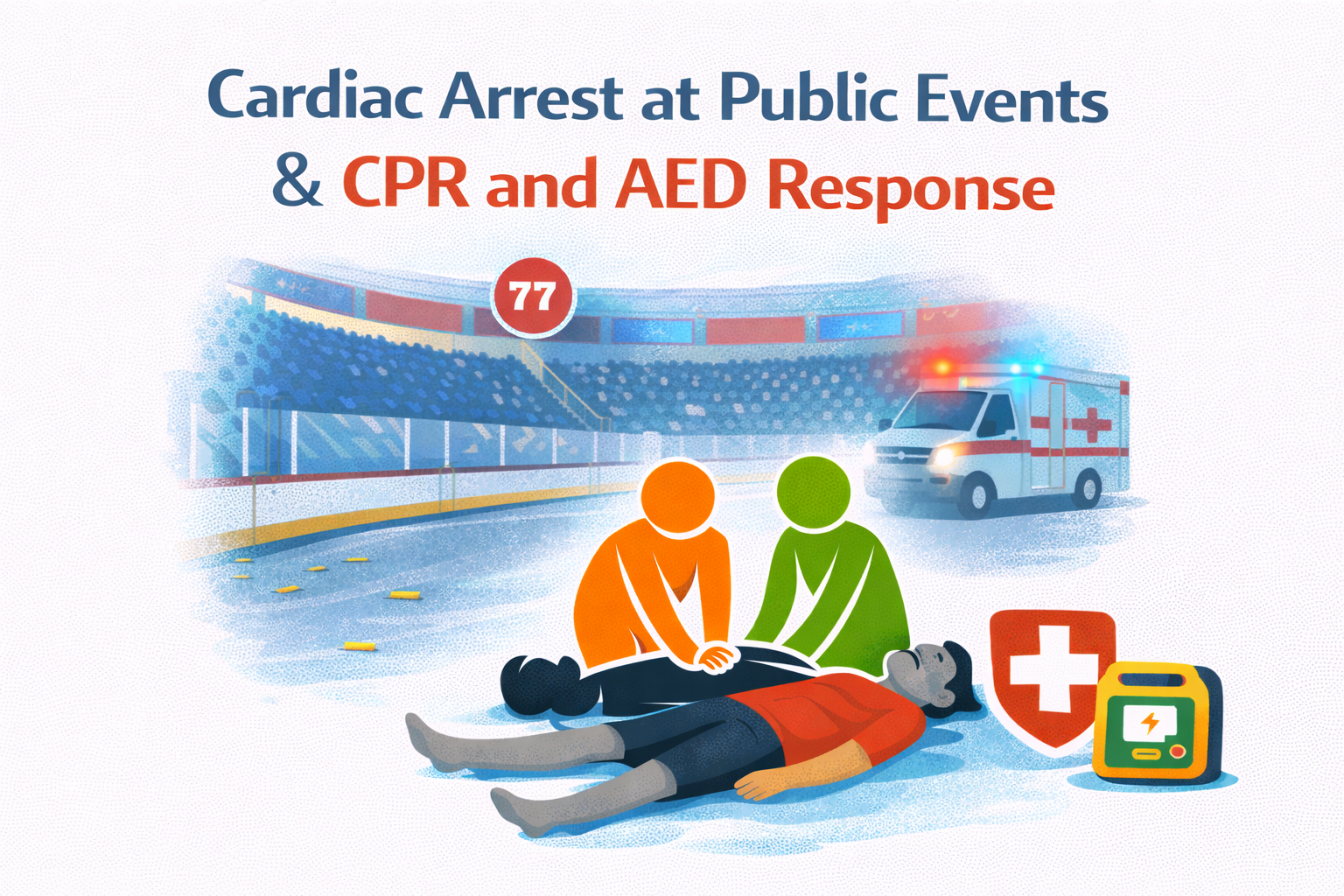
 Sudden cardiac arrest can occur anywhere, including large public gatherings such as sporting events, concerts, shopping centres, and arenas. Cardiac arrest happens when the heart suddenly stops pumping blood effectively, which prevents oxygen from reaching the brain and other vital organs.
In Vancouver and across British Columbia, large venues such as stadiums, arenas, and event facilities regularly host thousands of people. Because emergency medical teams may need several minutes to reach someone in distress, bystander CPR and the use of an automated external defibrillator (AED) can play a crucial role during the early stages of a cardiac emergency.
Prepared staff, trained volunteers, and public access defibrillators are important components of safety planning in many large facilities.
A Realistic Scenario: Medical Emergency During a Hockey Game
In a reported incident during a professional hockey game at the Canadian Tire Centre, a spectator experienced a cardiac emergency in the stands.
During the first period of the game, the individual became unresponsive. Staff members at the arena and a nearby bystander quickly stepped in to assist. They began CPR and used a publicly accessible defibrillator (AED) while emergency medical teams were called.
Paramedics soon arrived at the location and continued advanced medical care before transporting the individual to hospital for further treatment.
Because the emergency response was taking place in the seating area, the game was temporarily paused while responders attended to the situation.
Incidents like this highlight how rapid recognition, bystander CPR, and early defibrillation can support someone experiencing sudden cardiac arrest in public venues.
Signs of Sudden Cardiac Arrest
Cardiac arrest often happens without warning and requires immediate action.
Possible signs include:
-
Sudden collapse
-
Unresponsiveness
-
Absence of normal breathing or irregular gasping
-
No detectable pulse
-
Pale or bluish skin tone
If these signs are present, emergency services should be contacted immediately.
Why Cardiac Arrest Can Occur
Cardiac arrest usually results from an electrical disruption in the heart that prevents it from pumping blood properly.
Possible contributing factors include:
-
Abnormal heart rhythms (arrhythmias)
-
Coronary artery disease
-
Structural heart conditions
-
Severe medical events affecting the heart
-
Lack of oxygen reaching the heart
Without rapid treatment, cardiac arrest can quickly become life-threatening.
First Aid Response: CPR and AED Use
When someone experiences cardiac arrest outside of a hospital, early intervention from nearby individuals can help support survival.
First aid training typically teaches individuals to:
-
Ensure the area is safe
-
Call emergency services immediately
-
Check responsiveness and breathing
-
Begin CPR if the person is unresponsive and not breathing normally
-
Use an automated external defibrillator (AED) if one is available
-
Continue care until emergency responders arrive
AED devices are designed to guide responders with voice instructions and automatically analyze heart rhythms.
Early CPR helps maintain circulation to vital organs, while early defibrillation can help restore a normal heart rhythm.
Safety Preparedness in Public Facilities
Many public facilities across British Columbia implement emergency preparedness measures to protect visitors and staff.
Common safety practices include:
-
Training staff in CPR and first aid
-
Installing accessible AED devices throughout the facility
-
Establishing emergency response plans for large events
-
Encouraging public awareness of CPR and AED use
These preparedness measures help ensure rapid response during medical emergencies in crowded locations.
FAQ
What is sudden cardiac arrest?
Sudden cardiac arrest occurs when the heart abruptly stops pumping blood due to an electrical malfunction in the heart. Without immediate treatment, it can quickly become life-threatening.
Why are AEDs important in large public venues?
AEDs allow trained staff or bystanders to provide early defibrillation, which can help restore a normal heart rhythm during certain cardiac emergencies.
Why is CPR important before paramedics arrive?
CPR helps maintain blood flow and oxygen delivery to vital organs while emergency medical services are travelling to the scene.
Can cardiac arrest happen during routine activities?
Yes. Cardiac arrest can occur unexpectedly during everyday activities, including attending events, exercising, or performing routine tasks.
Why are CPR and first aid training recommended for the public?
Training helps individuals recognize life-threatening emergencies and respond safely until professional medical responders arrive.
Educational Note:
This article is intended for general first aid awareness and public safety education. Learning CPR and AED use can help individuals recognize emergencies and provide supportive assistance until trained emergency services arrive.
About The Author

Mark Kascha
First Aid Instructor Trainer with 30+ years of experience in CPR, emergency response, and safety training across Canada.
👉 [View full credentials]🔗 View LinkedIn Profile
Last reviewed: March 2026
 Support local, Canadian-owned businesses, with no connections to American corporations or partnerships.