
 Railway yards and train operations are complex work environments where heavy equipment, moving railcars, and limited visibility can create serious safety risks. Workers who operate or maintain trains—including conductors, yard staff, and forepersons—must remain constantly aware of their surroundings to reduce the risk of accidents.
Across Canada, including British Columbia and Vancouver, transportation and rail-related workplaces place strong emphasis on workplace safety training and first aid preparedness. When incidents occur in industrial environments, trained responders and coworkers may provide immediate assistance until emergency medical services arrive.
First Aid and Workplace Safety Relevance in Vancouver and British Columbia
In Vancouver and throughout British Columbia, many industrial sectors—including rail transport, shipping terminals, construction, and logistics—require workers to complete WorkSafeBC-recognized first aid training. These programs help workers recognize emergencies and provide initial assistance while waiting for professional responders.
Large work environments such as rail yards often include designated first aid attendants, emergency procedures, and safety protocols designed to reduce the impact of workplace incidents.
Understanding basic first aid awareness is an important part of workplace safety culture across Canada.
Scenario: Railway Yard Incident in Edmundston
In a reported workplace incident at a rail yard in Edmundston, New Brunswick, a 33-year-old rail worker and father of two was fatally injured. According to information shared by Teamsters Canada, the worker had recently begun working with Canadian National (CN) as a conductor and foreman trainee.
Authorities reported that the incident involved a railcar reversing in the yard, which resulted in the worker being struck.
Emergency responders attended the scene, including police officers who provided life-saving first aid before the individual was transported to a healthcare facility with critical injuries. Despite these efforts, the worker later died.
The Transportation Safety Board of Canada began examining the circumstances surrounding the incident. Investigations following workplace accidents are conducted to understand contributing factors and identify ways to improve safety practices.
Reports also noted that the event followed another serious railway incident in the region in recent weeks, highlighting ongoing concerns about workplace safety in rail operations.
Common Hazards in Railway Yards
Rail yards involve several safety challenges that workers must manage daily. Potential hazards may include:
-
Moving trains or reversing railcars
-
Limited visibility around rail equipment
-
Noise levels that make warnings difficult to hear
-
Tight working spaces between railcars
-
Changing track movements during switching operations
-
Heavy mechanical equipment operating nearby
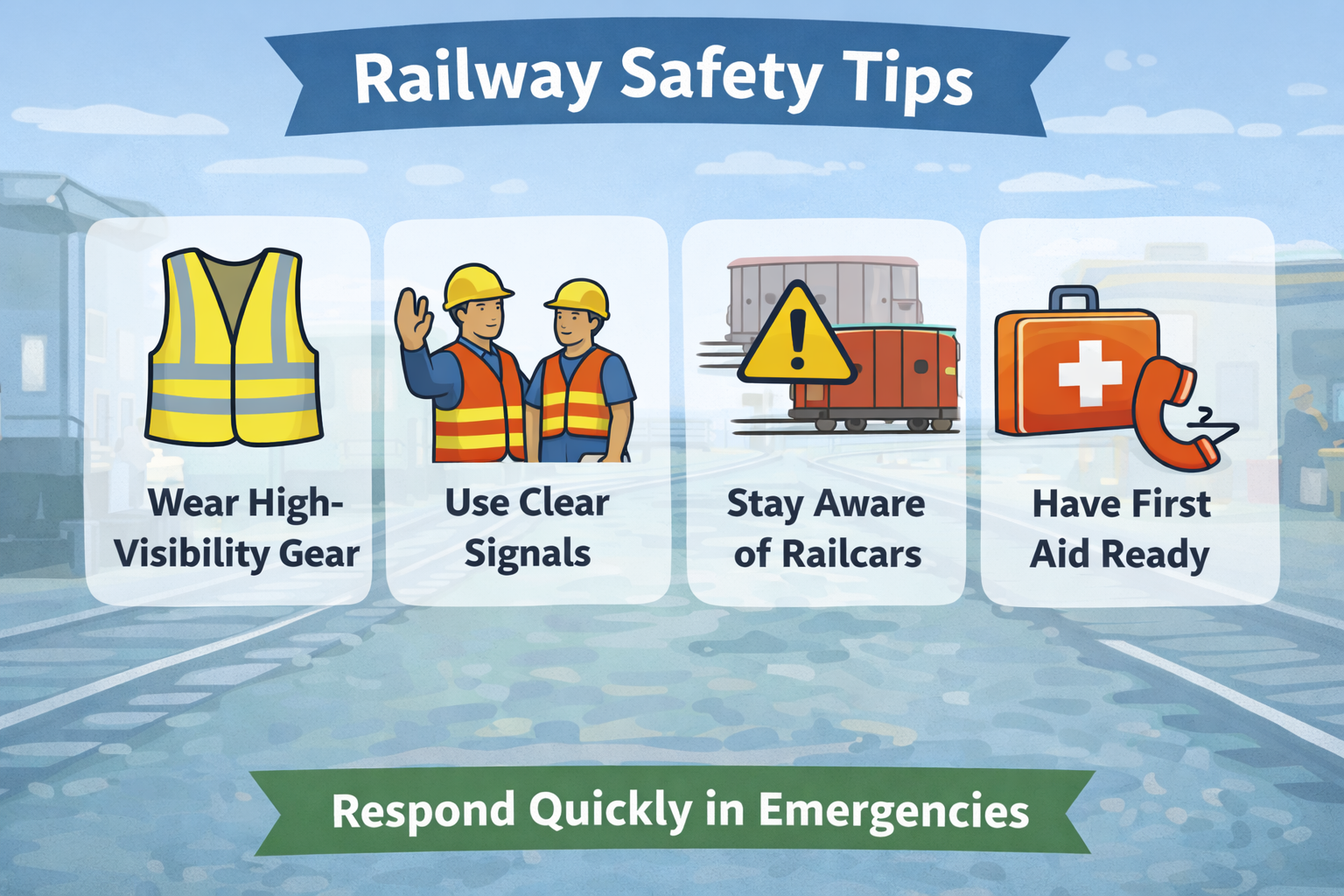
Because railcars can move suddenly and quietly, workers must rely on communication signals, safety procedures, and situational awareness.
First Aid Awareness in Industrial Emergencies
When serious workplace incidents occur, immediate response from trained personnel can help stabilize the situation until emergency medical services arrive.
General first aid awareness in industrial environments may include:
-
Contacting emergency services immediately
-
Ensuring the area is safe before approaching the injured person
-
Alerting supervisors and trained workplace first aid attendants
-
Providing assistance while waiting for paramedics
-
Helping guide emergency responders to the location within the worksite
Many Canadian workplaces designate specific staff members who receive advanced workplace first aid training to respond during emergencies.
Prevention and Workplace Safety Practices
Railway companies and transportation employers use multiple safety measures to help reduce workplace incidents. Safety practices often include:
-
Comprehensive safety training for new employees
-
Clear communication signals during switching and railcar movements
-
High-visibility clothing for workers in rail yards
-
Designated safe zones for employees during train movement
-
Regular safety meetings and incident reviews
-
Workplace hazard assessments and reporting systems
Across Canada’s transportation sector, continuous safety education and monitoring are key elements of workplace risk reduction.
Frequently Asked Questions
Why are railway yards considered hazardous workplaces?
Rail yards contain moving railcars, heavy equipment, and complex switching operations. Workers must coordinate movements carefully to avoid collisions and maintain safe working distances.
What is the role of the Transportation Safety Board of Canada in workplace incidents?
The Transportation Safety Board investigates transportation-related accidents across Canada. Their findings help identify contributing factors and support improvements in national safety standards.
Why is workplace first aid training important in industrial environments?
Industrial worksites may be large or located far from hospitals. Having trained first aid attendants on site helps ensure someone can provide immediate assistance until emergency services arrive.
How do workers communicate during rail yard operations?
Railway workers often use radios, hand signals, and established communication procedures to coordinate movements and maintain awareness of train operations.
How can workplaces reduce the risk of railway accidents?
Safety training, clear communication protocols, proper supervision, and ongoing hazard assessments all play important roles in reducing risks in railway environments.
Educational Note
This article is intended for general workplace safety and first aid awareness. Industrial incidents can involve complex hazards, and trained emergency responders are equipped to manage these situations. Understanding workplace safety practices and basic first aid principles can help improve awareness and preparedness in many work environments.
About The Author

Mark Kascha
First Aid Instructor Trainer with 30+ years of experience in CPR, emergency response, and safety training across Canada.
👉 [View full credentials]🔗 View LinkedIn Profile
Last reviewed: March 2026