
Understanding Overboard Incidents and Water Emergencies
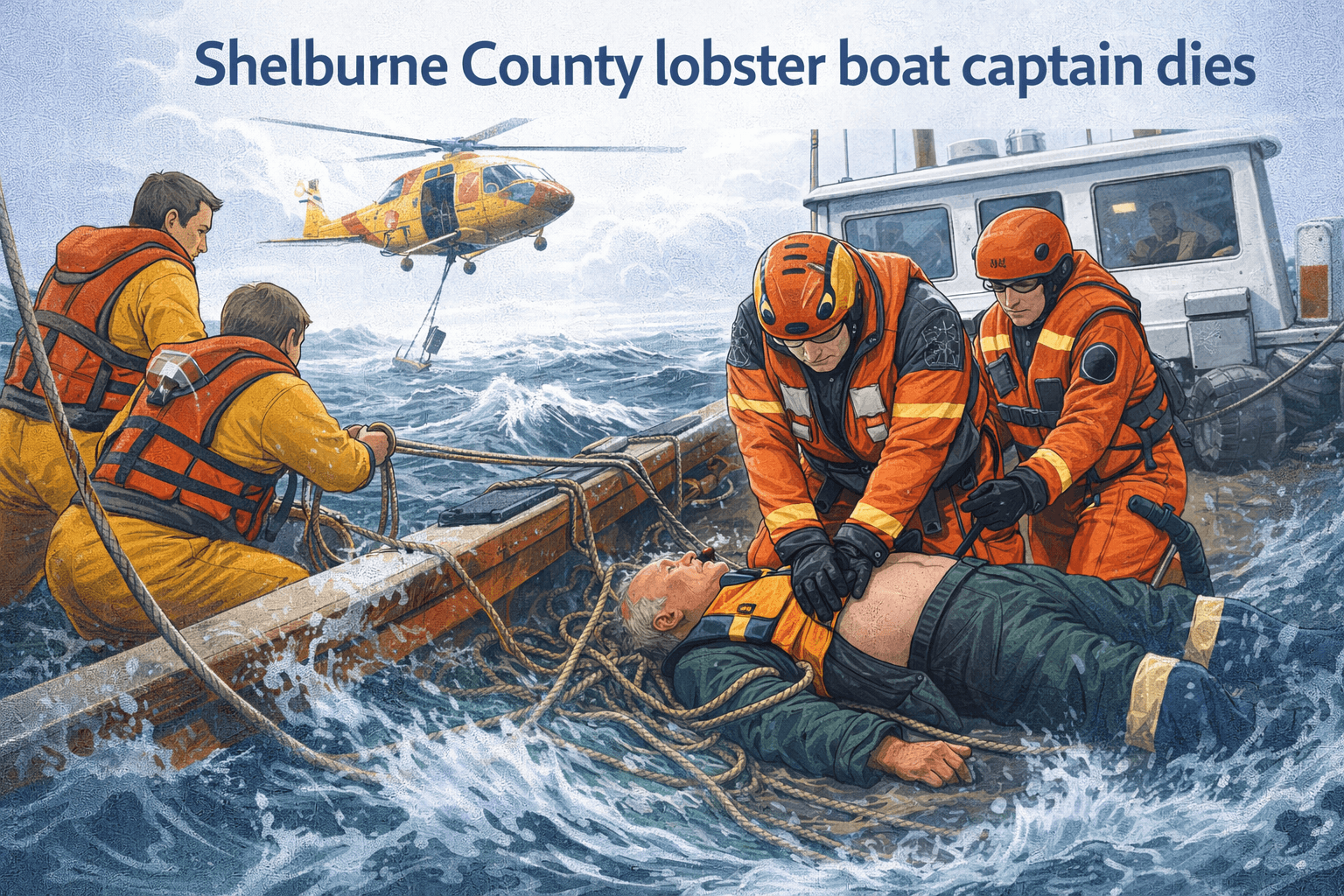 Working on the water—especially in commercial fishing—comes with serious risks. One of the most dangerous situations is being pulled overboard, often due to entanglement in ropes or equipment. These incidents can lead to drowning, hypothermia, or severe trauma.
Even with safety equipment like personal flotation devices (PFDs), quick rescue and immediate first aid, including CPR when needed, are critical.
First Aid & Workplace Relevance in Vancouver and the Lower Mainland
Across Vancouver, Richmond, Steveston, and coastal areas of British Columbia, many workers are involved in marine industries such as fishing, shipping, and marine transport.
For these workplaces, emergency preparedness, crew training, and first aid knowledge are essential due to the remote and unpredictable nature of water environments.
Real Incident Overview
A tragic marine incident occurred off the coast of Nova Scotia involving a 64-year-old lobster boat captain, Larry Wayne Sears of Shag Harbour.
The captain was working with two crew members approximately 16 nautical miles south of Clarks Harbour, hauling lobster pots when a trawl line became entangled in the hauler. While attempting to clear the line, he became caught in the rope and was pulled overboard.
Although he was wearing a personal flotation device, he remained severely entangled. Another fishing vessel in the area responded after hearing a distress call over the radio and assisted in recovering him from the water.
Search and rescue crews from Clarks Harbour responded quickly, along with additional SAR technicians deployed from a Cormorant helicopter. They began CPR immediately upon retrieval.
Rescue efforts were challenged by difficult sea conditions, including waves of 3–4 metres and winds exceeding 25 knots. Despite continued efforts, the man was later declared deceased after being brought ashore at West Head.
Authorities, including the RCMP, Transportation Safety Board, and Department of Labour and Advanced Education, launched investigations into the incident. No foul play was suspected.
Common Risks in Marine Work Environments
Overboard incidents are often linked to:
-
Rope or line entanglement
-
Moving mechanical equipment
-
Slippery or unstable surfaces
-
Harsh weather and sea conditions
-
Working in close proximity to heavy gear
These hazards are common in fishing and marine workplaces.
Signs of Water-Related Emergency or Distress
A person pulled from the water may show:
-
Unresponsiveness
-
Difficulty or absence of breathing
-
Weak pulse or no pulse
-
Signs of hypothermia (cold, pale skin, confusion)
-
Fatigue or inability to move
Immediate assessment is critical.
First Aid Response: Overboard and Water Rescue
If someone is pulled from the water:
-
Ensure scene safety before assisting
-
Call for emergency help immediately
-
Remove the person from the water as safely and quickly as possible
-
Check breathing and responsiveness
-
Begin CPR if the person is not breathing normally
-
Keep the person warm and still
-
Continue care until emergency responders arrive
Early rescue and care are key factors in survival.
Prevention and Marine Workplace Safety
To reduce risks in marine environments:
-
Stay clear of moving lines and equipment
-
Use proper protective gear, including PFDs
-
Follow safe work procedures when handling ropes
-
Maintain clear communication among crew members
-
Ensure all crew are trained in first aid and emergency response
Preparedness is essential in high-risk marine settings.
Frequently Asked Questions
Can someone still be at risk even when wearing a life jacket?
Yes. Entanglement or unconsciousness can still create serious danger.
What is the biggest risk when working with ropes on boats?
Entanglement in moving lines or equipment can pull a person overboard.
What should be done first after rescuing someone from the water?
Check breathing and begin first aid, including CPR if needed.
Why is CPR important in water-related incidents?
It helps restore breathing and circulation after oxygen deprivation.
How can marine workers improve safety?
Through training, awareness, and following proper safety procedures.
Educational Note
This article is intended for general first aid awareness and workplace safety education in Canada. First aid and CPR training can help individuals respond more effectively in marine emergencies.
About The Author

Mark Kascha
First Aid Instructor Trainer with 30+ years of experience in CPR, emergency response, and safety training across Canada.
👉 [View full credentials]🔗 View LinkedIn Profile
Last reviewed: March 2026