
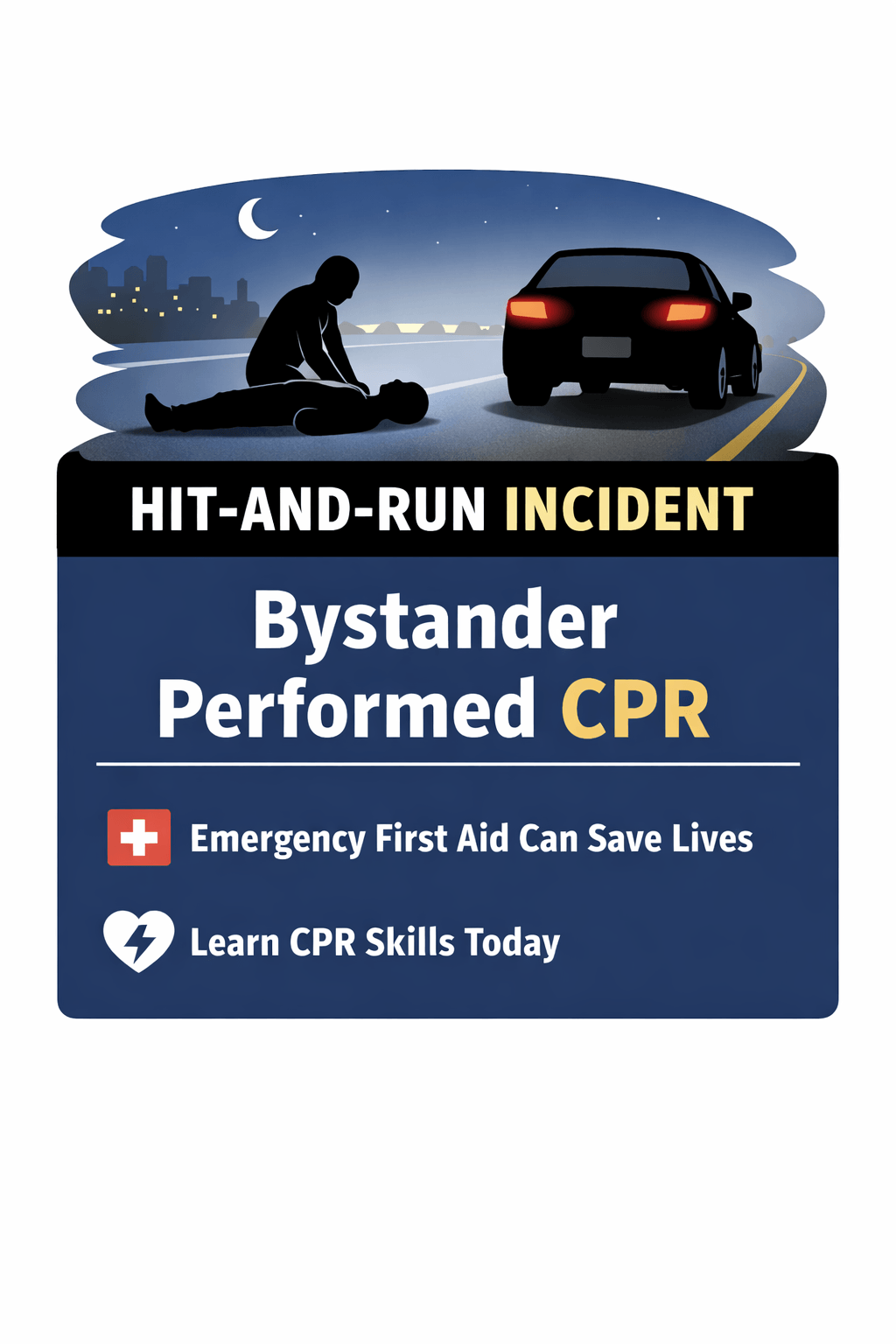
 Traffic collisions involving pedestrians can result in serious injuries that require immediate emergency response. In situations where a person becomes unresponsive after being struck by a vehicle, rapid recognition and first aid actions such as cardiopulmonary resuscitation (CPR) may be necessary while waiting for paramedics.
Across Surrey, Vancouver, Burnaby, and communities throughout the Lower Mainland of British Columbia, busy roads and late-night traffic can increase the risk of pedestrian incidents. Because emergencies may occur unexpectedly, bystanders often play an important role in providing early assistance until professional responders arrive.
First Aid Awareness on BC Roadways
Many communities in British Columbia encourage residents and workers to learn CPR and basic first aid because these skills can be used in a wide range of situations—including traffic emergencies, workplace injuries, and sudden medical events in public areas.
Knowing how to respond safely, contact emergency services, and begin life-saving care can help support injured individuals during those critical first moments after an incident.
Scenario: Bystander Response on Fraser Highway
A tragic incident on Fraser Highway near 168th Street in Surrey drew attention to the role of bystanders during road emergencies.
According to reports, a pedestrian was struck by an eastbound vehicle shortly before 1 a.m. The vehicle left the scene after the collision.
Two individuals driving along the highway noticed someone lying in the roadway and stopped their vehicle to help. One of the bystanders approached the injured man and attempted to speak with him while contacting emergency services.
Following guidance from a 911 dispatcher, the bystander checked the victim’s breathing and began CPR when the situation required it. Emergency responders were called to the scene, but despite the efforts to help, the pedestrian later died.
Investigators from the Surrey RCMP began examining the circumstances surrounding the incident. Authorities reported that they were attempting to identify the vehicle involved and determine what happened before the collision.
While the investigation continued, the bystander’s actions demonstrated how members of the public may step forward to assist during unexpected emergencies on roadways.
Recognizing When CPR May Be Needed
CPR may be required when a person becomes unresponsive and stops breathing normally. Signs that CPR may be necessary can include:
-
Unresponsiveness or inability to wake the person
-
No visible breathing or only gasping breaths
-
No detectable pulse
-
Sudden collapse following trauma or illness
-
Pale or bluish skin tone
When these signs are present, immediate emergency assistance and CPR may be necessary while waiting for paramedics.
How CPR Supports the Body During Cardiac Arrest
When the heart stops beating effectively, blood circulation throughout the body stops. CPR helps support vital functions by:
-
Providing chest compressions that help circulate blood
-
Helping oxygen reach the brain and other organs
-
Maintaining circulation until advanced medical care arrives
-
Supporting the body during the early stages of cardiac arrest
Early CPR is an important part of the chain of survival during medical emergencies.
First Aid Response at Roadside Emergencies
People trained in first aid may assist safely during roadside emergencies by:
-
Calling emergency services immediately
-
Ensuring personal safety and watching for traffic hazards
-
Checking for responsiveness and breathing
-
Beginning CPR if the person is unresponsive and not breathing normally
-
Continuing care until emergency responders arrive
Following instructions from emergency dispatchers can also help guide bystanders during these situations.
Prevention and Road Safety Awareness
While not all collisions can be prevented, road safety awareness helps reduce risks for drivers and pedestrians. Safety practices may include:
-
Staying alert while driving, especially at night
-
Avoiding distractions behind the wheel
-
Using designated pedestrian crossings where available
-
Remaining visible near roadways in low-light conditions
-
Encouraging first aid and CPR training for community members
Prepared communities are better equipped to respond when emergencies occur on public roads.
Frequently Asked Questions
Why is CPR important after serious traffic incidents?
CPR helps maintain blood circulation when a person’s heart has stopped or breathing has become ineffective following a traumatic event.
Can bystanders perform CPR during emergencies?
Yes. Many people trained in CPR are able to assist during emergencies while waiting for paramedics to arrive.
What should someone do first when witnessing a roadside emergency?
The most important first step is contacting emergency services so trained responders can reach the scene quickly.
Why is personal safety important when helping at traffic scenes?
Roadways may have moving vehicles or other hazards. Ensuring personal safety helps prevent additional injuries.
Should community members learn CPR?
Many safety organizations encourage CPR training because emergencies can occur in many everyday settings, including roads, workplaces, and public spaces.
Educational Note
This article is intended for general public education about CPR awareness and emergency preparedness. Participating in recognized first aid and CPR training can help individuals feel more prepared to respond during unexpected emergencies.
About The Author

Mark Kascha
First Aid Instructor Trainer with 30+ years of experience in CPR, emergency response, and safety training across Canada.
👉 [View full credentials]🔗 View LinkedIn Profile
Last reviewed: March 2026