
 Traffic collisions can happen suddenly in neighbourhoods, city streets, or highways. When someone is injured in an accident, the first people to respond are often nearby residents or bystanders.
Basic first aid provided in the minutes immediately following an incident can help stabilize an injured person until paramedics arrive. Actions such as checking breathing, keeping the injured person still, and contacting emergency services can make a meaningful difference.
Across Canada—including Vancouver and communities throughout British Columbia—first aid training is widely encouraged in workplaces and community programs to help individuals respond safely during emergencies.
First Aid and Workplace Relevance in Canada
Many Canadian workplaces require employees to complete first aid certification, particularly in industries where workers may encounter accidents or medical emergencies.
Healthcare workers, care aides, construction staff, teachers, and public service workers often receive training in emergency response procedures. These skills allow them to assist injured individuals while waiting for professional responders.
Prepared citizens and trained employees contribute to stronger community safety and quicker emergency response.
A Realistic Scenario from Nanaimo, British Columbia
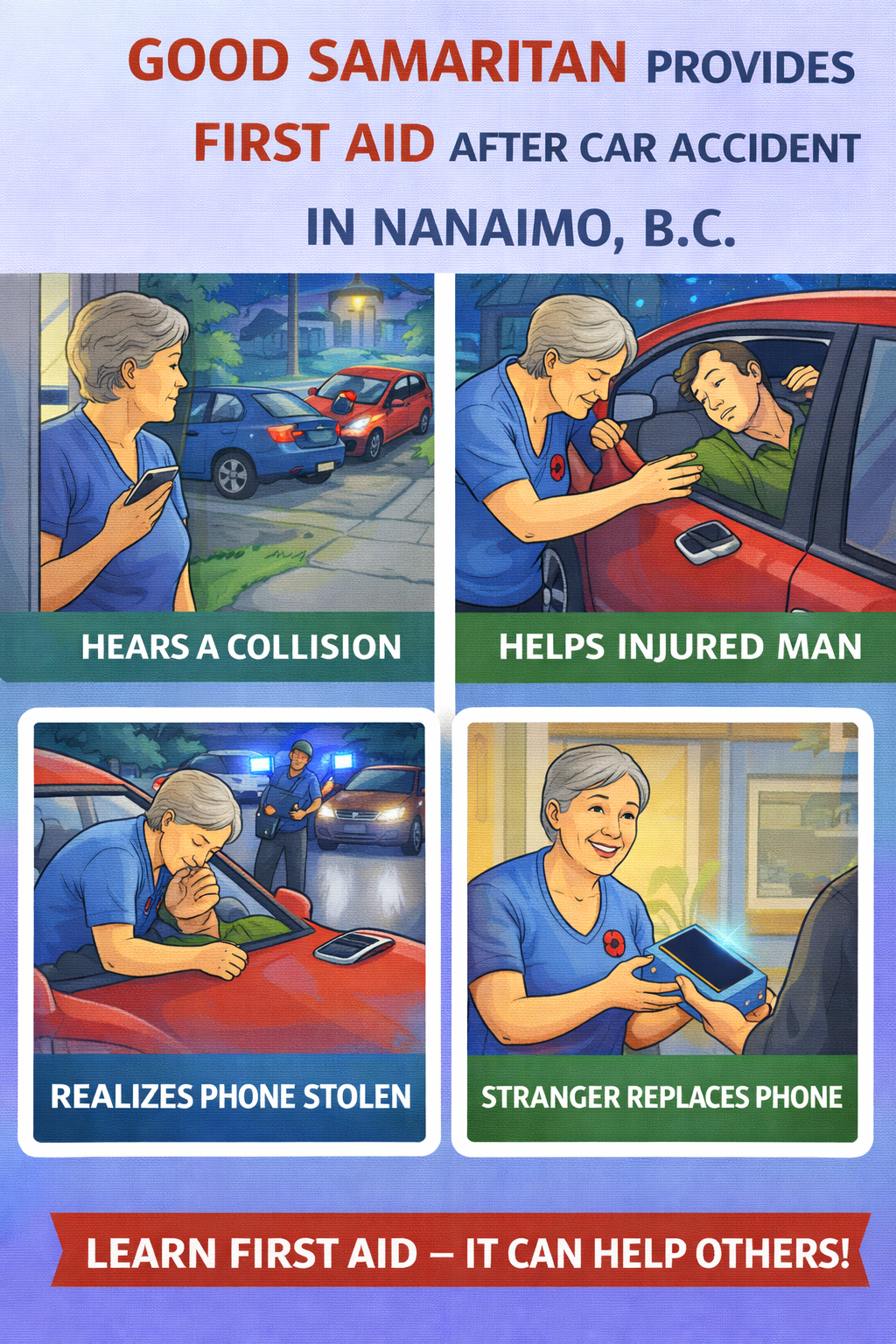
In Nanaimo, British Columbia, a local resident stepped in to help an accident victim after hearing a collision outside her home.
Anne Marie Behan, a 57-year-old care aide who had worked at Nanaimo Regional General Hospital for nearly a decade, was at home wrapping Christmas presents one evening when she heard the sound of a crash nearby.
Looking outside, she realized that two vehicles had collided near the corner of her street and that people were shouting for help.
Without hesitation, Behan ran outside wearing her slippers and carrying her phone so she could call emergency services if needed.
At the scene, she noticed a man seated in the back of one of the vehicles who appeared to be having difficulty breathing.
Behan placed her phone on the hood of the vehicle and focused on helping the injured man. Drawing on her healthcare experience, she supported the victim and provided basic first aid while bystanders contacted paramedics.
Emergency responders soon arrived and took over care of the injured man before transporting him to a healthcare facility for further treatment.
After the paramedics left, Behan realized that the phone she had placed on the vehicle was missing.
The phone was particularly important to her because it helped her stay connected with both her work and her daughter. As a single mother, replacing the device would have been difficult.
News of the situation spread through the community, and many people expressed support for her actions. Eventually, an anonymous individual who read about the incident offered to replace the phone.
Once Behan received the replacement phone, the first person she contacted was her daughter.
The incident became a reminder that acts of kindness and community support can emerge even during difficult situations.
Signs That Someone May Need First Aid After a Collision
Following a traffic accident, injured individuals may show symptoms that require immediate attention.
Possible warning signs include:
-
Difficulty breathing
-
Visible injuries or bleeding
-
Confusion or disorientation
-
Severe pain
-
Loss of consciousness
-
Inability to move normally
Emergency services should be contacted immediately if these symptoms appear.
Common Injuries in Vehicle Collisions
Vehicle collisions can cause a wide range of injuries depending on the force of impact and position of those involved.
Possible injuries may include:
-
Head injuries or concussions
-
Neck or spinal injuries
-
Broken bones
-
Internal injuries
-
Breathing difficulties
Professional medical evaluation is important to assess and treat these injuries.
First Aid Response and Immediate Management
When someone is injured in a traffic accident, bystanders can take several steps while waiting for emergency services.
General first aid actions may include:
-
Call emergency services immediately.
-
Ensure the area is safe before approaching.
-
Check the injured person’s responsiveness and breathing.
-
Provide basic first aid if trained.
-
Remain with the injured person until paramedics arrive.
Remaining calm and communicating clearly with emergency dispatchers can help guide the response.
Prevention and Community Safety Considerations
Although accidents cannot always be prevented, awareness and preparedness help improve safety in communities.
Helpful safety practices may include:
-
Learning first aid and emergency response skills
-
Following safe driving practices
-
Staying alert in residential neighbourhoods
-
Encouraging workplace first aid training
-
Supporting community emergency preparedness programs
Prepared individuals and community cooperation can help improve outcomes during emergencies.
Frequently Asked Questions
What should someone do if they witness a car accident?
The first step is to call emergency services. If it is safe to do so, bystanders may assist injured individuals with basic first aid until paramedics arrive.
Why is first aid important after a collision?
First aid can help stabilize injuries, support breathing, and reduce further harm while waiting for professional medical care.
Can bystanders safely help accident victims?
Yes, if the scene is safe. Bystanders can assist by contacting emergency services and providing basic care if they are trained.
Why do many workplaces require first aid training?
First aid training prepares employees to recognize emergencies and respond appropriately before emergency responders arrive.
How can communities support emergency response?
Communities can improve preparedness by promoting first aid education, installing AEDs in public spaces, and encouraging safety awareness.
Educational Note
This article is intended for general first aid awareness and public education. Learning first aid and emergency response skills can help individuals respond confidently during accidents while waiting for professional medical assistance.
About The Author

Mark Kascha
First Aid Instructor Trainer with 30+ years of experience in CPR, emergency response, and safety training across Canada.
👉 [View full credentials]🔗 View LinkedIn Profile
Last reviewed: March 2026