
A tragic hit-and-run in Surrey highlights the critical role bystanders can play in the moments immediately following a serious collision.
Across Metro Vancouver and throughout British Columbia, early CPR and rapid activation of emergency services can influence survival outcomes in traumatic incidents. While not every emergency can be reversed, quick action remains essential.
What Happened in Surrey
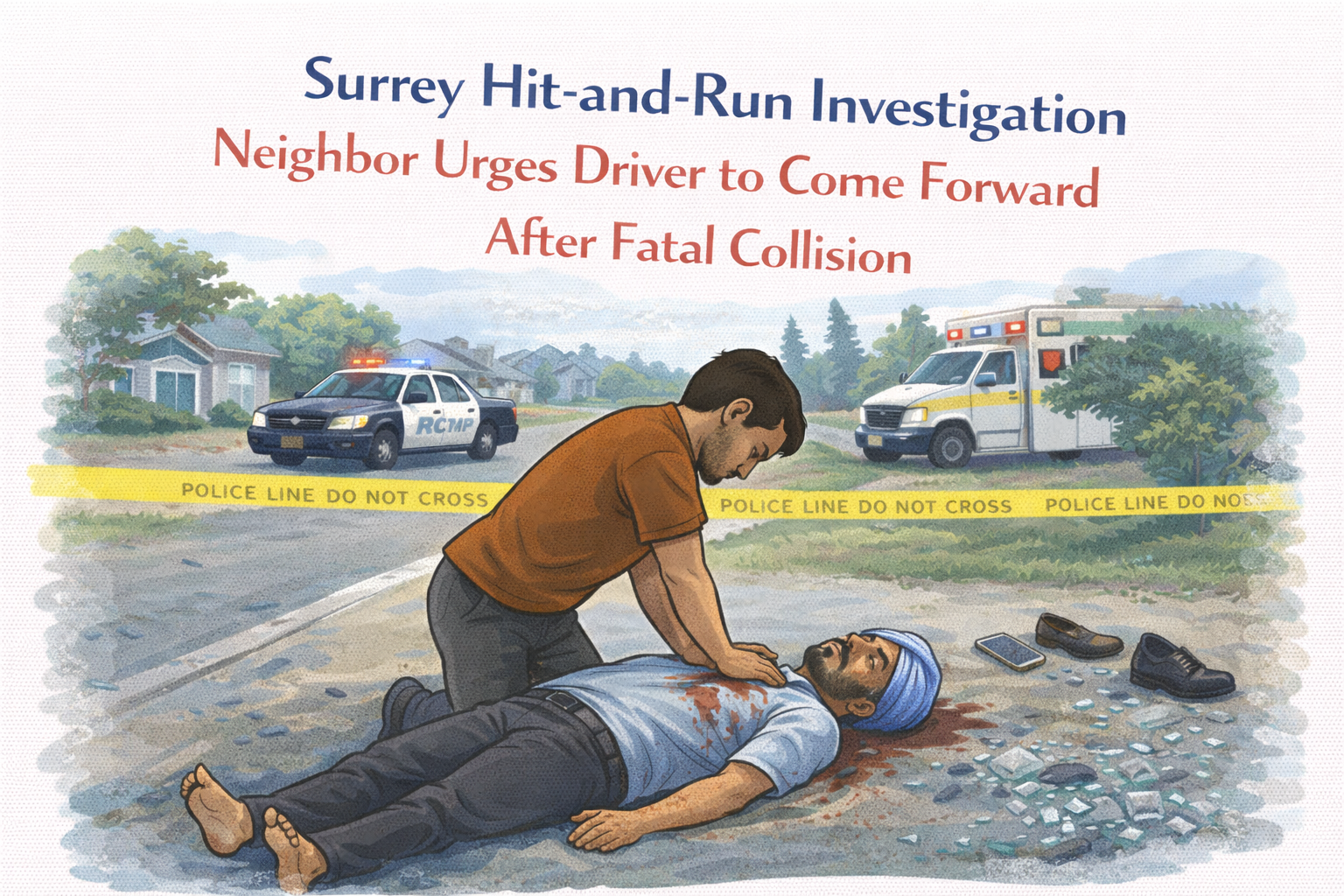 Police responded to reports of an injured man in the 14300 block of 92nd Avenue in Surrey around 7:20 a.m.
The 28-year-old man was found unconscious on the roadway with severe injuries. A neighbour discovered him and immediately sought help. Another resident called 9-1-1, and the phone was passed to the neighbour who remained beside the victim.
Under the guidance of the emergency dispatcher, CPR was started when the man was found not breathing and without a detectable pulse. Paramedics arrived shortly afterward and took over care before transporting him to hospital, where he later died.
Investigators later confirmed the incident was a hit-and-run and continued gathering evidence.
Understanding Traumatic Cardiac Arrest
Severe vehicle collisions can cause life-threatening injuries, including:
-
Head trauma
-
Internal bleeding
-
Chest injuries
-
Respiratory failure
-
Cardiac arrest
If a person becomes unresponsive and stops breathing normally, CPR is initiated to maintain circulation until advanced care is available.
In trauma cases, outcomes depend on many factors, including the extent of injuries and how quickly surgical and advanced medical support can be provided.
The Role of Dispatcher-Assisted CPR
In this incident, CPR was started with guidance from a 9-1-1 dispatcher.
Across British Columbia, dispatchers are trained to:
-
Identify cardiac arrest over the phone
-
Encourage continuous compressions until paramedics arrive
Even individuals without formal training can begin CPR when coached over the phone.
First Aid Response After a Collision
If you encounter someone seriously injured in a roadway incident and the scene is safe:
-
Call 9-1-1 immediately
-
Avoid placing yourself in traffic danger
-
Check responsiveness and breathing
-
Begin CPR if the person is unresponsive and not breathing normally
-
Apply firm, direct pressure to visible bleeding
-
Follow dispatcher instructions until emergency services arrive
Personal safety must always come first, especially in traffic environments.
Why CPR Training Is Important in BC
Motor vehicle incidents remain one of the leading causes of serious injury in Canada.
CPR training equips individuals to:
-
Act confidently while waiting for paramedics
-
Support emergency responders
-
Improve survival chances in cardiac and respiratory arrest
In Vancouver and across BC, CPR certification is widely available and often included in workplace first aid programs.
Roadway Safety and Community Responsibility
Hit-and-run incidents can complicate investigations and delay accountability. From a safety perspective, drivers are reminded to:
-
Remain at the scene of any collision
-
Call emergency services immediately
-
Provide assistance when safe to do so
Community awareness and responsible action contribute to safer roads.
Frequently Asked Questions
When should CPR be started after a collision?
CPR should begin if the person is unresponsive and not breathing normally.
Can CPR help after a severe injury?
CPR maintains circulation but cannot reverse severe internal injuries. Outcomes depend on many medical factors.
What if I am not trained in CPR?
Call 9-1-1 immediately. Dispatchers can guide you through chest compressions.
Is it safe to help someone on the road?
Ensure traffic hazards are managed and do not place yourself at risk.
Is CPR training required for most workplaces in BC?
Many industries require Occupational First Aid certification, which includes CPR training.
Educational Note
This article is provided for general first aid and community safety education in British Columbia. Formal CPR and first aid training helps individuals respond appropriately and confidently during emergencies while waiting for professional medical services.
About The Author

Mark Kascha
First Aid Instructor Trainer with 30+ years of experience in CPR, emergency response, and safety training across Canada.
👉 [View full credentials]🔗 View LinkedIn Profile
Last reviewed: March 2026
 Support local, Canadian-owned businesses, with no connections to American corporations or partnerships.