 Spending time at lakes and natural swimming areas is a popular summer activity across British Columbia, including well-known locations around Victoria and the Vancouver region. While these areas offer recreation and relaxation, they can also present hidden water safety risks. Drowning incidents often occur quickly and quietly, particularly when swimmers overestimate their abilities or encounter unexpected physical difficulties in the water.
For workplaces, outdoor recreation groups, and community members in Vancouver and across BC, understanding basic water safety and first aid and CPR awareness is an important part of public health education. Training helps individuals recognize emergencies and respond safely while waiting for professional responders.
A Realistic Water Safety Scenario
In one widely reported incident, emergency crews responded to a call involving a swimmer who had disappeared beneath the surface at Thetis Lake in View Royal, near Victoria, British Columbia. According to reports from the West Shore RCMP, bystanders noticed that a young man who had been floating on an air mattress was suddenly no longer visible in the water.
People nearby pulled him from the lake, and CPR was started before emergency responders arrived. Police and paramedics continued resuscitation efforts and transported him to Victoria General Hospital, where he was later declared deceased.
Reports suggested the 21-year-old man, an international student, may not have been a strong swimmer. It was also noted that he had experienced leg cramps following a soccer game earlier in the week. Authorities were unsure how he became separated from the flotation device he had been using.
Incidents like this highlight how quickly conditions can change in natural swimming environments, even during recreational outings.
Signs of Someone Struggling in Water
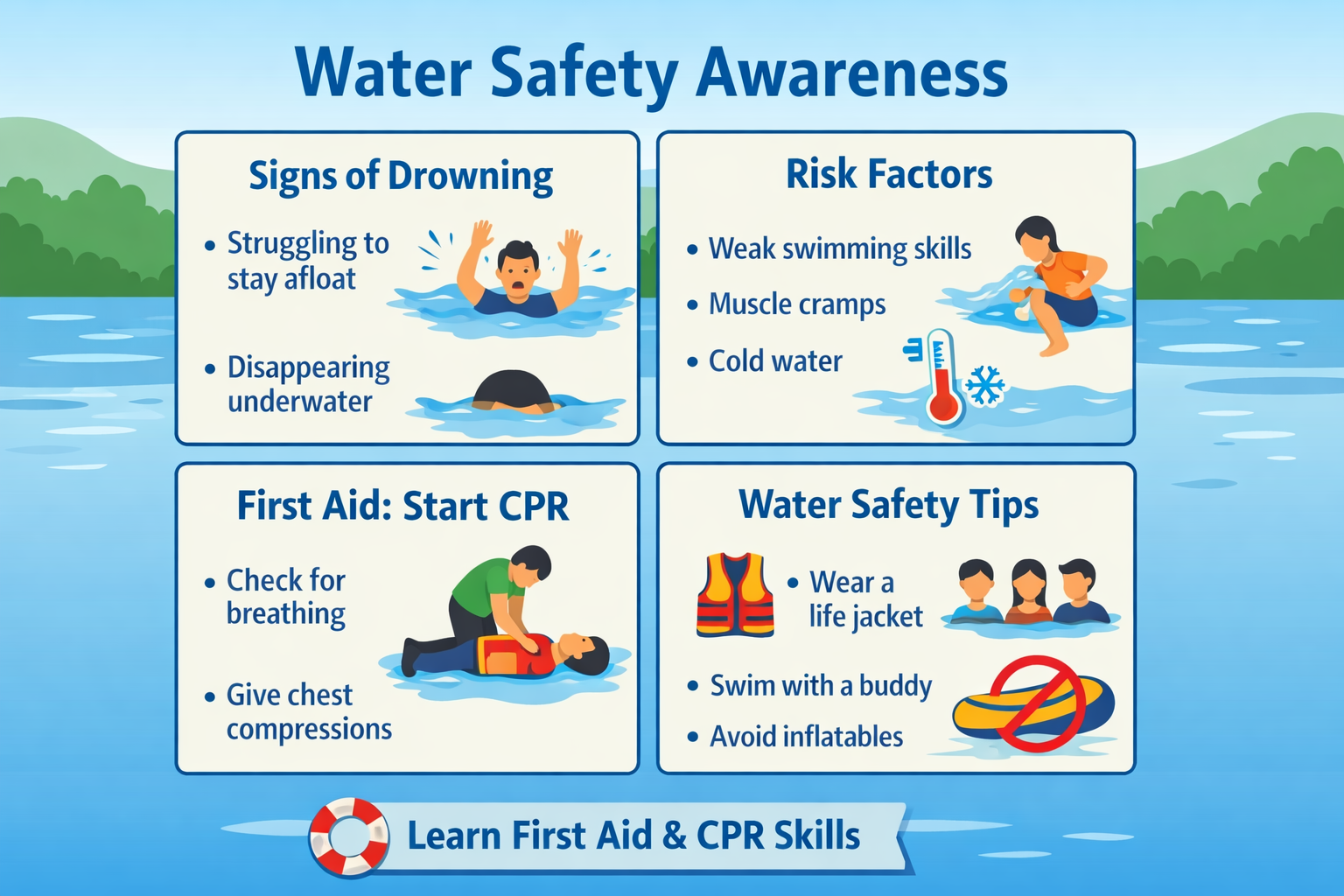
Drowning rarely looks dramatic. In many cases, a person in trouble may appear quiet or simply be struggling to stay afloat.
Possible warning signs can include:
-
Difficulty keeping the head above water
-
Gasps or attempts to inhale while the mouth is near the water surface
-
Arms pressing downward on the water rather than waving for help
-
Vertical body position with little forward movement
-
Sudden disappearance beneath the surface
-
Signs of panic or exhaustion while swimming
Recognizing these signs early can allow bystanders to seek help quickly.
Factors That Can Contribute to Water Emergencies
Several factors may increase the risk of drowning in lakes, rivers, or pools.
Common contributing factors include:
-
Limited or weak swimming ability
-
Fatigue or muscle cramps while swimming
-
Cold water that reduces muscle function
-
Overconfidence in flotation devices such as air mattresses or inflatables
-
Sudden separation from flotation equipment
-
Unexpected depth changes in natural lakes
-
Panic or exhaustion while attempting to swim to shore
Natural bodies of water can also have colder temperatures and uneven underwater terrain, which may surprise swimmers.
Emergency Response and First Aid Awareness
When a person is pulled from the water and is not breathing normally, bystanders may begin CPR while emergency services are contacted. Early action can be critical while waiting for trained responders.
In many communities across Vancouver, Victoria, and British Columbia, emergency dispatchers can guide callers through basic steps while paramedics are on the way.
It is important for bystanders to prioritize their own safety first and avoid entering the water if conditions are dangerous. Whenever possible, calling for help and alerting lifeguards or emergency services is the safest approach.
Learning CPR and basic first aid can help people understand how to respond appropriately in emergencies until professional care arrives.
Prevention and Water Safety Considerations
Many drowning incidents are preventable through awareness and preparation.
Important safety considerations include:
-
Swimming with others rather than alone
-
Using properly fitted life jackets when swimming ability is limited
-
Avoiding reliance on inflatable devices as safety equipment
-
Being cautious if experiencing fatigue, injury, or muscle cramps
-
Entering natural water slowly to adjust to temperature
-
Choosing designated swimming areas when available
-
Supervising inexperienced swimmers closely
For workplaces that organize outdoor events or team recreation near water, reviewing basic safety planning and emergency response procedures can also reduce risks.
Frequently Asked Questions
What makes natural lakes more dangerous than swimming pools?
Natural lakes often have colder water, uneven depths, and limited supervision. Unlike pools, they may not have lifeguards, marked swimming areas, or clear visibility below the surface.
Can muscle cramps affect swimming ability?
Muscle cramps can make it difficult to move effectively in the water. When a swimmer cannot kick or move normally, it can increase fatigue and make staying afloat more difficult.
Are inflatable air mattresses safe flotation devices?
Inflatable items such as air mattresses or pool toys are designed for recreation and are not considered reliable safety equipment. They can drift away, deflate, or separate from the user unexpectedly.
Why is CPR training recommended for the public?
CPR training helps individuals recognize when someone may not be breathing normally and understand how to assist until emergency responders arrive. Early assistance can be an important part of community emergency response.
Is swimming ability alone enough to prevent drowning?
Strong swimming skills help reduce risk, but factors like cold water, fatigue, injuries, or unexpected conditions can still lead to emergencies. Water safety awareness and preparation remain important.
Educational Note
This article is intended for general public education about water safety and first aid awareness. First aid and CPR training provide valuable knowledge about recognizing emergencies and responding safely until professional help arrives.
About The Author

Mark Kascha
First Aid Instructor Trainer with 30+ years of experience in CPR, emergency response, and safety training across Canada.
Last reviewed: March 2026
 Support local, Canadian-owned businesses, with no connections to American corporations or partnerships.