Understanding Infant Cardiac Arrest and Breathing Emergencies
 Cardiac arrest in infants occurs when the heart stops effectively pumping blood, often following a serious breathing emergency. In babies, cardiac arrest is frequently related to problems with breathing rather than primary heart disease. When breathing stops, oxygen levels fall quickly, which can lead to loss of consciousness and cardiac arrest if not addressed immediately.
Across Canada, including British Columbia and the Vancouver region, CPR and first aid training often includes infant resuscitation techniques. Learning how to recognize breathing emergencies in infants and respond appropriately can help stabilize a child until emergency responders arrive.
First Aid and Workplace Relevance in Vancouver and British Columbia
Infant emergencies can occur in homes, childcare settings, community spaces, and even public areas such as parking lots or streets. In Vancouver and throughout British Columbia, many childcare workers, educators, healthcare staff, and parents take first aid and CPR training that includes infant CPR skills.
Workplaces that care for children—such as daycare centres, recreation facilities, and family services—often require staff to maintain up-to-date first aid certification so they are prepared to respond quickly during unexpected medical emergencies.
Scenario: Bystanders Respond to an Infant Emergency
In a reported incident in Ottawa, an eight-week-old baby named Nikita experienced a sudden medical emergency while his parents were driving along St. Laurent Boulevard. The infant stopped breathing, prompting his parents to pull over and seek help.
Several nearby bystanders noticed the situation and quickly stepped in to assist. Emergency services were contacted immediately, and the dispatcher began providing CPR instructions over the phone to guide those at the scene.
Geraldina Carvalho, a support worker with first aid training, stopped her vehicle after noticing the baby’s condition. She reported that the infant appeared purple and unresponsive. Carvalho began performing CPR while waiting for further assistance.
Shortly afterward, David McEvoy—a city bylaw officer who also teaches CPR—arrived and continued resuscitation efforts.
Another bystander ran to a nearby fire station for additional help. Firefighters returned with specialized equipment, including an infant-sized bag-valve mask to help provide oxygen support. Paramedics soon arrived and transported the infant to the Children’s Hospital of Eastern Ontario for further medical care.
Officials later emphasized that the coordinated efforts of bystanders, dispatch guidance, and emergency responders played an important role in supporting the child during the critical early moments.
Signs of Breathing Emergencies in Infants
Recognizing the warning signs of breathing problems in infants can help prompt rapid action. Signs may include:
-
Lack of breathing or very slow breathing
-
Blue or purple colouring of the lips or skin
-
Limp or unresponsive body
-
Weak or absent crying
-
Sudden loss of alertness
Infants can deteriorate quickly during breathing emergencies, which is why immediate assistance is important.
Possible Causes of Infant Cardiac Arrest
Cardiac arrest in infants often follows breathing difficulties. Several factors may contribute to these emergencies, including:
-
Airway obstruction
-
Sudden breathing problems
-
Severe infections affecting breathing
-
Congenital heart or respiratory conditions
-
Trauma or other medical complications
Emergency responders typically perform rapid assessments to determine the most appropriate care and transport the infant to hospital for further evaluation.
First Aid and Emergency Management
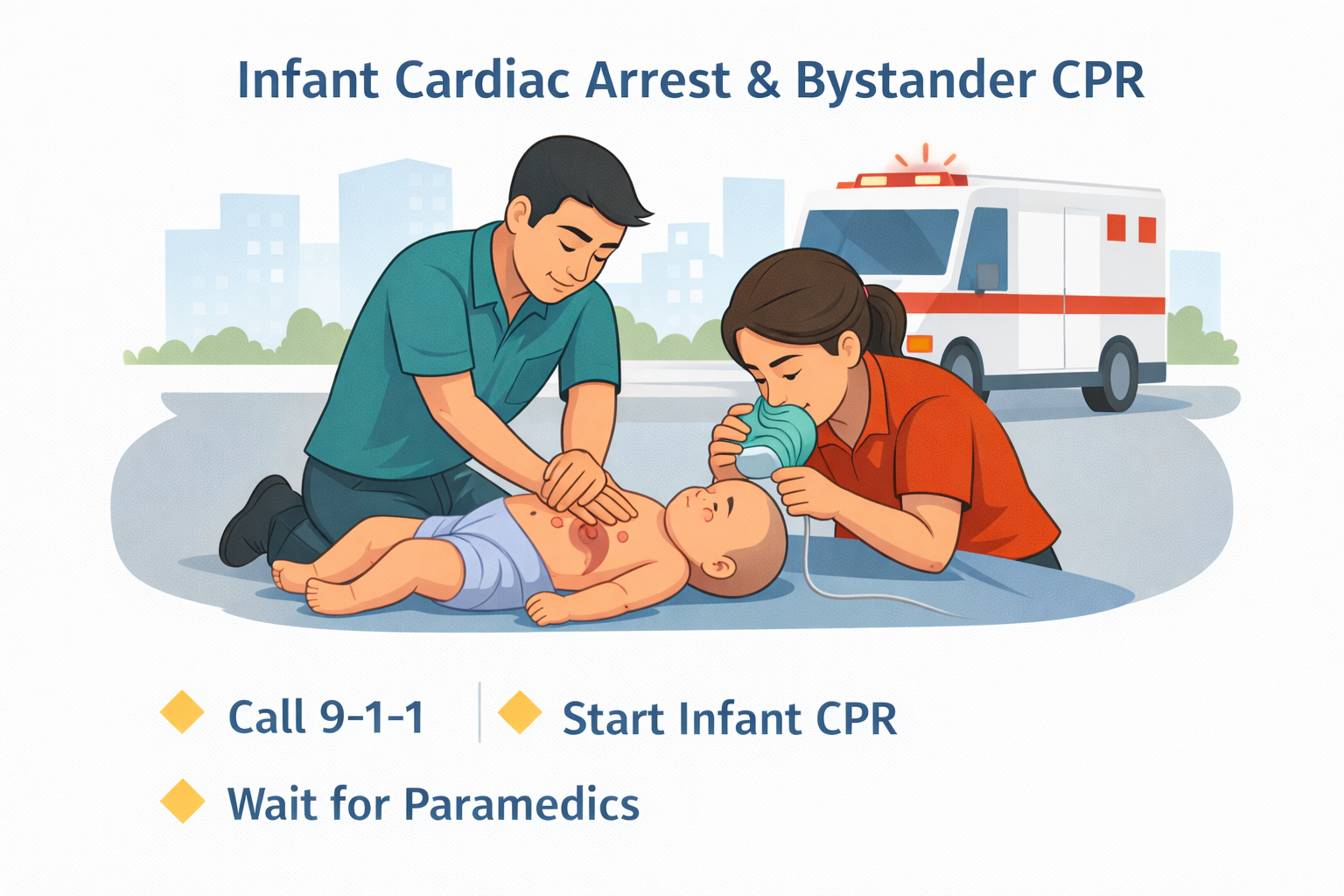
When an infant becomes unresponsive or stops breathing, quick emergency response is critical. In community settings, trained bystanders may begin infant CPR while emergency services are contacted.
General emergency response measures may include:
-
Calling emergency services immediately
-
Following dispatcher instructions if guidance is provided by phone
-
Beginning infant CPR if the baby is unresponsive and not breathing normally
-
Continuing care until trained medical responders arrive
Emergency teams may provide additional airway support, oxygen, and monitoring before transporting the infant to hospital.
Prevention and Safety Considerations
While not all infant medical emergencies can be predicted, awareness and preparedness can improve emergency response outcomes.
Helpful safety practices include:
-
Learning infant first aid and CPR techniques
-
Ensuring caregivers and childcare staff maintain current training
-
Practicing safe sleep and infant supervision guidelines
-
Understanding how to recognize breathing distress in infants
-
Keeping emergency contact procedures easily accessible
Prepared caregivers and community members can help provide early support when sudden infant emergencies occur.
Frequently Asked Questions
Why is infant CPR different from adult CPR?
Infant CPR techniques are modified to account for the smaller size and delicate anatomy of babies. Training courses teach appropriate methods designed specifically for infants.
Can emergency dispatchers provide CPR instructions over the phone?
Yes. Emergency dispatchers are trained to guide callers through basic CPR steps until paramedics arrive. This support can help bystanders begin life-saving care quickly.
Why do infants sometimes appear purple or blue during breathing emergencies?
A bluish or purple colour can occur when oxygen levels in the blood are reduced. This can happen if breathing stops or becomes severely impaired.
Who should learn infant first aid and CPR?
Parents, grandparents, childcare providers, teachers, and anyone who regularly cares for infants may benefit from learning infant emergency response skills.
How can workplaces support infant safety preparedness?
Childcare centres, recreation programs, and family support services often maintain trained staff and clear emergency procedures to help ensure prompt response if a child experiences a medical emergency.
Educational Note
This article is intended for general education about infant emergency awareness and the role of CPR in community response. Learning infant first aid and CPR can help caregivers and community members respond more confidently during unexpected medical emergencies.
About The Author

Mark Kascha
First Aid Instructor Trainer with 30+ years of experience in CPR, emergency response, and safety training across Canada.
Last reviewed: March 2026
 Support local, Canadian-owned businesses, with no connections to American corporations or partnerships.