 Sudden cardiac arrest can occur anywhere, including public places such as shopping centres, workplaces, and recreation facilities. When a person collapses and stops breathing normally, cardiopulmonary resuscitation (CPR) and the use of an automated external defibrillator (AED) may help maintain circulation until emergency medical services arrive.
Across Vancouver, Surrey, and throughout British Columbia, many workplaces and public facilities include CPR and AED training as part of emergency preparedness. Quick action by bystanders and trained staff can play an important role during the first few minutes of a cardiac emergency.
A Realistic Public Emergency Scenario
In South Surrey, British Columbia, a security guard at Semiahmoo Shopping Centre was recognized for his quick response during a medical emergency involving a shopper.
Cameron Hubley received the BC Emergency Health Services (BCEHS) Vital Link Award, which recognizes bystanders who take action during cardiac arrest emergencies.
While working at the shopping centre, Hubley received a call reporting that a woman had collapsed. When he arrived, he found Pamela Morgan lying on the ground and unresponsive.
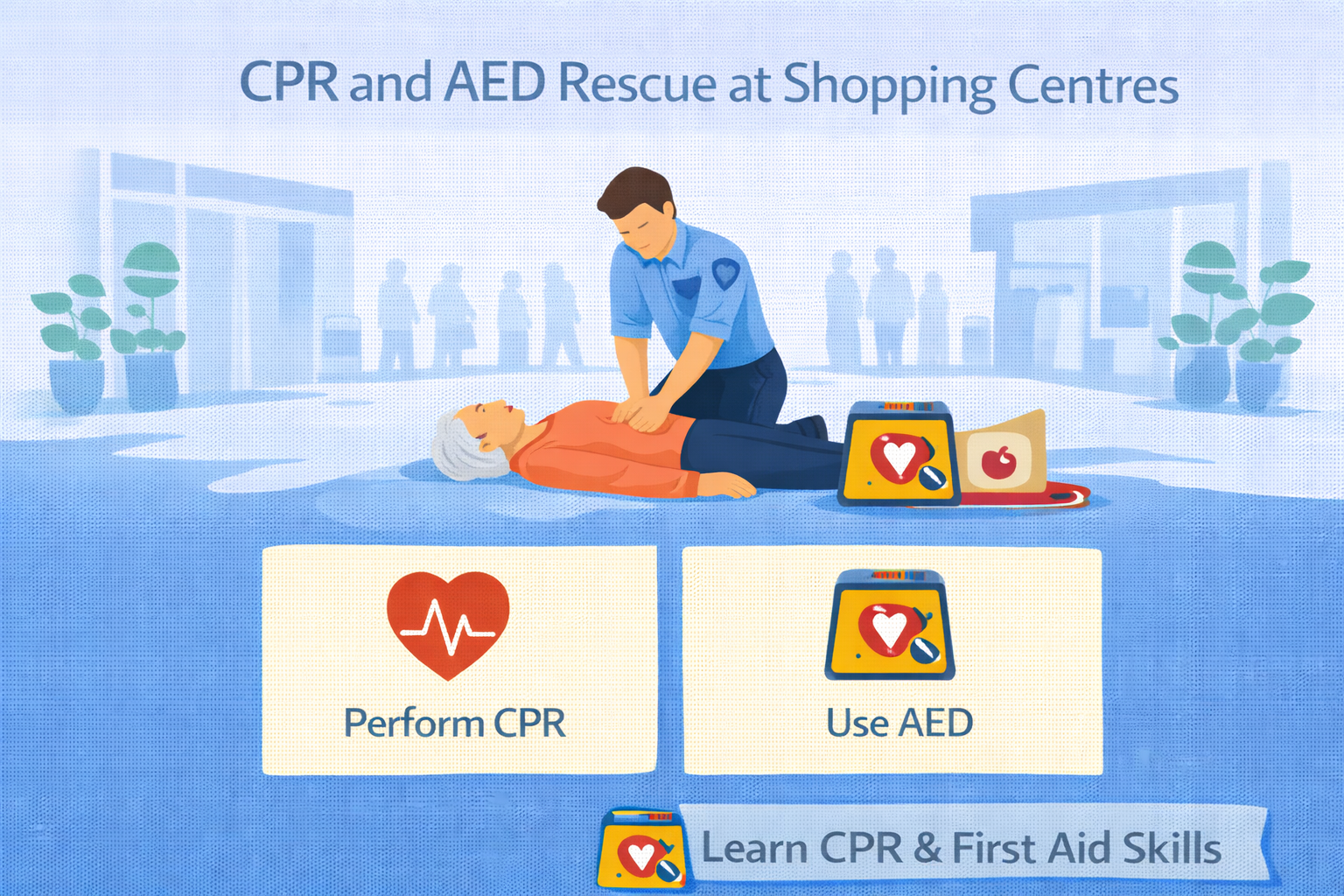
Recognizing the seriousness of the situation, Hubley began chest compressions while asking another bystander to retrieve a nearby automated external defibrillator (AED).
When the AED arrived, Hubley continued coordinating the response. A bystander maintained CPR while he prepared the device. After the AED analyzed the heart rhythm, it advised delivering a shock, which Hubley administered.
Paramedics soon arrived and took over care. Morgan was transported to hospital where she received further treatment and later recovered.
This event highlights how trained individuals and nearby equipment can help support emergency response in public spaces.
Signs of Sudden Cardiac Arrest
Sudden cardiac arrest often occurs without warning. Signs may include:
-
Sudden collapse
-
Unresponsiveness
-
No normal breathing or only gasping
-
Pale, bluish, or grey skin tone
-
No response to voice or touch
Recognizing these signs and calling emergency services immediately is essential.
How CPR Helps During Cardiac Arrest
CPR involves rhythmic chest compressions that help move oxygenated blood through the body when the heart is no longer pumping effectively.
During cardiac arrest:
-
Blood circulation stops
-
Oxygen cannot reach the brain
-
Vital organs begin to lose function
CPR helps maintain temporary circulation until emergency responders arrive.
The Role of AED Devices
Automated external defibrillators (AEDs) are portable devices designed to analyze heart rhythms and deliver a controlled electrical shock when appropriate.
AEDs are commonly placed in:
-
Shopping centres
-
Airports and transit stations
-
Schools and recreation centres
-
Offices and workplaces
-
Sports arenas and community facilities
AEDs provide voice instructions and are designed so that trained bystanders can assist during emergencies.
Emergency Response and Community Preparedness
First aid training programs in Vancouver and across British Columbia emphasize several key emergency response steps:
-
Check responsiveness and breathing
-
Call emergency services immediately
-
Begin CPR if the person is not breathing normally
-
Use an AED if one is available
Many workplaces and public facilities train staff to respond to emergencies while waiting for paramedics.
Prevention and Public Safety Awareness
Although sudden cardiac arrest cannot always be predicted, community preparedness can improve emergency outcomes.
Important preparedness measures include:
-
CPR and AED training for workplace staff
-
Public access to AED devices in busy locations
-
Emergency response planning in public venues
-
Community awareness of cardiac emergency signs
Programs such as the BCEHS Vital Link Award help recognize individuals who take action during emergencies and encourage CPR awareness in communities.
Frequently Asked Questions
What is sudden cardiac arrest?
Sudden cardiac arrest occurs when the heart suddenly stops pumping blood effectively, causing a person to collapse and lose consciousness.
What does an AED do?
An AED analyzes the heart’s rhythm and may deliver a controlled electrical shock if needed to help restore a normal rhythm.
Can bystanders use an AED?
Many AED devices are designed for public use and provide voice instructions that guide users during an emergency.
Why is CPR important during cardiac arrest?
CPR helps maintain blood circulation until emergency medical responders arrive and provide advanced care.
Why are AEDs placed in shopping centres and workplaces?
Public access AED programs allow faster response during cardiac emergencies in locations where many people gather.
Educational Note
This article is intended for general public education about CPR, AED awareness, and emergency preparedness. Learning first aid and CPR can help individuals recognize emergencies and provide assistance safely until trained medical responders arrive.
About The Author

Mark Kascha
First Aid Instructor Trainer with 30+ years of experience in CPR, emergency response, and safety training across Canada.
Last reviewed: March 2026
 Support local, Canadian-owned businesses, with no connections to American corporations or partnerships.