 Medical emergencies can occur unexpectedly in crowded public settings such as restaurants, entertainment venues, parks, and waterfront areas. In situations where someone becomes critically injured, immediate assistance from nearby individuals and first responders can play an important role while waiting for paramedics.
Across Vancouver and British Columbia, public gatherings at waterfront areas, entertainment districts, and nightlife venues are common. Because emergency services may require time to reach a location, basic first aid knowledge and CPR awareness can help support someone experiencing a life-threatening condition until professional medical care arrives.
Quick recognition of the emergency and early intervention are important parts of community safety preparedness.
A Realistic Scenario: Emergency Response Outside a Nightclub
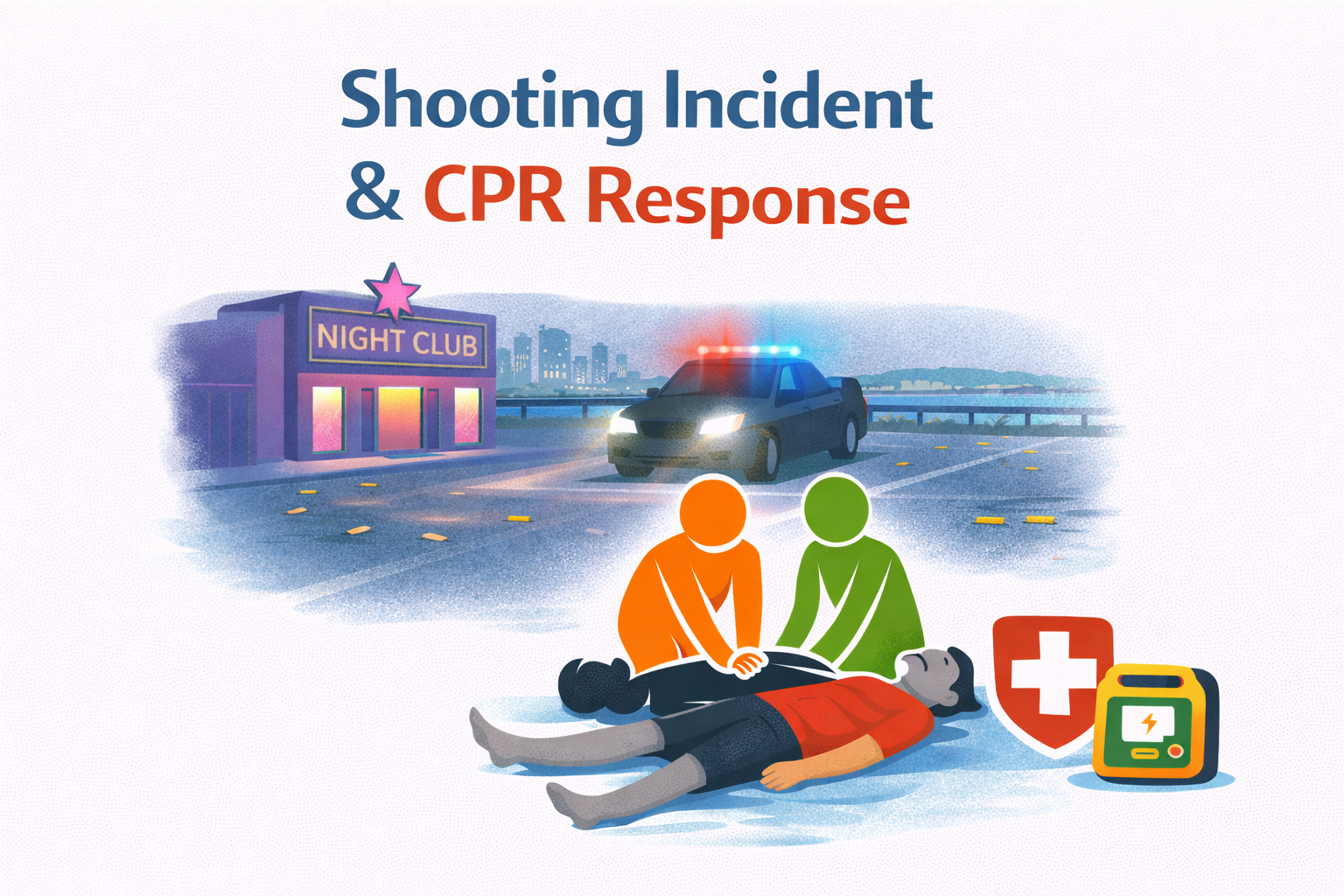
In one reported incident, police responded to reports of gunfire in a parking lot outside a nightclub shortly before 9 PM.
Witnesses described a sudden and chaotic scene as several loud sounds were heard from the parking area. At first, some people believed the noises were firecrackers. Moments later, people began running from the area while others moved to the ground for safety.
Officers arriving at the location searched the area and located shell casings in the parking lot. They also found a man who had sustained injuries. Police began CPR while waiting for emergency medical assistance before transporting the individual to hospital.
Authorities later reported that the man’s injuries were not considered life-threatening, and investigators continued to gather information from witnesses to understand the circumstances surrounding the incident.
Situations like this demonstrate how rapid action by first responders and trained individuals can help stabilize a person during an emergency.
Signs of a Life-Threatening Medical Emergency
In serious incidents, individuals may experience medical distress that requires immediate attention.
Possible warning signs include:
-
Loss of consciousness or unresponsiveness
-
Difficulty breathing or abnormal breathing
-
Severe bleeding or visible trauma
-
Weak or absent pulse
-
Confusion or disorientation
-
Pale, cool, or clammy skin indicating possible shock
Recognizing these symptoms quickly allows responders to begin appropriate emergency care.
Causes of Sudden Medical Distress in Public Incidents
Injuries occurring during unexpected events can lead to several medical complications.
Possible causes of medical distress may include:
-
Trauma or injuries sustained during the incident
-
Severe bleeding
-
Lack of oxygen due to breathing difficulties
-
Cardiac arrest resulting from injury or shock
Because these situations can escalate quickly, rapid response from trained individuals is essential.
First Aid Response and CPR Awareness
During emergencies, first aid responders and bystanders are often encouraged to focus on safety and immediate assistance.
First aid training typically emphasizes the following steps:
-
Ensure the area is safe before approaching
-
Contact emergency services immediately
-
Check responsiveness and breathing
-
Provide assistance without placing yourself at risk
-
Begin CPR if the person is unresponsive and not breathing normally, if trained
-
Continue care until emergency responders arrive
In some locations, automated external defibrillators (AEDs) may be available in public spaces to assist with cardiac emergencies.
Early CPR helps maintain circulation and oxygen delivery to vital organs during cardiac arrest.
Public Safety and Preparedness
Prepared communities are better equipped to respond during emergencies. Public education programs across British Columbia often emphasize the importance of first aid awareness.
Preparedness strategies include:
-
Learning CPR and first aid skills
-
Recognizing signs of medical emergencies
-
Knowing how to contact emergency services quickly
-
Supporting community safety initiatives
Training programs help individuals respond calmly and effectively during unexpected situations.
FAQ
Why might CPR be used during a public emergency?
CPR may be used if a person becomes unresponsive and is not breathing normally. The technique helps circulate oxygenated blood to vital organs until advanced medical care arrives.
What should bystanders do if an emergency occurs in a crowded public space?
The first priority is personal safety. Emergency services should be contacted immediately, and trained individuals may provide first aid assistance if it is safe to do so.
Why is first aid training recommended for the public?
First aid training prepares individuals to recognize medical emergencies and provide supportive assistance while waiting for professional responders.
What is an AED and why is it useful?
An automated external defibrillator (AED) analyzes the heart’s rhythm and can deliver a shock if a life-threatening rhythm is detected. The device provides guided instructions to assist responders.
Can bystander intervention make a difference during emergencies?
Yes. Early recognition and assistance can help support a person experiencing a life-threatening condition until paramedics arrive.
Educational Note:
This article is intended for general first aid awareness and public safety education. Learning CPR and first aid skills can help individuals recognize emergencies and provide supportive care until trained emergency services arrive.
About The Author

Mark Kascha
First Aid Instructor Trainer with 30+ years of experience in CPR, emergency response, and safety training across Canada.
Last reviewed: March 2026
 Support local, Canadian-owned businesses, with no connections to American corporations or partnerships.