Water Emergency at Quarry Lake: CPR Awareness and Bystander Response
Understanding CPR During Water Emergencies
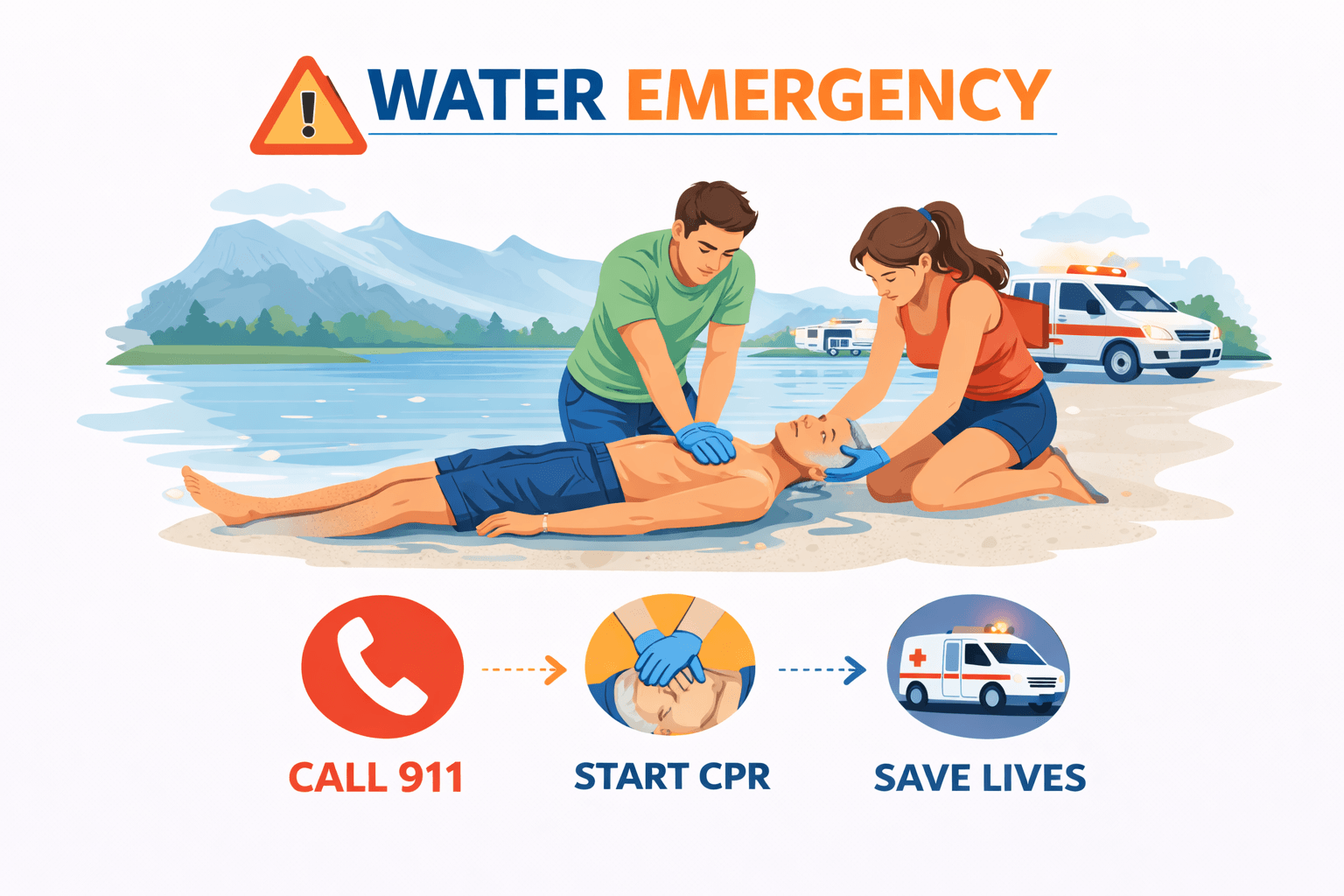 Water recreation areas such as lakes, beaches, and swimming spots can be enjoyable places for outdoor activity. However, emergencies can occur if someone experiences difficulty breathing while in the water or becomes submerged unexpectedly.
Cardiopulmonary resuscitation (CPR) is a first aid technique used when a person becomes unresponsive and is not breathing normally. Across Canada, including Vancouver and British Columbia, CPR training is commonly taught in workplace first aid programs and community safety courses.
Learning CPR helps people understand how to respond quickly during emergencies while waiting for professional responders.
Water Safety and Public Recreation Areas
Popular outdoor swimming locations often attract large numbers of visitors, especially during warm weather. Natural bodies of water such as lakes may not always have lifeguards present, meaning bystanders can become the first people to notice when someone is in distress.
First aid and CPR education programs often encourage individuals to:
-
Watch for swimmers who may be struggling
-
Contact emergency services immediately
-
Assist safely if someone requires rescue
-
Begin CPR if the person is unresponsive and not breathing normally
Prepared bystanders can play an important role in emergency response until trained responders arrive.
A Water Emergency at Quarry Lake in Canmore
Emergency services responded to a distress call at Quarry Lake in the Town of Canmore involving a swimmer in trouble.
According to reports from the Canmore RCMP, witnesses noticed a man who appeared to be struggling while swimming. He called out for help before disappearing beneath the surface of the water.
Several bystanders quickly moved to assist and began searching for the swimmer.
After several minutes, the man was located and pulled from the lake. He was unresponsive when rescuers brought him to shore.
Bystanders immediately began performing CPR while waiting for emergency responders to arrive.
Police officers, paramedics, and firefighters soon reached the scene and continued medical treatment. The man was transported to hospital with assistance from emergency medical crews from the surrounding region.
Despite continued life-saving efforts, he later died from his injuries.
Incidents like this highlight how quickly water emergencies can develop and the important role bystanders may play in early response.
Recognizing Signs of a Water Emergency
A swimmer experiencing distress may show several warning signs, including:
-
Calling for help in the water
-
Difficulty staying afloat
-
Sudden disappearance beneath the surface
-
Uncoordinated or weak movements
-
Unresponsiveness after being removed from the water
Recognizing these signs quickly allows bystanders to contact emergency services and begin assistance if it is safe to do so.
Why CPR May Be Used After Water Rescue
When someone is removed from the water and is not breathing normally, CPR may be performed while waiting for emergency medical care.
CPR helps maintain circulation of oxygen-rich blood to the brain and vital organs during the critical early minutes of an emergency.
Emergency response organizations across Canada emphasize that early CPR and rapid emergency response can improve survival outcomes in certain drowning emergencies.
Prevention and Water Safety Awareness
Communities and recreation areas often encourage several safety practices for open water swimming:
-
Swimming with a partner whenever possible
-
Remaining within designated swimming areas
-
Supervising swimmers carefully
-
Being aware of personal swimming ability and water conditions
-
Learning CPR and first aid skills
Prepared individuals may be better equipped to respond quickly during emergencies.
Frequently Asked Questions
What should someone do if they see a swimmer in distress?
Alert emergency services immediately and seek assistance from others nearby. If it is safe, trained individuals may help remove the person from the water and begin first aid.
When might CPR be used during a water emergency?
CPR may be used if a person rescued from the water is unresponsive and not breathing normally.
Why is quick rescue important during drowning incidents?
Oxygen levels in the body can drop quickly when breathing stops, making rapid rescue and emergency response important.
Are lakes more dangerous than pools?
Natural water environments can present additional risks such as cold water, uneven terrain, and the absence of lifeguards.
Where can people learn CPR in Canada?
CPR training courses are available through workplace safety providers, community organizations, and certified first aid training centres across Canada.
Educational Note
This article is intended for general first aid awareness and public safety education. Learning CPR and first aid can help individuals better understand how to respond during emergencies while waiting for trained emergency medical services.
About The Author

Mark Kascha
First Aid Instructor Trainer with 30+ years of experience in CPR, emergency response, and safety training across Canada.
Last reviewed: March 2026
 Support local, Canadian-owned businesses, with no connections to American corporations or partnerships.