 Water-related incidents can happen quickly, especially during recreational activities such as boating or jet skiing. When a person is submerged or unable to breathe properly, oxygen levels in the body can drop rapidly, leading to a life-threatening emergency.
Across Maple Ridge, Vancouver, Coquitlam, and the Lower Mainland of British Columbia, waterways such as the Fraser River are commonly used for recreation. Because of this, water safety awareness and CPR training are important for both individuals and workplaces involved in outdoor or marine activities.
First Aid and CPR Training in British Columbia
In British Columbia, many emergency responders—including firefighters, paramedics, and police—are trained in cardiopulmonary resuscitation (CPR) to assist during water-related emergencies. In addition, recreational users of rivers and lakes are encouraged to learn CPR and basic first aid.
When someone is pulled from the water and is not breathing normally, immediate CPR can help support circulation and oxygen delivery until advanced care arrives.
Scenario: Emergency Response on the Fraser River
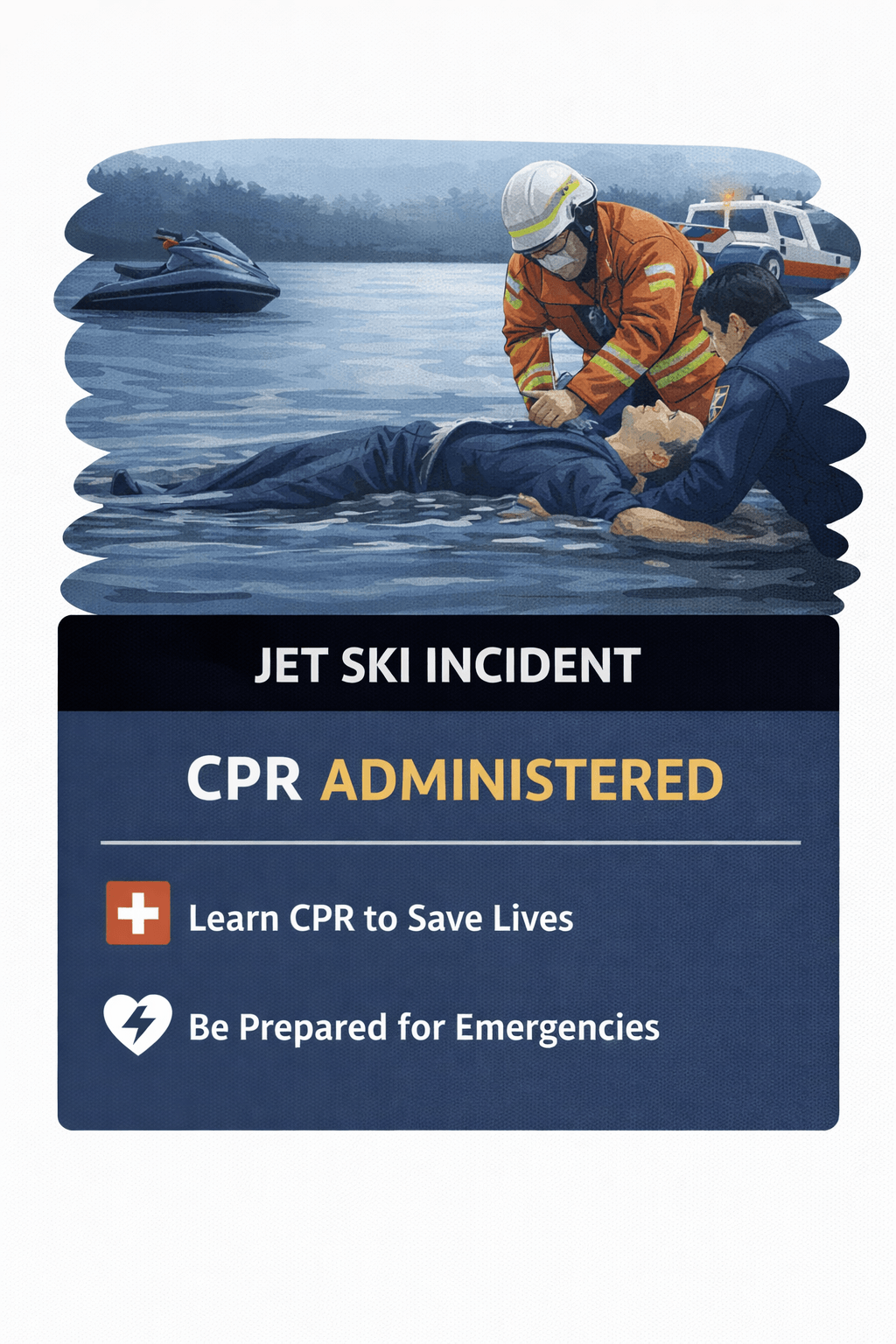
An incident on the Fraser River near Haney Bypass and 225 Street in Maple Ridge highlighted the importance of rapid emergency response during water emergencies.
Authorities were called to the area early in the morning after reports of a possible drowning. Witnesses indicated that a jet ski crash may have occurred in the water, and the incident was reported from a nearby location.
Emergency responders arrived and located a man who had been pulled from the river. He was unresponsive, and responders immediately began CPR at the scene.
Despite these efforts, the man did not survive.
Search teams, including a hovercraft unit, were deployed to locate the jet ski believed to be involved in the incident. At the time of the report, no equipment had been recovered.
Investigators from the Ridge Meadows RCMP began reviewing the circumstances surrounding the event. The incident was treated as a sudden death while authorities worked to determine how the individual entered the water and what factors contributed to the outcome.
Recognizing Signs of a Water Emergency
Water emergencies may not always be obvious. Signs that someone may be in distress or require immediate assistance can include:
-
Unresponsiveness after being in the water
-
Difficulty breathing or no visible breathing
-
Weak or absent movement
-
Bluish or pale skin around the lips
-
Gasping or irregular breathing
Recognizing these signs quickly allows for faster emergency response.
How CPR Helps After Drowning Incidents
When a person stops breathing due to a water-related incident, oxygen cannot reach vital organs such as the brain and heart. CPR helps by:
-
Providing chest compressions to circulate blood
-
Supporting oxygen delivery throughout the body
-
Maintaining circulation until breathing returns
-
Bridging the time until paramedics can provide advanced care
Early CPR is an important part of the chain of survival during drowning emergencies.
First Aid Response Near Water
Individuals trained in CPR may assist during water emergencies by:
-
Safely removing the person from the water
-
Checking for responsiveness and breathing
-
Contacting emergency services immediately
-
Beginning CPR if the person is unresponsive and not breathing normally
-
Continuing care until emergency responders arrive
Emergency dispatchers may also provide instructions while help is on the way.
Prevention and Water Safety Considerations
While not all incidents can be prevented, safety awareness can reduce risks during water activities. Important precautions include:
-
Wearing approved life jackets or personal flotation devices
-
Avoiding high speeds in unfamiliar or crowded waterways
-
Staying aware of river currents and conditions
-
Ensuring equipment is properly maintained
-
Learning CPR and first aid skills
Prepared individuals and communities help improve safety on waterways throughout the Lower Mainland and British Columbia.
Frequently Asked Questions
Why is CPR important after a drowning incident?
CPR helps maintain circulation and oxygen delivery when breathing has stopped, supporting the body until medical help arrives.
Can water incidents happen quickly?
Yes. Water emergencies can occur suddenly, especially in moving water or during recreational activities such as jet skiing.
Should people using waterways learn CPR?
Many safety organizations encourage CPR training for individuals who spend time near water, including boaters and recreational users.
What should someone do if they see a person in distress in the water?
Emergency services should be contacted immediately, and assistance should only be provided if it is safe to do so.
Why are life jackets important?
Life jackets help keep individuals afloat and reduce the risk of drowning during unexpected incidents.
Educational Note
This article is intended for general public education about CPR awareness and water safety. Participating in recognized first aid and CPR training can help individuals feel more prepared to respond during emergencies involving water activities.
About The Author

Mark Kascha
First Aid Instructor Trainer with 30+ years of experience in CPR, emergency response, and safety training across Canada.
Last reviewed: March 2026
 Support local, Canadian-owned businesses, with no connections to American corporations or partnerships.