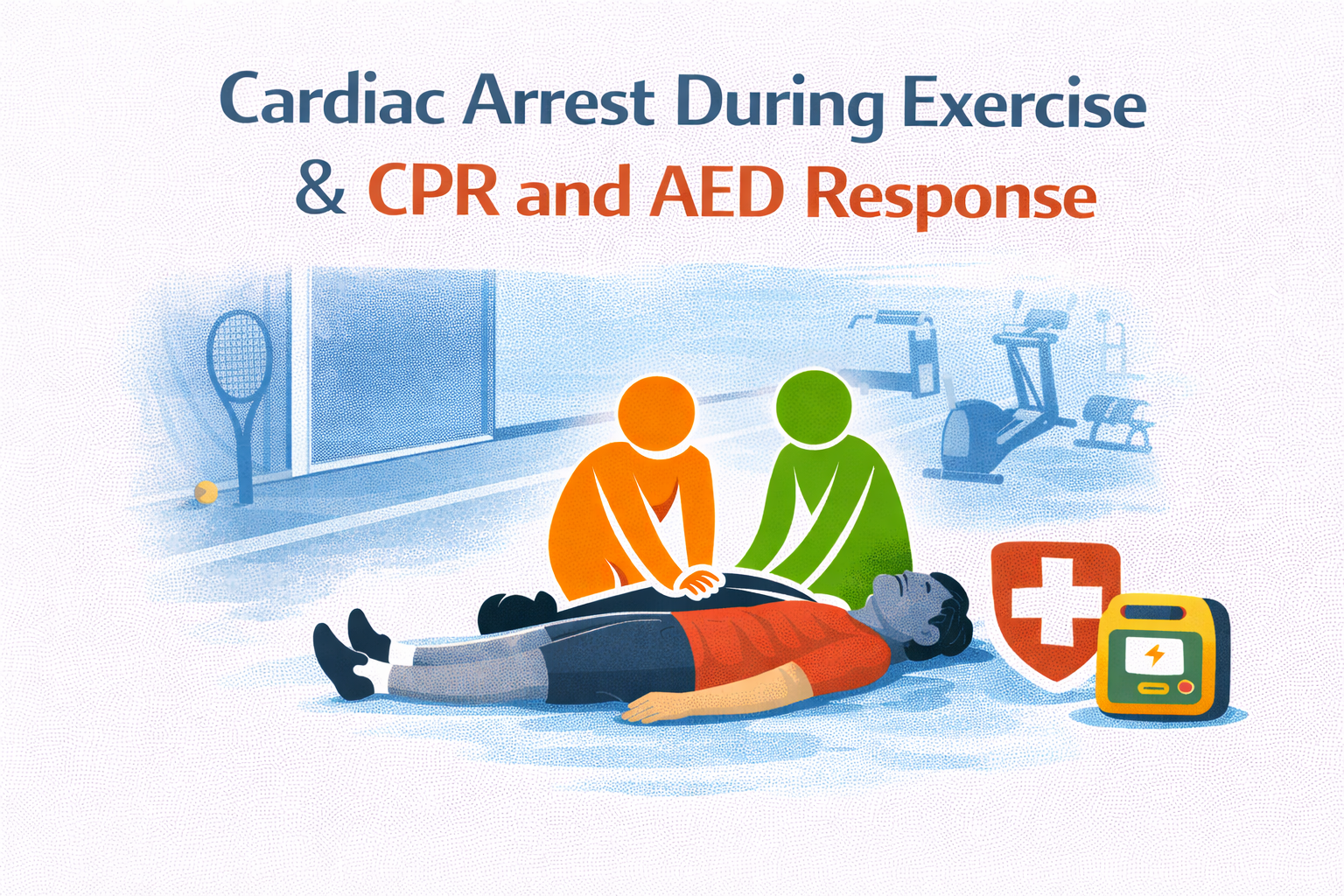
 Sudden cardiac arrest can occur during physical activity, including recreational sports or exercise. Cardiac arrest happens when the heart suddenly stops pumping blood effectively, preventing oxygen from reaching the brain and other vital organs.
In Vancouver and across British Columbia, recreation centres, gyms, and sports facilities host thousands of people each day. Because emergencies can happen during physical activity, CPR training and access to automated external defibrillators (AEDs) are important safety measures in many recreational environments.
Quick action from trained bystanders or facility staff can provide critical support until paramedics arrive.
A Realistic Scenario: Emergency at a Recreation Centre
In a reported incident, a man in his 50s was playing squash at a recreation facility when he suddenly began feeling dizzy and short of breath. Moments later, he collapsed on the court.
Nearby individuals quickly noticed the emergency and moved to assist. A student who was present responded first and immediately began CPR after recognizing that the man was unresponsive.
As others were alerted to the situation, more trained individuals joined the response. A supervisor retrieved an automated external defibrillator (AED) from the facility and attached it to the patient while responders continued chest compressions.
The AED delivered shocks to help restore the heart’s rhythm while CPR continued. Emergency medical services arrived shortly afterward and took over advanced care.
The individual was transported to hospital and later recovered well enough to personally thank the people who helped during the emergency.
Situations like this demonstrate how teamwork, CPR knowledge, and quick access to AED equipment can support survival during sudden cardiac arrest.
Signs of Sudden Cardiac Arrest
Cardiac arrest often occurs without warning, especially during physical activity.
Possible signs include:
-
Sudden collapse
-
Unresponsiveness
-
No normal breathing or gasping breathing
-
Weak or absent pulse
-
Bluish or pale skin tone
Immediate emergency response is critical when these symptoms appear.
Why Cardiac Arrest Can Occur During Exercise
Exercise places additional demand on the heart. In some individuals, underlying heart conditions may lead to electrical disturbances that interrupt the heart’s normal rhythm.
Possible contributing factors include:
-
Abnormal heart rhythms (arrhythmias)
-
Undiagnosed heart conditions
-
Reduced blood flow to the heart
-
Structural heart abnormalities
Although exercise is generally beneficial for overall health, sudden cardiac events can occasionally occur in both trained athletes and recreational participants.
First Aid Response: CPR and AED Use
When someone experiences cardiac arrest outside of a hospital, bystander intervention plays a critical role during the first minutes of the emergency.
First aid training typically teaches individuals to:
-
Ensure the area is safe
-
Call emergency services immediately
-
Check responsiveness and breathing
-
Begin CPR if the person is unresponsive and not breathing normally
-
Use an automated external defibrillator (AED) if available
-
Continue care until emergency responders arrive
Early CPR helps maintain blood circulation to vital organs, while early defibrillation may restore a normal heart rhythm.
Prevention and Recreation Facility Safety
Many recreation centres and sports facilities across British Columbia implement safety measures to respond to medical emergencies.
Common preparedness steps include:
-
Staff training in CPR and first aid
-
Installing accessible AED devices throughout the facility
-
Creating emergency response plans for medical incidents
-
Encouraging members and staff to recognize warning signs of distress
These safety measures help ensure that facilities are prepared to respond quickly when emergencies occur.
FAQ
Can cardiac arrest happen during exercise?
Yes. Although uncommon, cardiac arrest can occur during physical activity due to underlying heart conditions or abnormal heart rhythms.
Why is CPR important during cardiac arrest?
CPR helps maintain circulation and oxygen delivery to the brain and vital organs until professional medical responders arrive.
What does an AED do?
An automated external defibrillator analyzes the heart’s rhythm and can deliver a shock if a life-threatening rhythm is detected. The device provides guided instructions for responders.
Why are AEDs placed in recreation centres and gyms?
Recreation facilities host many participants and spectators. Having an AED nearby allows responders to deliver early defibrillation during cardiac emergencies.
Why should people learn CPR and first aid?
Training helps individuals recognize emergencies and provide life-saving assistance while waiting for professional medical care.
Educational Note:
This article is intended for general first aid awareness and public safety education. Learning CPR and AED use can help individuals recognize emergencies and provide supportive assistance until trained emergency services arrive.
About The Author

Mark Kascha
First Aid Instructor Trainer with 30+ years of experience in CPR, emergency response, and safety training across Canada.
Last reviewed: March 2026
 Support local, Canadian-owned businesses, with no connections to American corporations or partnerships.