Understanding CPR During Medical Emergencies: Lessons from a Langley Incident
What Is CPR and When Is It Used?
 Cardiopulmonary resuscitation (CPR) is a first aid technique used when a person becomes unresponsive and is not breathing normally. CPR helps maintain circulation of oxygen-rich blood to the brain and vital organs until advanced medical care becomes available.
Across Vancouver and throughout British Columbia, CPR training is widely included in workplace first aid programs and community safety courses. These programs teach individuals how to recognize life-threatening emergencies and respond quickly while waiting for paramedics.
Understanding when CPR should be started—and when other care may be appropriate—is an important part of first aid education.
Emergency Response in Public Settings
Medical emergencies can occur suddenly on roads, in workplaces, or in public spaces. In many cases, bystanders may be the first people available to help until emergency services arrive.
First aid training in Canada often focuses on several key emergency actions:
-
Recognizing when someone is unresponsive
-
Contacting emergency services immediately
-
Checking breathing and responsiveness
-
Beginning CPR if the person is not breathing normally
-
Continuing care until professional responders arrive
Early assistance from bystanders can help support emergency response during critical moments.
A Medical Emergency in Langley, British Columbia
A case in Langley, British Columbia, brought attention to how CPR decisions may be made during emergency situations.
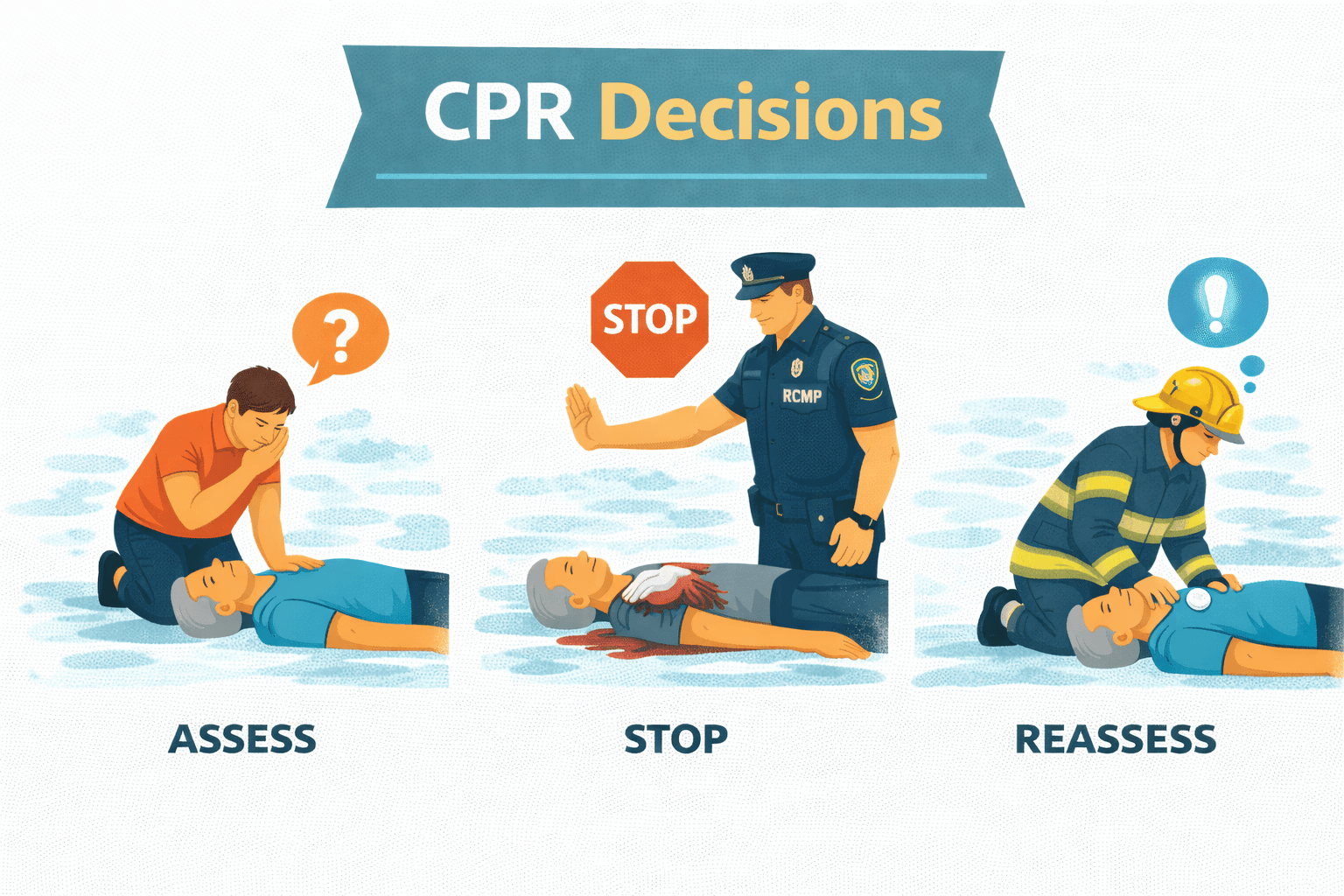
According to reports, a man experienced a medical event while driving and crashed his vehicle. A civilian who arrived at the scene began performing CPR on the driver.
When an RCMP officer arrived, he checked the driver for signs of breathing and a pulse. Believing that the man was breathing, the officer instructed the bystander to stop performing CPR.
Shortly afterward, firefighters arrived and reassessed the driver. At that point, the man did not have a pulse, and CPR was restarted.
Despite further medical interventions, the man later died at a healthcare facility.
The civilian who had initially provided CPR later filed a complaint about the incident. The Independent Investigations Office of British Columbia reviewed the circumstances.
After reviewing the evidence, the BC Crown prosecutor’s office concluded that charges would not be laid because there was no substantial likelihood of conviction.
Why CPR Decisions Can Be Complex
Emergency situations can be difficult to assess, especially when responders are working quickly under pressure.
First aid training teaches individuals to evaluate several factors before starting CPR, including:
-
Whether the person is responsive
-
Whether breathing appears normal
-
Whether a pulse or signs of circulation are present
If someone is unresponsive and not breathing normally, CPR is typically initiated while emergency services are contacted.
Professional responders may reassess the situation as additional information becomes available.
Why Early CPR Is Important
During cardiac arrest, the heart stops effectively pumping blood. Without circulation, oxygen supply to the brain and organs decreases quickly.
CPR helps maintain circulation during this critical period while advanced medical care is on the way.
Public health organizations across Canada emphasize that early CPR and rapid emergency response can improve survival outcomes during certain medical emergencies.
Prevention and Community Preparedness
Communities and workplaces can support emergency preparedness by encouraging first aid education and awareness.
Examples of preparedness include:
-
Providing CPR and first aid training for employees and community members
-
Ensuring emergency response procedures are clearly understood
-
Promoting awareness of medical emergencies in public spaces
-
Supporting access to automated external defibrillators (AEDs)
Prepared individuals are often better equipped to recognize emergencies and respond quickly.
Frequently Asked Questions
What is cardiopulmonary resuscitation (CPR)?
CPR is a first aid technique used when a person becomes unresponsive and stops breathing normally. It helps maintain circulation until emergency medical care arrives.
When should CPR be started?
CPR is typically started when someone is unresponsive and not breathing normally.
Why is early CPR important?
Early CPR helps maintain blood circulation to the brain and vital organs while waiting for professional medical care.
Who can perform CPR during an emergency?
Anyone trained in CPR can provide assistance during an emergency, including bystanders, workplace first aid attendants, police officers, firefighters, or paramedics.
Where can people learn CPR in British Columbia?
CPR training is commonly available through workplace safety programs, community organizations, and certified first aid training providers throughout British Columbia.
Educational Note
This article is intended for general first aid awareness and workplace safety education. Learning CPR and first aid can help individuals better understand how to respond during emergencies while waiting for trained emergency medical services.
About The Author

Mark Kascha
First Aid Instructor Trainer with 30+ years of experience in CPR, emergency response, and safety training across Canada.
Last reviewed: March 2026
 Support local, Canadian-owned businesses, with no connections to American corporations or partnerships.