 Large community gatherings such as ceremonies, festivals, and public commemorations bring people together but can also present situations where someone experiences sudden medical distress.
When a person collapses or becomes unresponsive, quick action from trained responders—such as police officers, first aid attendants, or bystanders—can help provide immediate care until paramedics arrive.
Across Canada, including Vancouver and throughout British Columbia, first aid and emergency response training are widely encouraged in workplaces and public safety organizations to prepare for unexpected medical emergencies.
First Aid and Workplace Relevance in Canada
Many professionals who regularly work in public environments—such as police officers, firefighters, security staff, and event personnel—receive first aid, CPR, and emergency response training.
These skills help responders assess medical situations, provide immediate assistance, and coordinate with paramedics when someone becomes unwell.
Emergency preparedness is particularly important at public gatherings where individuals of all ages may attend.
A Realistic Scenario from a Remembrance Day Ceremony
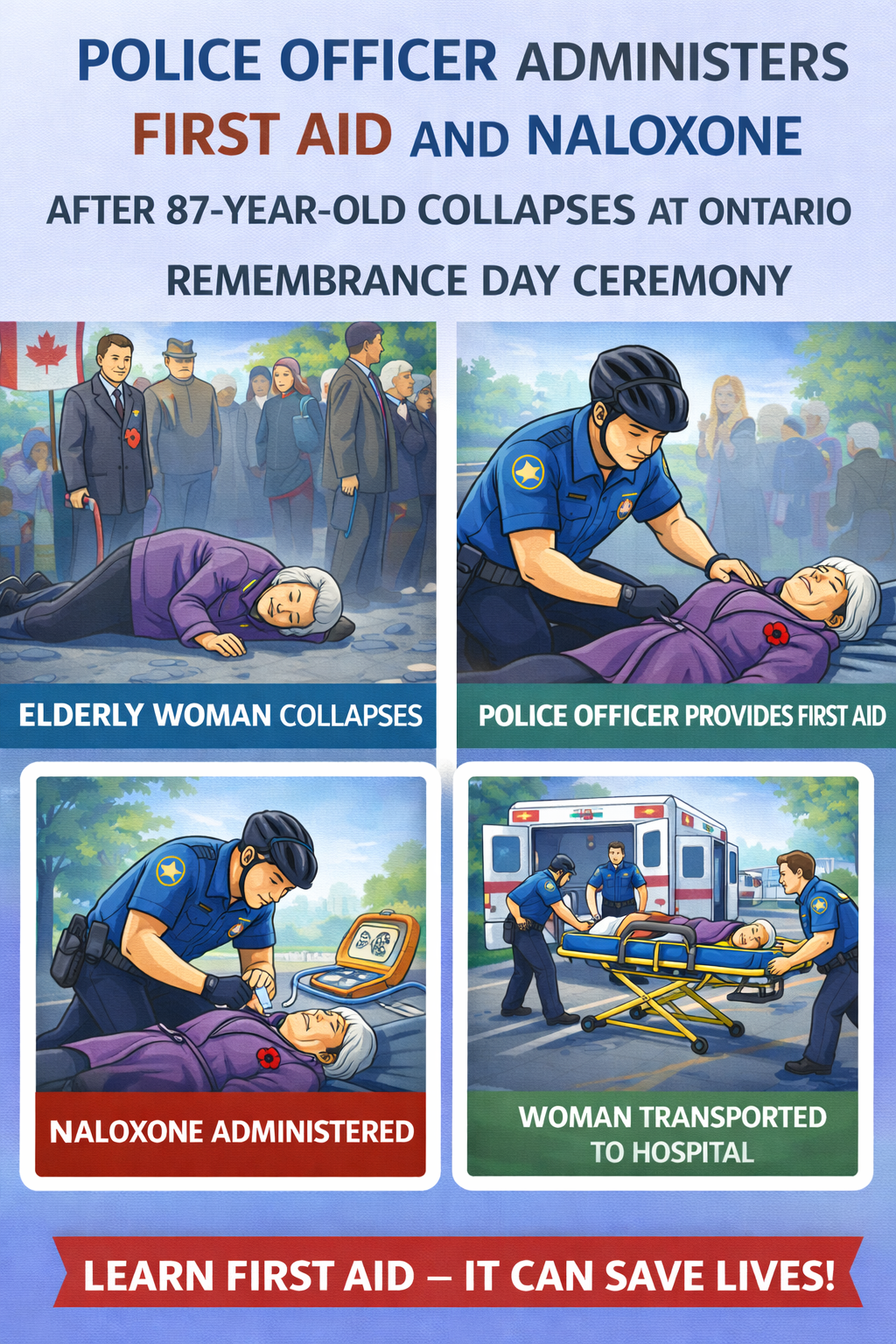
During a Remembrance Day ceremony in Clayton, Ontario—approximately 65 kilometres southwest of Ottawa—an elderly woman experienced a sudden medical emergency.
The 87-year-old attendee collapsed during the event, prompting immediate concern from those nearby.
A police officer present at the ceremony quickly responded and began providing first aid while emergency services were contacted. According to reports, the officer also administered naloxone after learning that the woman had been taking medication.
Naloxone is a medication that can help reverse the effects of opioid overdose by blocking opioid receptors in the body. It is increasingly carried by police officers, paramedics, and first responders across Canada.
Paramedics soon arrived and transported the woman to a hospital for further medical care. Unfortunately, she was later declared deceased due to cardiac arrest.
The Special Investigations Unit (SIU), an independent agency responsible for reviewing incidents involving police that result in serious injury or death, examined the circumstances surrounding the event.
Following its review, the SIU determined that the officer’s actions in providing first aid and administering naloxone were not connected to the woman’s death, which was attributed to her underlying medical condition.
The incident also prompted discussions among provincial officials about procedures for reviewing situations where police provide emergency medical assistance.
Signs of Medical Distress
Medical emergencies can appear suddenly and may require immediate attention.
Possible warning signs include:
-
Sudden collapse
-
Difficulty breathing or no normal breathing
-
Chest pain or pressure
-
Confusion or disorientation
-
Loss of consciousness
-
Weak or absent pulse
Emergency services should be contacted immediately when these symptoms occur.
Possible Causes of Sudden Collapse
A person may collapse for several reasons, particularly during stressful or physically demanding situations.
Possible causes may include:
-
Cardiac arrest or heart-related conditions
-
Severe medical illness
-
Medication reactions
-
Respiratory problems
-
Underlying health conditions
Medical professionals typically perform further evaluation to determine the exact cause.
First Aid Response and Immediate Management
When someone collapses at a public event or in the community, trained responders may take several steps while waiting for paramedics.
General response steps may include:
-
Call emergency services immediately.
-
Check responsiveness and breathing.
-
Provide first aid or CPR if necessary.
-
Follow instructions from emergency dispatchers.
-
Continue care until professional responders arrive.
In some situations, responders may also use additional emergency tools or medications carried as part of their training.
Prevention and Community Safety Considerations
While not all medical emergencies can be prevented, communities can improve preparedness through education and planning.
Helpful measures may include:
-
Encouraging first aid and CPR training in workplaces and communities
-
Ensuring trained responders are present at large public events
-
Supporting access to AEDs and emergency equipment in public areas
-
Promoting awareness of early warning signs of medical distress
Prepared responders and rapid communication with emergency services can help improve response during medical emergencies.
Frequently Asked Questions
What is naloxone?
Naloxone is a medication that can temporarily reverse the effects of opioid overdose by blocking opioid receptors in the body.
Why do police officers carry naloxone?
Many police officers carry naloxone because they may arrive first at the scene of medical emergencies involving opioid overdoses.
What is the Special Investigations Unit (SIU)?
The Special Investigations Unit is an independent agency in Ontario that reviews incidents involving police when serious injury or death occurs.
Why is first aid important at public events?
Large gatherings increase the likelihood that someone may experience a medical emergency. Trained responders can provide immediate assistance while waiting for paramedics.
Can bystanders help during medical emergencies?
Yes. Bystanders can assist by contacting emergency services and following instructions from emergency dispatchers if someone collapses.
Educational Note
This article is intended for general first aid awareness and public education. Learning first aid and emergency response skills can help individuals respond more confidently during medical emergencies while waiting for professional medical assistance.
About The Author

Mark Kascha
First Aid Instructor Trainer with 30+ years of experience in CPR, emergency response, and safety training across Canada.
Last reviewed: March 2026
 Support local, Canadian-owned businesses, with no connections to American corporations or partnerships.