 Cardiac emergencies can occur unexpectedly in everyday situations, including while driving or sitting inside a vehicle. When a person becomes unresponsive and stops breathing normally, cardiopulmonary resuscitation (CPR) may be used to help maintain blood circulation until emergency medical services arrive.
Across Vancouver and British Columbia, CPR and first aid training are commonly included in workplace safety programs and community education initiatives. These courses help people recognize signs of medical emergencies and respond quickly when someone requires assistance.
Early action from bystanders can be an important step in providing support during the first few minutes of a cardiac emergency.
Community Awareness and First Aid Preparedness
Many workplaces and municipalities encourage employees to learn basic first aid skills. Individuals working in public-facing roles—such as security personnel, transit workers, and enforcement officers—may encounter medical emergencies during their daily duties.
First aid training programs often emphasize several key steps:
-
Calling emergency services immediately
-
Checking responsiveness and breathing
-
Beginning CPR if breathing has stopped or is abnormal
-
Continuing assistance until trained responders arrive
Prepared individuals may be able to assist during emergencies while waiting for paramedics.
A Medical Emergency in Burnaby
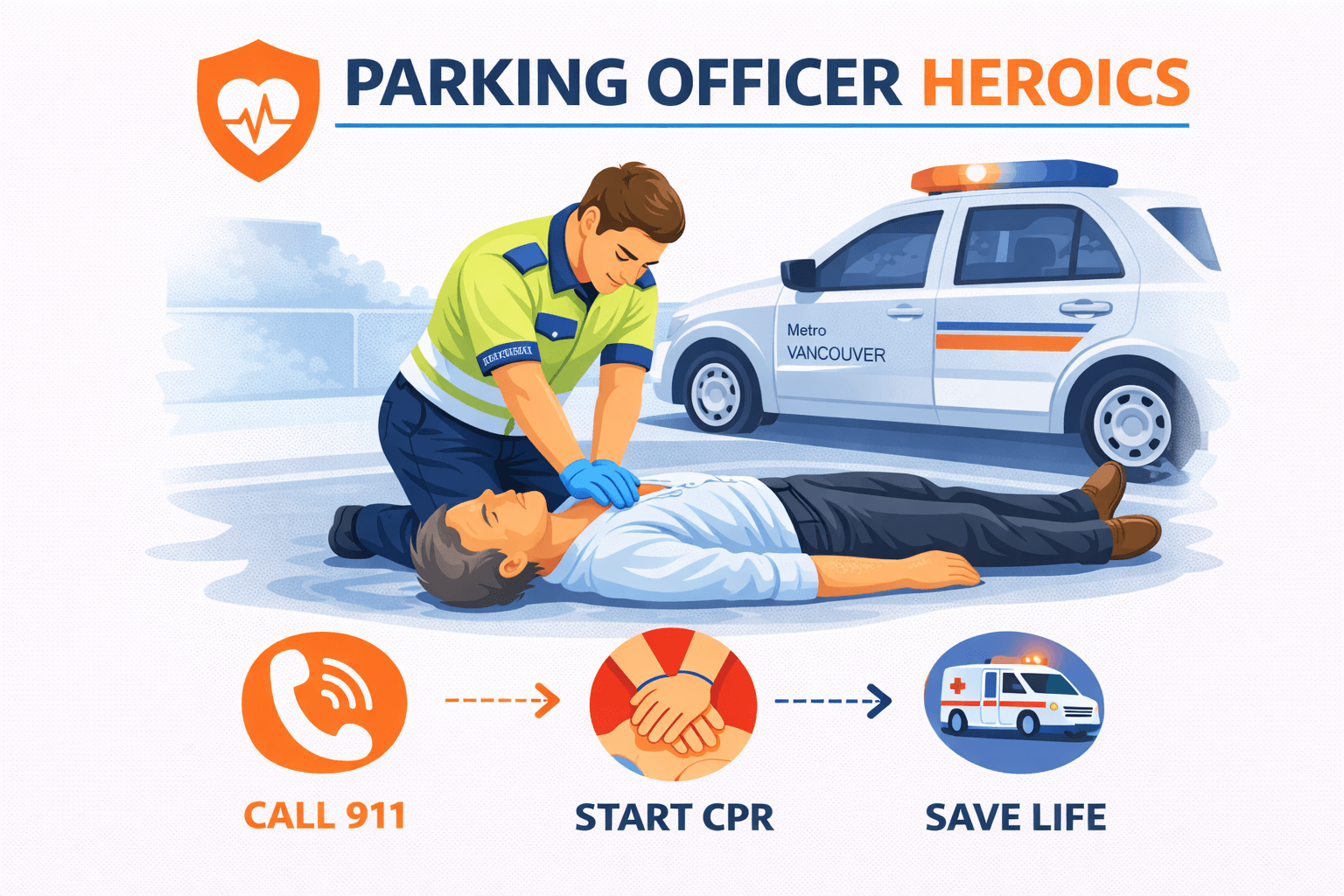
A parking enforcement officer in Metro Vancouver was recognized for responding quickly when he encountered a driver experiencing a medical emergency.
Jason Vickers was working in Burnaby when he noticed a vehicle that appeared to be stopped in an unusual position. When he approached the car to check on the situation, he discovered that the driver inside was in serious distress and appeared to be suffering a cardiac emergency.
Vickers immediately called 911 and began providing assistance.
According to reports, he removed the driver from the vehicle and started performing CPR while waiting for emergency responders to arrive.
Approximately five minutes later, Burnaby firefighters reached the scene and took over medical treatment. The driver was stabilized and transported to hospital for further care.
Although updates on the driver’s condition were not immediately available, the quick response from the parking enforcement officer helped ensure that the individual received immediate assistance during the emergency.
Recognizing Signs of a Cardiac Emergency
Cardiac arrest and other heart-related emergencies can develop suddenly. Warning signs may include:
-
Sudden collapse or loss of responsiveness
-
Difficulty breathing or abnormal breathing
-
Chest discomfort before collapse
-
Pale or grey skin colour
Recognizing these symptoms quickly allows bystanders to contact emergency services and begin assistance if appropriate.
Why CPR May Be Used During Cardiac Arrest
During cardiac arrest, the heart stops pumping blood effectively. Without circulation, oxygen levels in the brain and other organs begin to decrease rapidly.
CPR helps maintain blood circulation during this critical period while waiting for professional medical care.
Emergency response organizations across Canada emphasize that early CPR and rapid emergency response can improve survival outcomes in certain cardiac emergencies.
Prevention and Community Preparedness
Communities and workplaces often encourage preparedness through safety education and training.
Important steps may include:
-
Learning CPR and first aid skills
-
Recognizing signs of medical distress
-
Contacting emergency services quickly
-
Supporting public access to AED devices
Prepared individuals may feel more confident assisting during unexpected emergencies.
Frequently Asked Questions
What is cardiopulmonary resuscitation (CPR)?
CPR is a first aid technique used when a person becomes unresponsive and stops breathing normally. It helps maintain circulation until professional medical care arrives.
Can CPR be performed outside of medical settings?
Yes. CPR is often performed by trained bystanders, workplace first aid attendants, or emergency responders before paramedics arrive.
What should someone do if they find a person unconscious in a vehicle?
Emergency services should be contacted immediately. Trained individuals may check breathing and begin CPR if the person is unresponsive and not breathing normally.
Why is early CPR important?
Early CPR helps maintain oxygen circulation to the brain and vital organs during the first minutes of a cardiac emergency.
Where can people learn CPR in British Columbia?
CPR training courses are widely available through workplace safety providers, community organizations, and certified first aid training centres across British Columbia.
Educational Note
This article is intended for general first aid awareness and public safety education. Learning CPR and first aid can help individuals better understand how to respond during emergencies while waiting for trained emergency medical services.
About The Author

Mark Kascha
First Aid Instructor Trainer with 30+ years of experience in CPR, emergency response, and safety training across Canada.
Last reviewed: March 2026
 Support local, Canadian-owned businesses, with no connections to American corporations or partnerships.