 Medical emergencies can occur anywhere—including during air travel. When someone becomes unresponsive and stops breathing normally, cardiopulmonary resuscitation (CPR) may be used to help maintain circulation until professional medical care becomes available.
Across Canada, including Vancouver and British Columbia, CPR training is commonly included in workplace safety programs and community first aid courses. These programs help individuals learn how to recognize emergencies and assist during critical moments.
In environments such as airplanes, where access to immediate hospital care is limited, early assistance from passengers and trained professionals can play an important role in emergency response.
Emergency Preparedness During Air Travel
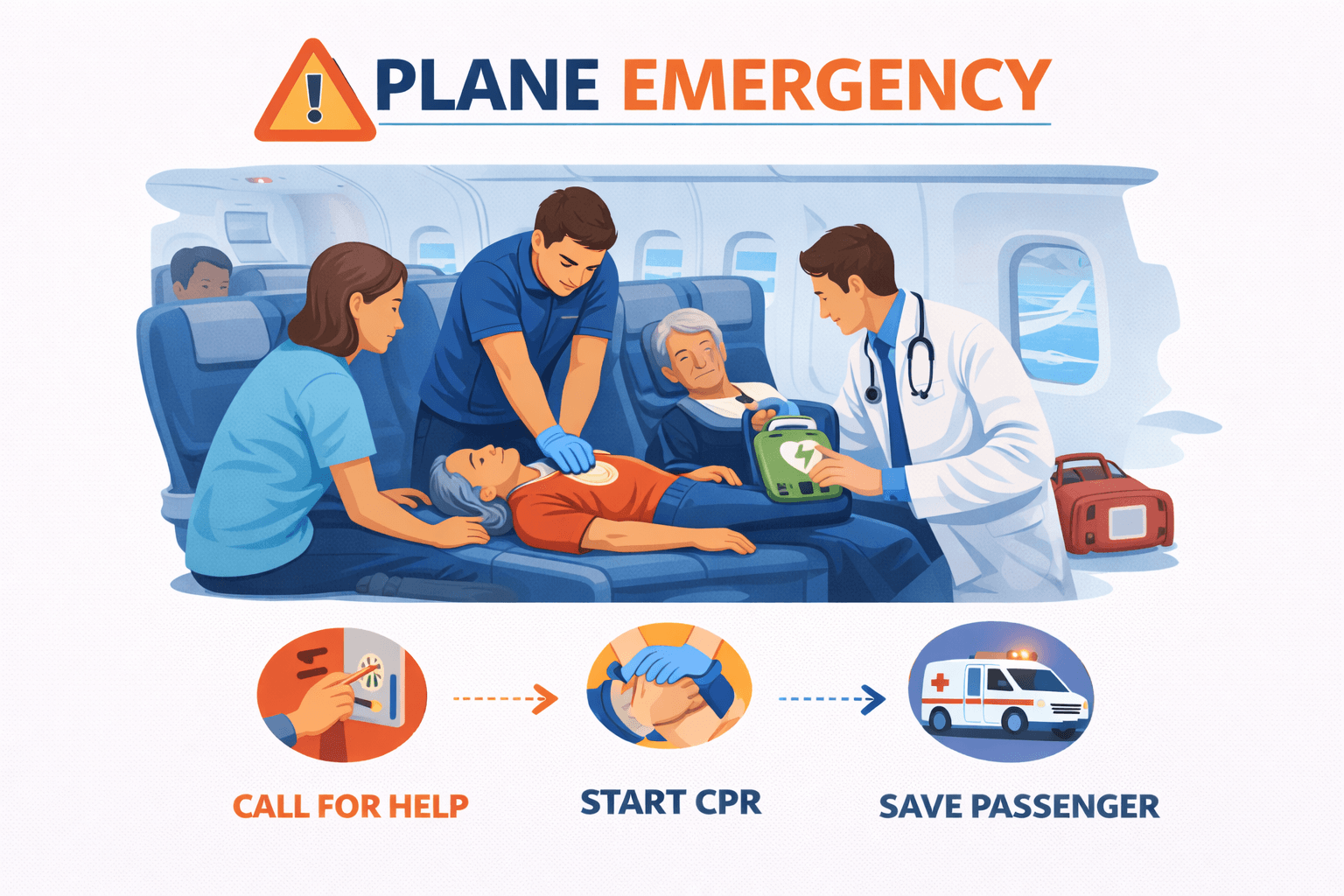
Commercial aircraft are equipped with medical emergency kits and automated external defibrillators (AEDs) to assist during serious medical events. Flight crews receive training to respond to medical situations and may ask passengers with medical or first aid training to assist.
Common steps taken during an in-flight medical emergency may include:
-
Alerting the flight crew immediately
-
Checking responsiveness and breathing
-
Using onboard medical equipment such as an AED if available
-
Diverting the aircraft to the nearest airport if necessary
These measures allow the flight crew to coordinate emergency care until paramedics can meet the aircraft.
A Medical Emergency on a Flight to Vancouver
A medical emergency occurred on an Air Canada flight travelling from Toronto to Vancouver when a passenger became seriously ill during the flight.
Witnesses reported that a 78-year-old woman began feeling extremely unwell while the plane was flying over Saskatchewan. Her condition worsened quickly and she eventually became unresponsive.
Passengers on the flight immediately stepped forward to assist. Two doctors, a nurse, and other individuals with first aid knowledge worked together to provide emergency care.
Among those assisting was Vancouver resident Hayden Ordel, who had previously received first aid training through his work in the film industry. Although he had practiced CPR in training scenarios, this was the first time he had participated in a real emergency.
The group began providing CPR while also using onboard medical equipment to monitor the passenger’s condition.
Because of the seriousness of the situation, the flight crew arranged an emergency landing in Calgary so paramedics could meet the aircraft.
When the plane landed, emergency medical responders transported the passenger to hospital. Despite the extensive efforts by those on board and the emergency teams who responded, the woman later died.
The incident highlighted the cooperation between passengers, medical professionals, and flight crew during unexpected emergencies.
Recognizing Signs of a Cardiac Emergency
Cardiac arrest and other medical emergencies can develop suddenly. Warning signs may include:
-
Sudden collapse or loss of responsiveness
-
Difficulty breathing or abnormal breathing
-
Pale or grey skin colour
-
Loss of consciousness
Recognizing these symptoms quickly allows bystanders to alert trained responders and begin assistance if appropriate.
Why CPR May Be Used During Medical Emergencies
During cardiac arrest, the heart stops pumping blood effectively. Without circulation, oxygen levels in the brain begin to decrease within minutes.
CPR helps maintain blood circulation during the critical early period of an emergency while advanced medical care is arranged.
Emergency response organizations across Canada emphasize that early CPR combined with rapid medical response can improve survival outcomes in certain cardiac emergencies.
Prevention and Emergency Preparedness
Although medical emergencies cannot always be predicted, communities and workplaces often encourage preparedness through education and training.
Preparedness may include:
-
Learning CPR and first aid skills
-
Being aware of signs of medical distress
-
Knowing how to contact emergency services
-
Supporting public access to AED devices
Prepared individuals may feel more confident responding during unexpected emergencies.
Frequently Asked Questions
Can medical emergencies happen during flights?
Yes. Medical emergencies can occur during air travel just as they can in any other environment.
Do airplanes carry medical equipment?
Commercial aircraft are typically equipped with emergency medical kits and automated external defibrillators to assist during serious medical events.
Who provides help during in-flight emergencies?
Flight attendants coordinate the response and may request assistance from passengers who have medical or first aid training.
What is cardiopulmonary resuscitation (CPR)?
CPR is a first aid technique used when a person becomes unresponsive and stops breathing normally. It helps maintain circulation until professional medical care is available.
Where can people learn CPR in Canada?
CPR training is widely available through workplace safety programs, community organizations, and certified first aid training providers across Canada.
Educational Note
This article is intended for general first aid awareness and public safety education. Learning CPR and first aid can help individuals better understand how to respond during emergencies while waiting for trained emergency medical services.
About The Author

Mark Kascha
First Aid Instructor Trainer with 30+ years of experience in CPR, emergency response, and safety training across Canada.
Last reviewed: March 2026
 Support local, Canadian-owned businesses, with no connections to American corporations or partnerships.