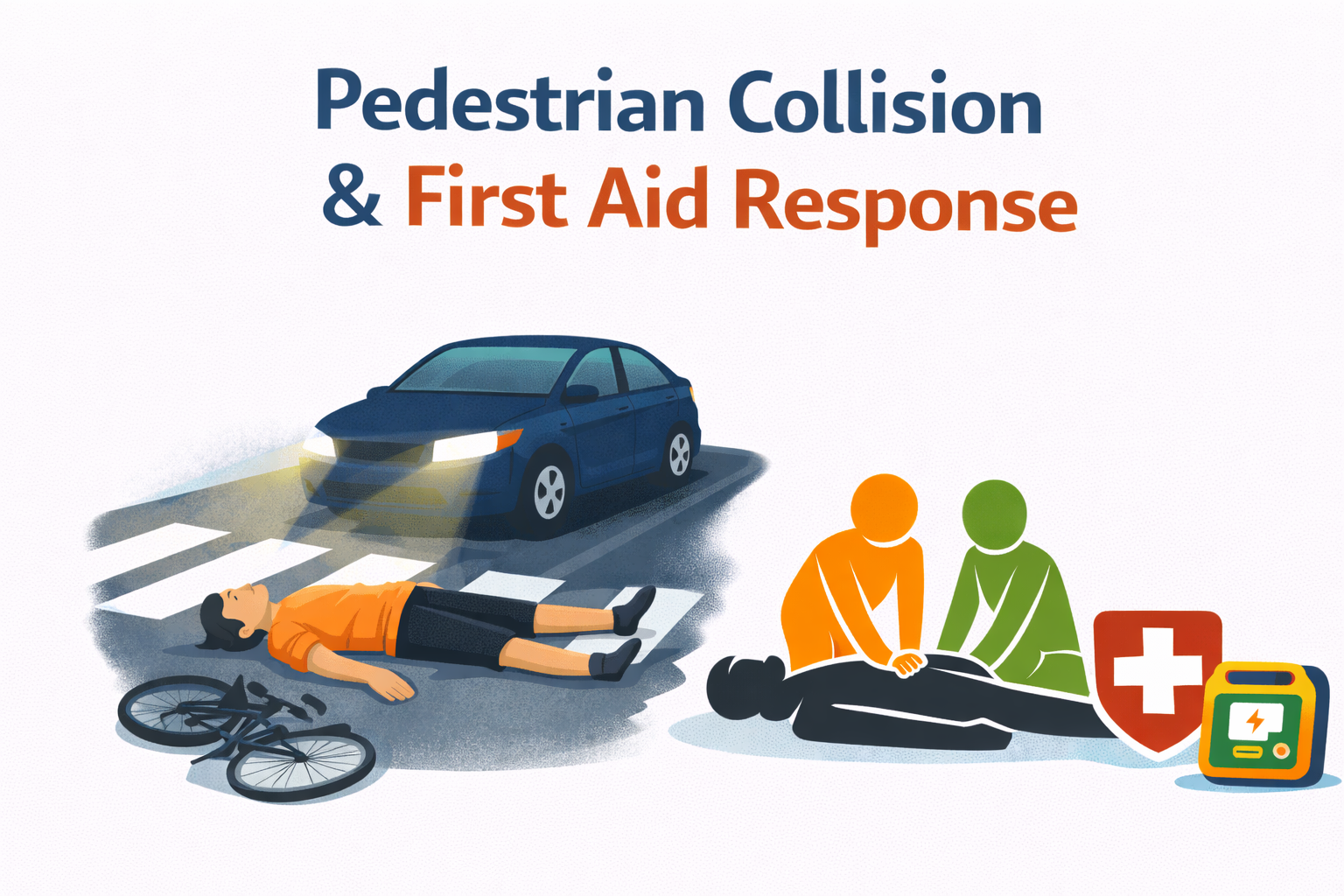
 Pedestrian collisions can occur when vehicles and pedestrians share busy intersections or roadways. Even at relatively low speeds, these incidents can lead to serious injuries because pedestrians have little protection during an impact.
In Vancouver and across British Columbia, busy intersections and high-traffic corridors require drivers and pedestrians to remain alert at all times. Because emergency responders may take several minutes to arrive, bystanders who understand basic first aid can provide important assistance while waiting for paramedics.
First aid awareness is often included in workplace safety training and community emergency preparedness programs to help individuals respond safely during unexpected incidents.
A Realistic Scenario: Intersection Collision in Abbotsford
In a reported incident in Abbotsford, emergency services responded to a pedestrian collision at the intersection of Marshall Road and McCallum Road during the evening hours.
Police were called to the scene after reports that a pedestrian had been struck by a vehicle while crossing the intersection. According to investigators, the driver of a westbound vehicle was turning onto McCallum Road when the collision occurred.
Witnesses nearby quickly stepped forward to assist the injured individual before emergency crews arrived. Bystanders provided basic first aid measures while waiting for paramedics and police to reach the scene.
The injured pedestrian was transported to hospital by ambulance, but later passed away due to the severity of the injuries. Authorities continued to investigate the circumstances surrounding the collision, including whether the pedestrian had been using the crosswalk at the time.
Police later acknowledged the efforts of those who attempted to help the injured individual before emergency responders arrived.
Signs of Serious Injury After a Pedestrian Collision
Pedestrian collisions can cause significant trauma. Recognizing signs of serious injury can help bystanders understand when immediate assistance is needed.
Possible signs include:
-
Loss of consciousness or unresponsiveness
-
Difficulty breathing
-
Severe bleeding or visible injuries
-
Confusion or disorientation
-
Chest or head injuries
-
Pale or clammy skin indicating possible shock
Emergency responders assess these symptoms quickly to determine appropriate care.
Causes and Risk Factors at Intersections
Intersections can be high-risk areas because vehicles, cyclists, and pedestrians must navigate the same space. Several factors can contribute to pedestrian collisions, including:
-
Drivers failing to notice pedestrians during turns
-
Limited visibility at intersections
-
Poor lighting conditions at night
-
Pedestrians crossing outside designated crosswalks
-
Driver distraction or inattention
Urban planning and traffic control systems aim to reduce these risks, but awareness from both drivers and pedestrians remains essential.
First Aid Response at Roadway Incidents
When someone is injured in a traffic collision, bystanders should focus on safety and contacting emergency services.
First aid training typically emphasizes the following steps:
-
Ensure the area is safe before approaching the injured person
-
Call emergency services immediately
-
Avoid moving the injured person unless there is immediate danger
-
Monitor breathing and responsiveness
-
Provide basic first aid assistance if trained
-
Remain with the person until emergency responders arrive
In some situations, trained individuals may provide additional care such as managing bleeding or assisting with breathing until paramedics take over.
Prevention and Road Safety Considerations
Reducing pedestrian injuries requires awareness from both drivers and pedestrians.
Important safety considerations include:
For drivers:
-
Slow down near intersections and crosswalks
-
Check carefully for pedestrians before turning
-
Remain attentive, especially at night or in poor visibility
For pedestrians:
-
Use designated crosswalks whenever possible
-
Make eye contact with drivers before crossing
-
Remain visible in low-light conditions
Workplace safety programs often include road safety awareness and first aid training, particularly for employees who work near roadways or travel frequently as part of their job.
FAQ
Why are intersections common locations for pedestrian collisions?
Intersections involve vehicles turning, stopping, and accelerating while pedestrians may be crossing. This combination increases the potential for conflicts if drivers or pedestrians are not fully aware of each other.
What should bystanders do if they witness a pedestrian collision?
Emergency services should be contacted immediately. If it is safe to approach, bystanders may provide basic first aid support while waiting for trained responders.
Should injured individuals be moved after a traffic collision?
In general, injured individuals should remain still unless there is immediate danger such as fire or further traffic risk. Moving someone with possible injuries can sometimes worsen the condition.
Why is first aid training recommended for the public?
First aid training helps individuals recognize emergencies and respond safely until professional medical assistance arrives.
How can drivers reduce the risk of hitting pedestrians?
Drivers can reduce risk by slowing down at intersections, checking blind spots carefully when turning, and staying attentive to crosswalks and pedestrian signals.
Educational Note:
This article is intended for general first aid awareness and public safety education. Learning basic first aid skills can help individuals recognize emergencies and provide supportive assistance while waiting for trained emergency services.
About The Author

Mark Kascha
First Aid Instructor Trainer with 30+ years of experience in CPR, emergency response, and safety training across Canada.
Last reviewed: March 2026
 Support local, Canadian-owned businesses, with no connections to American corporations or partnerships.