
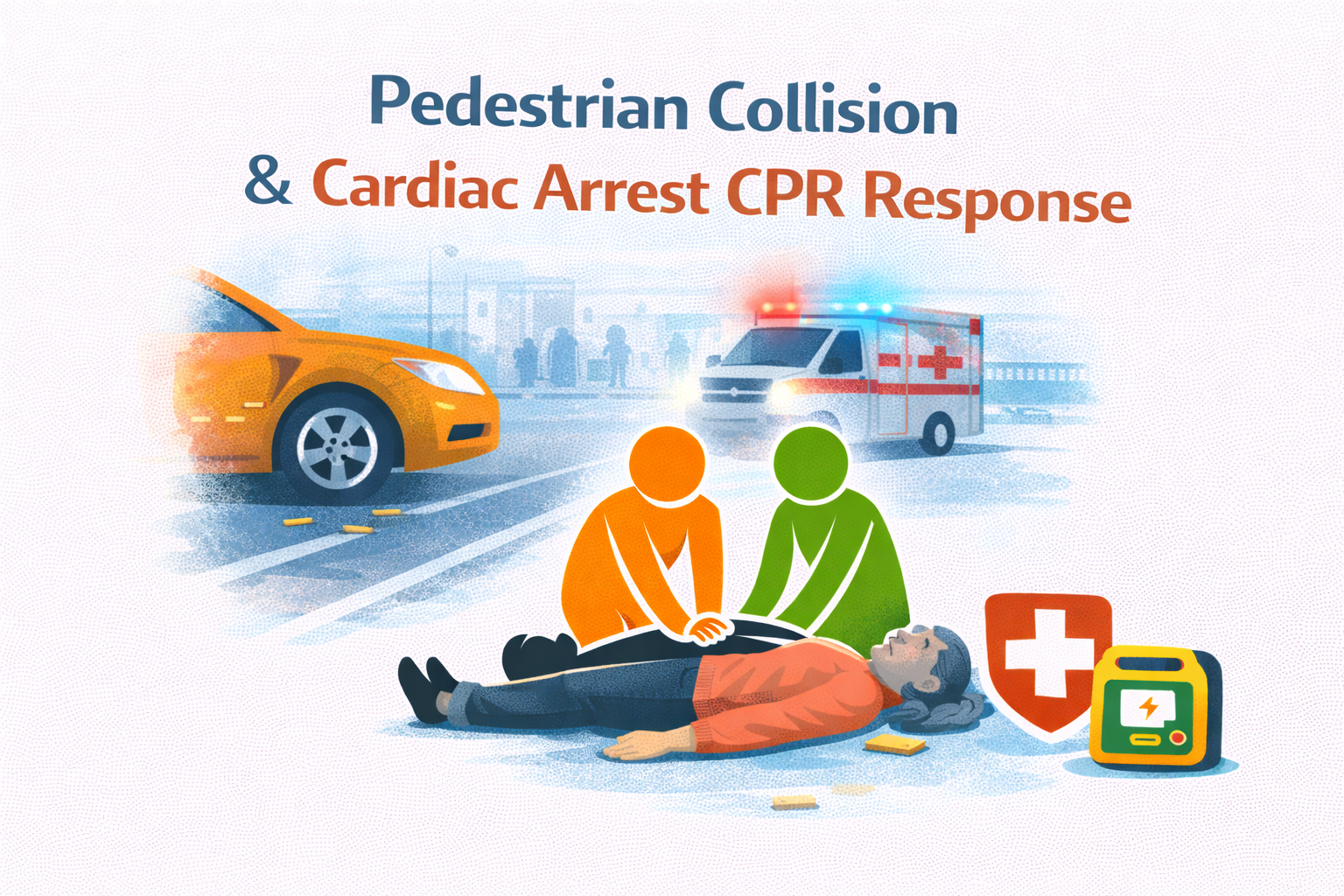
 Traffic collisions involving pedestrians can lead to serious injuries and medical emergencies. In some cases, trauma from an impact may cause cardiac arrest, where the heart suddenly stops pumping blood effectively.
In Vancouver and throughout British Columbia, busy urban streets and intersections require both drivers and pedestrians to remain alert. When serious incidents occur, first aid knowledge and CPR awareness can help support someone experiencing a life-threatening condition while waiting for emergency responders.
Rapid recognition of cardiac arrest and immediate resuscitation efforts can improve the chances of survival in these emergencies.
A Realistic Scenario: Pedestrian Collision on a City Street
In one reported incident, a woman in her 60s sustained serious injuries after being struck by a taxi on a busy city street during the morning hours.
Emergency crews responded to the scene shortly after the collision occurred. The woman was reportedly standing near the sidewalk when the vehicle struck her.
When paramedics arrived, they found the individual in cardiac arrest. Emergency responders immediately began resuscitation efforts, including CPR and airway support. These life-saving measures helped restore the woman’s heartbeat before she was transported to hospital for further care.
The taxi driver was also treated for a medical emergency and transported to hospital, while a passenger in the vehicle received treatment for minor injuries.
Incidents like this highlight how prompt emergency care and CPR can support individuals experiencing cardiac arrest after traumatic events.
Signs of Cardiac Arrest After an Injury
Cardiac arrest can occur suddenly following severe trauma or medical complications. Recognizing the warning signs allows responders to begin life-saving actions quickly.
Possible signs include:
-
Sudden collapse
-
Unresponsiveness
-
No normal breathing or gasping breathing
-
Weak or absent pulse
-
Pale or bluish skin tone
When these symptoms are present, emergency services should be contacted immediately.
How Trauma Can Lead to Cardiac Arrest
Severe injuries can affect the heart and body in several ways. Trauma from a collision may cause disruptions in breathing, circulation, or heart rhythm.
Possible contributing factors include:
-
Severe internal injuries
-
Lack of oxygen reaching the heart and brain
-
Shock caused by trauma or blood loss
-
Underlying medical conditions triggered by stress or injury
Because cardiac arrest prevents oxygen from circulating through the body, immediate medical response is critical.
First Aid Response: CPR and Emergency Care
When someone becomes unresponsive and is not breathing normally, emergency responders and trained individuals may begin CPR while waiting for advanced medical care.
First aid training typically teaches individuals to:
-
Ensure the area is safe before approaching
-
Contact emergency services immediately
-
Check responsiveness and breathing
-
Begin CPR if the person is unresponsive and not breathing normally
-
Continue care until emergency responders arrive
Professional responders may also provide additional interventions such as airway management and advanced life support.
Early CPR helps maintain circulation and oxygen delivery to the brain and vital organs during cardiac arrest.
Prevention and Road Safety Awareness
Reducing pedestrian injuries requires cooperation between drivers, pedestrians, and city safety initiatives.
Important safety considerations include:
For drivers:
-
Reduce speed in areas with heavy pedestrian traffic
-
Watch carefully for pedestrians when turning or approaching intersections
-
Avoid distractions while driving
For pedestrians:
-
Use crosswalks and follow traffic signals
-
Remain visible to drivers, especially in busy urban areas
-
Stay aware of nearby traffic when walking near roadways
Workplace safety programs across British Columbia often encourage first aid and CPR training so individuals are prepared to respond during emergencies.
FAQ
Can cardiac arrest occur after a traffic collision?
Yes. Severe trauma or lack of oxygen following an injury can sometimes lead to cardiac arrest, which requires immediate medical attention.
Why is CPR important during cardiac arrest?
CPR helps maintain blood circulation and oxygen delivery to the brain and vital organs until advanced medical care arrives.
What should bystanders do if they witness a serious collision?
The first step is to call emergency services. If it is safe to approach, trained individuals may provide basic first aid assistance while waiting for responders.
Should injured people be moved after a collision?
In general, injured individuals should remain still unless there is immediate danger such as fire or traffic hazards. Emergency responders are trained to move patients safely.
Why is CPR training recommended for the public?
CPR training helps people recognize cardiac arrest and respond appropriately while waiting for emergency medical professionals.
Educational Note:
This article is intended for general first aid awareness and public safety education. Learning CPR and basic first aid skills can help individuals recognize emergencies and provide supportive assistance until trained emergency services arrive.
About The Author

Mark Kascha
First Aid Instructor Trainer with 30+ years of experience in CPR, emergency response, and safety training across Canada.
👉 [View full credentials]🔗 View LinkedIn Profile
Last reviewed: March 2026
 Support local, Canadian-owned businesses, with no connections to American corporations or partnerships.