
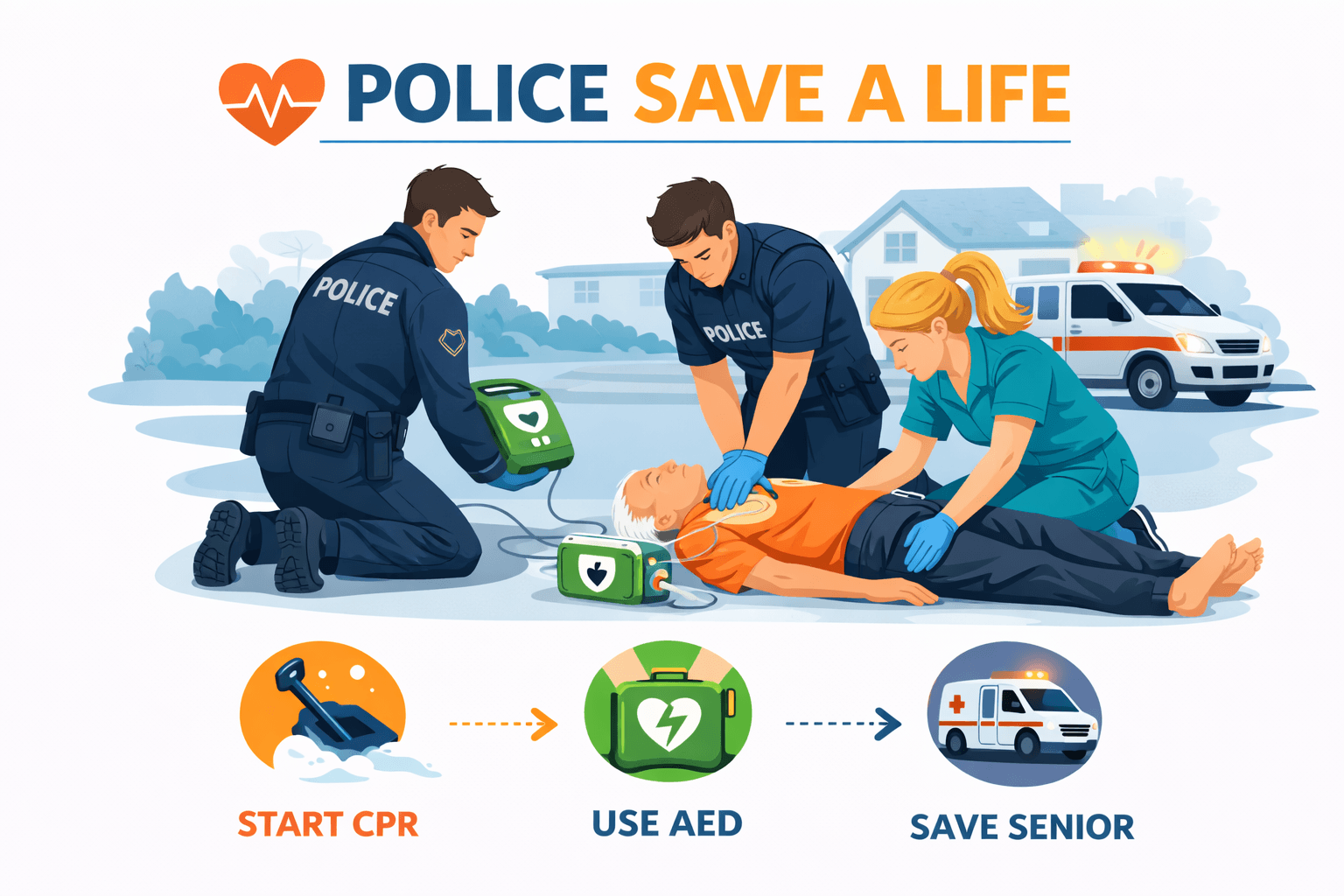
 Cardiac arrest is a medical emergency that occurs when the heart suddenly stops pumping blood effectively. When this happens, oxygen can no longer reach the brain and other vital organs. Without rapid intervention, the situation can quickly become life-threatening.
Across Canada, including Vancouver and British Columbia, CPR (cardiopulmonary resuscitation) and AED (automated external defibrillator) training are key components of workplace first aid programs and community safety education. These skills prepare individuals to respond during emergencies until paramedics arrive.
When cardiac arrest occurs outside a hospital, quick action from nearby people—whether neighbours, coworkers, or first responders—can play an important role in early life-saving care.
Community Preparedness and First Aid Awareness
Many communities encourage public access to CPR training and AED devices. AEDs are portable machines designed to analyze heart rhythms and deliver an electrical shock if needed to restore a normal heartbeat.
First aid and CPR training programs in Canada typically teach participants how to:
-
Recognize cardiac arrest
-
Call emergency services immediately
-
Begin chest compressions
-
Use an AED if one is available
-
Continue assistance until paramedics arrive
These actions can help maintain circulation during the critical first minutes of a cardiac emergency.
A Cardiac Emergency in La Pêche, Quebec
In western Quebec, quick thinking by bystanders and police officers helped save the life of a senior experiencing cardiac arrest.
At approximately 6 p.m., police officers responded to a call on I’lf Road in the municipality of La Pêche. Reports indicated that a 68-year-old man was in cardio-respiratory arrest.
Before emergency services arrived, a neighbour who was a nurse had already started performing CPR.
When police officers reached the scene, they continued the emergency response and used an automated external defibrillator to assist the man. The device was applied while CPR efforts continued.
Shortly afterward, paramedics arrived and took over medical care. The man was transported to a healthcare facility in Wakefield for further treatment.
The coordinated response between the neighbour, police officers, and paramedics helped provide rapid assistance during the emergency.
Recognizing Signs of Cardiac Arrest
Cardiac arrest often occurs suddenly and may include the following warning signs:
-
Sudden collapse
-
Loss of responsiveness
-
Abnormal or absent breathing
-
Gasping or irregular breathing
Recognizing these signs quickly allows bystanders to call emergency services and begin CPR.
Why CPR and AED Use Are Important
During cardiac arrest, the heart stops pumping blood effectively. Without circulation, oxygen levels in the brain begin to decrease within minutes.
CPR helps maintain blood flow to the brain and organs while waiting for advanced medical care. An AED can analyze the heart’s rhythm and deliver an electrical shock when appropriate to help restore a normal heartbeat.
Emergency response organizations across Canada emphasize that early CPR and rapid AED use can significantly improve survival outcomes in certain cardiac emergencies.
Prevention and Community Emergency Preparedness
Communities and workplaces can support emergency preparedness through several initiatives:
-
Encouraging CPR and first aid training
-
Installing AED devices in public locations
-
Promoting awareness of cardiac emergency symptoms
-
Supporting workplace safety programs
Prepared individuals and communities are often better equipped to respond quickly during medical emergencies.
Frequently Asked Questions
What is cardiopulmonary resuscitation (CPR)?
CPR is a first aid technique used when a person becomes unresponsive and stops breathing normally. It helps maintain circulation until professional medical care arrives.
What is an automated external defibrillator (AED)?
An AED is a portable device that analyzes heart rhythms and may deliver an electrical shock to help restore a normal heartbeat during certain cardiac emergencies.
Can police officers use AED devices?
Yes. Many police departments carry AED devices and are trained to use them when responding to medical emergencies.
Why is early CPR important?
Early CPR helps maintain oxygen circulation to the brain and vital organs while waiting for emergency medical services.
Where can people learn CPR and AED use in Canada?
CPR and AED training courses are available through workplace safety providers, community organizations, and certified first aid training centres across Canada.
Educational Note
This article is intended for general first aid awareness and public safety education. Learning CPR and AED use can help individuals better understand how to respond during emergencies while waiting for trained emergency medical services.
About The Author

Mark Kascha
First Aid Instructor Trainer with 30+ years of experience in CPR, emergency response, and safety training across Canada.
👉 [View full credentials]🔗 View LinkedIn Profile
Last reviewed: March 2026