
Cardiopulmonary resuscitation (CPR) is a well-known emergency first aid technique used when a person is not breathing or their heart has stopped. By providing chest compressions and maintaining circulation, CPR can help keep oxygen moving to the brain and vital organs until trained medical responders arrive.
Across Canada, including in Vancouver, Surrey, and the wider Lower Mainland, CPR training is an important part of workplace safety education and community first aid awareness. Medical emergencies such as cardiac arrest, drug poisoning, or breathing failure can occur unexpectedly in public places, workplaces, or homes. Knowing how to recognize the signs and respond calmly can make a significant difference while waiting for emergency services.
A Real-World Example from White Rock
 In White Rock, British Columbia, a man’s life was helped by quick action from a nearby passerby.
Shortly after noon, South Surrey resident Patrick Storoshenko was walking through the White Rock Elks parking lot on his way to get a haircut. Suddenly, a distressed woman ran toward him waving her arms and asking for help. She explained that her friend had overdosed and was already speaking with a 911 dispatcher.
She handed the phone to Storoshenko and rushed back toward the scene.
Following the dispatcher’s instructions, he found a man believed to be in his 30s lying on a nearby deck. The man appeared unconscious and unresponsive. According to Storoshenko’s description, the man was limp and not reacting when spoken to.
The dispatcher instructed him to place the man flat and check for breathing. When breathing could not be detected, he was guided through the steps to begin cardiopulmonary resuscitation (CPR).
While continuing CPR, Storoshenko called out for assistance from people nearby but received no response from passersby. Within minutes, paramedics arrived on scene.
Emergency responders assessed the situation and administered naloxone, a medication used by medical professionals to reverse the effects of opioid drugs. After several doses, the man began breathing again. He remained seated and recovering for a short period before being further evaluated by paramedics.
Situations like this highlight how early intervention and basic first aid knowledge can support emergency response before professional care arrives.
Recognizing When CPR May Be Needed
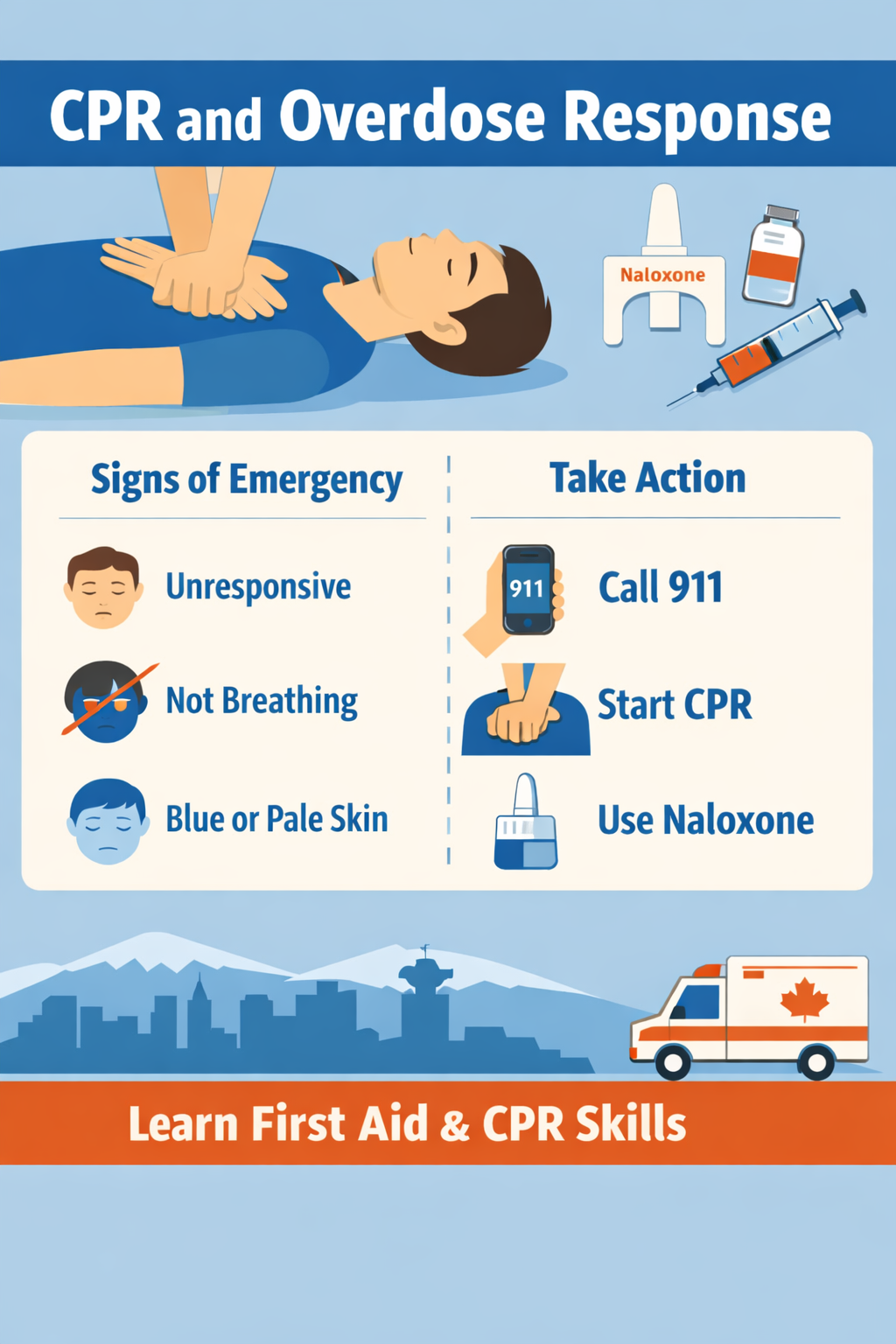
CPR may be necessary when a person shows signs of severe breathing or circulation problems.
Common warning signs include:
-
Unresponsiveness or inability to wake the person
-
No breathing or abnormal breathing
-
Collapse or sudden loss of consciousness
-
Blue or pale lips or skin tone changes
-
No detectable pulse or movement
In suspected opioid overdose situations, breathing may become slow, shallow, or stop completely, which can lead to a life-threatening emergency if oxygen does not reach the brain.
Possible Causes of Breathing Emergencies
Several situations can lead to a person becoming unconscious or stopping breathing, including:
-
Cardiac arrest
-
Drug or opioid overdose
-
Severe allergic reactions
-
Drowning incidents
-
Choking or airway blockage
-
Certain medical conditions affecting the heart or lungs
In many communities across Metro Vancouver, opioid poisoning emergencies have become an important public health concern. Awareness of the signs of overdose and how to respond safely is often included in modern first aid and workplace safety training.
First Aid Response and Emergency Management
When someone appears unconscious and not breathing normally, immediate action is important.
Basic emergency response principles taught in first aid training include:
-
Ensure the scene is safe.
-
Call emergency services (911) or ask someone nearby to call.
-
Check responsiveness and breathing.
-
Follow dispatcher instructions if connected with emergency services.
-
Begin CPR if instructed and if breathing is absent.
-
Continue assistance until paramedics arrive.
Emergency dispatchers in Canada are trained to guide callers step-by-step through CPR instructions while help is on the way.
In opioid poisoning situations, paramedics or trained responders may administer naloxone, a medication designed to block opioid effects and help restore breathing.
Prevention and Workplace Awareness
Many workplaces in British Columbia include CPR and first aid training as part of their safety programs. While medical emergencies cannot always be predicted, preparedness can improve response times and awareness.
Prevention and readiness strategies include:
-
Participating in first aid and CPR training
-
Learning to recognize signs of medical distress
-
Knowing how to contact emergency services quickly
-
Encouraging workplace emergency response plans
-
Supporting public awareness about overdose recognition and response
Community training programs throughout the Vancouver region help equip individuals with practical skills that may assist in unexpected emergencies.
Frequently Asked Questions
What is CPR and why is it important?
CPR (cardiopulmonary resuscitation) is a first aid technique that uses chest compressions to help circulate blood when a person is not breathing or their heart has stopped. It helps maintain oxygen flow to vital organs until professional medical care arrives.
Can CPR be used during an overdose emergency?
CPR may be required if an overdose causes a person to stop breathing or become unresponsive. Emergency dispatchers can provide guidance over the phone while paramedics are on the way.
What is naloxone?
Naloxone is a medication used by trained responders to reverse the effects of opioid drugs. It works by blocking opioids in the body and may help restore breathing in overdose situations.
How quickly should CPR start during an emergency?
Early action is important. Emergency dispatchers typically guide callers through assessing breathing and beginning CPR if needed while emergency services are dispatched.
Why is CPR training recommended for workplaces?
CPR training helps employees recognize life-threatening emergencies and respond appropriately while waiting for paramedics. This knowledge can improve overall workplace safety preparedness.
Educational Note
This article is intended for general first aid awareness and public education. First aid training helps individuals recognize emergencies and provide initial assistance until professional medical responders arrive.
About The Author

Mark Kascha
First Aid Instructor Trainer with 30+ years of experience in CPR, emergency response, and safety training across Canada.
👉 [View full credentials]🔗 View LinkedIn Profile
Last reviewed: March 2026
 Support local, Canadian-owned businesses, with no connections to American corporations or partnerships.