
Understanding First Aid and Emergency Response During Major Incidents
 During large-scale emergencies, first responders such as police officers, firefighters, and paramedics play a critical role in protecting public safety and assisting injured individuals. In many situations, officers arriving first at the scene may need to provide immediate first aid and bleeding control while waiting for paramedics.
Across British Columbia and the Lower Mainland—including Vancouver, Burnaby, Surrey, and Richmond—first aid training is commonly provided to emergency personnel and many workplaces. Learning how to respond during medical emergencies, including severe bleeding or trauma, helps ensure that people receive care as quickly as possible.
First Aid Preparedness in Communities and Workplaces
Public safety organizations often emphasize emergency preparedness, including first aid training, because serious incidents can occur unexpectedly in public places such as community centres, workplaces, or places of worship.
In Vancouver and throughout British Columbia, many first aid programs teach techniques such as:
-
Calling emergency services quickly
-
Controlling severe bleeding
-
Supporting injured individuals until paramedics arrive
These skills can be used by first responders and trained community members alike.
The Quebec City Mosque Shooting
On January 29, 2017, a tragic shooting occurred at the Quebec Islamic Cultural Centre in Sainte-Foy, a borough of Quebec City. The incident took place shortly after evening prayers, when a gunman entered the building and began shooting inside the mosque.
Emergency dispatchers began receiving multiple calls reporting gunfire and injuries at the scene. Officers from the Quebec City Police Service responded immediately.
A Rapid Police Response
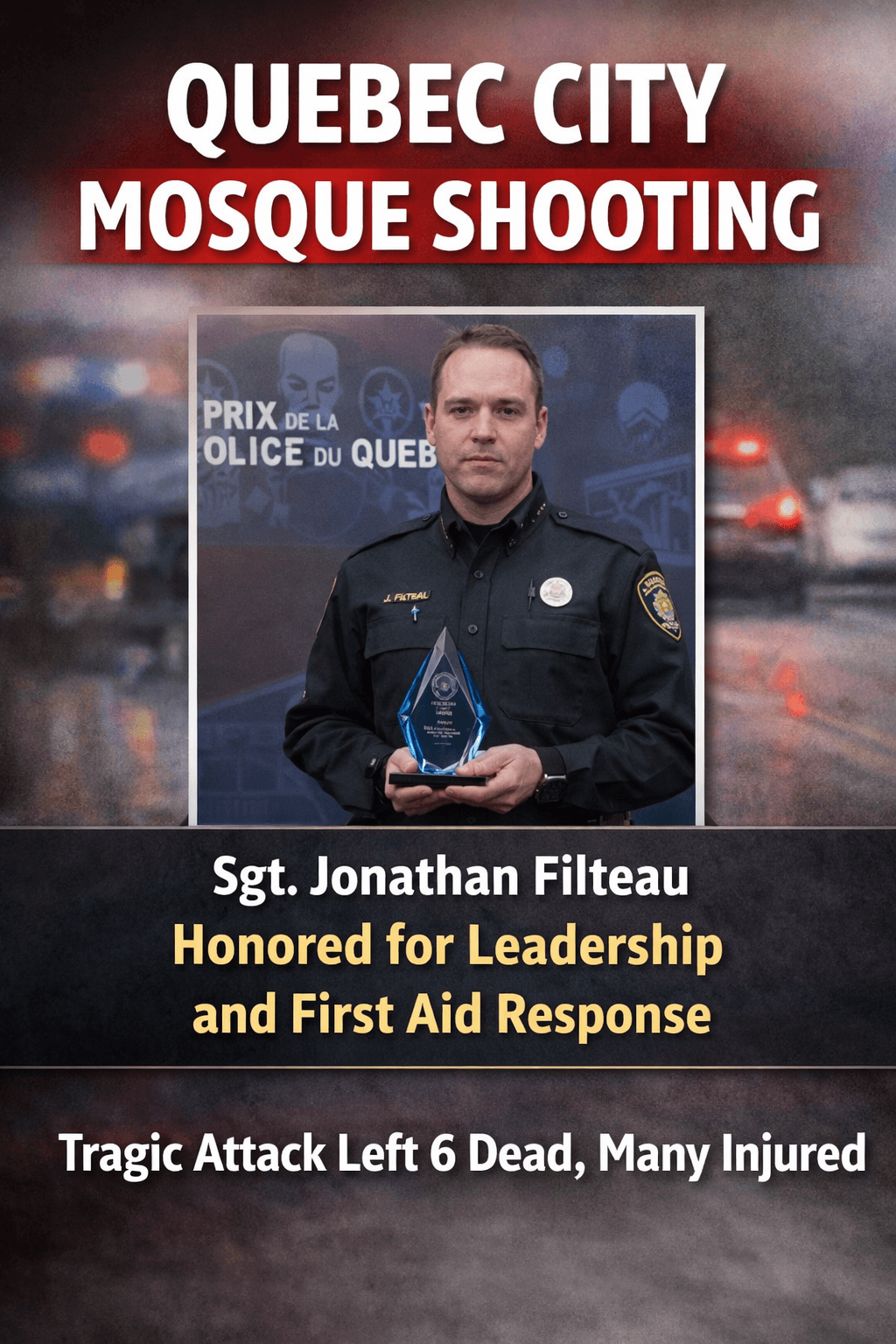
Sgt. Jonathan Filteau, who was on duty nearby, arrived at the scene within moments of the emergency call. His priority was to assess the situation, ensure the safety of those inside the building, and assist people who had been injured.
Reports later confirmed that six people lost their lives and many others were injured during the attack.
While officers secured the scene, police and emergency personnel also worked to assist victims who required urgent medical care.
First Aid Assistance at the Scene
During the emergency response, Constable Francis Simard, working alongside Sgt. Filteau, provided first aid to one of the severely injured individuals.
Using available materials at the scene—including a belt and rubber hose—Simard created a makeshift tourniquet to help control severe bleeding until paramedics arrived.
Emergency responders later transported injured individuals to nearby hospitals for further treatment.
Officials noted that the quick thinking and first aid efforts helped stabilize the injured person until advanced medical care could be provided.
Recognition for Leadership and Compassion
In recognition of their actions during the emergency response, Sgt. Jonathan Filteau and Constable Francis Simard were honoured at the Quebec Police Awards gala.
Sgt. Filteau received a crystal trophy recognizing his leadership, compassion, and coordination of emergency response efforts during the incident.
According to officials, the officers’ training and preparedness helped them respond quickly and effectively in a highly stressful situation.
The Importance of First Aid Training
Emergency situations often require quick decisions and coordinated responses. Training in first aid and emergency procedures helps responders remain focused and organized during challenging circumstances.
First aid programs commonly emphasize:
-
Recognizing life-threatening injuries
-
Controlling severe bleeding
-
Coordinating emergency response efforts
-
Providing care until paramedics arrive
Across Vancouver and the Lower Mainland, many workplaces and community programs encourage individuals to learn these life-saving skills.
Prevention and Community Preparedness
Although incidents of violence are rare, communities can improve safety preparedness by:
-
Supporting emergency response training
-
Promoting first aid education
-
Developing emergency response plans for public facilities
-
Encouraging community awareness of safety procedures
Preparedness and training help ensure that responders and community members are ready to assist when emergencies occur.
Frequently Asked Questions
Why is bleeding control important in emergencies?
Severe bleeding can lead to rapid blood loss. First aid techniques such as applying pressure or using a tourniquet may help slow bleeding until medical professionals arrive.
Do police officers receive first aid training?
Yes. Many police officers receive training in first aid, CPR, and emergency response procedures as part of their preparation for responding to public emergencies.
What is a tourniquet in first aid?
A tourniquet is a device or improvised method used to help control severe bleeding from a limb by applying pressure above the wound.
Why is emergency response training important?
Training helps responders remain calm and organized when emergencies occur, allowing them to assist injured individuals until professional medical care is available.
Can community members learn bleeding control techniques?
Yes. Many first aid courses include training on managing bleeding and other emergency situations.
Educational Note
This article is intended for general public education about first aid awareness and emergency preparedness. Certified first aid training programs provide practical instruction to help individuals recognize emergencies and respond safely.
About The Author

Mark Kascha
First Aid Instructor Trainer with 30+ years of experience in CPR, emergency response, and safety training across Canada.
👉 [View full credentials]🔗 View LinkedIn Profile
Last reviewed: March 2026