
 Sudden cardiac arrest occurs when the heart unexpectedly stops beating effectively, preventing blood from circulating to the brain and vital organs. Without immediate assistance, loss of consciousness can occur within seconds and survival chances decline rapidly.
Automated external defibrillators (AEDs) are portable devices designed to help restore a normal heart rhythm during certain types of cardiac arrest. When used together with cardiopulmonary resuscitation (CPR), AEDs can significantly improve survival outcomes.
Across Canada, including workplaces in British Columbia and the Vancouver region, CPR and AED training are important components of workplace safety education. Many workplaces choose to install AEDs and train staff so that employees can respond quickly if a cardiac emergency occurs.
Workplace Relevance in Vancouver and British Columbia
In busy workplaces such as warehouses, offices, retail locations, and vehicle dealerships, medical emergencies can occur unexpectedly. Having employees trained in first aid, CPR, and AED awareness can make a critical difference during the first few minutes of a cardiac emergency.
Workplace safety training programs in Vancouver commonly emphasize early recognition of cardiac arrest, prompt activation of emergency services, and immediate assistance using CPR and AED devices when available.
A Real Workplace Example from Canada
A Canadian workplace incident illustrates how rapid action by co-workers can help save a life.
Ted Brown, a 65-year-old employee at a car dealership in Saskatoon, experienced sudden cardiac arrest while at work. His colleagues at the dealership quickly recognized that something was wrong and responded immediately.
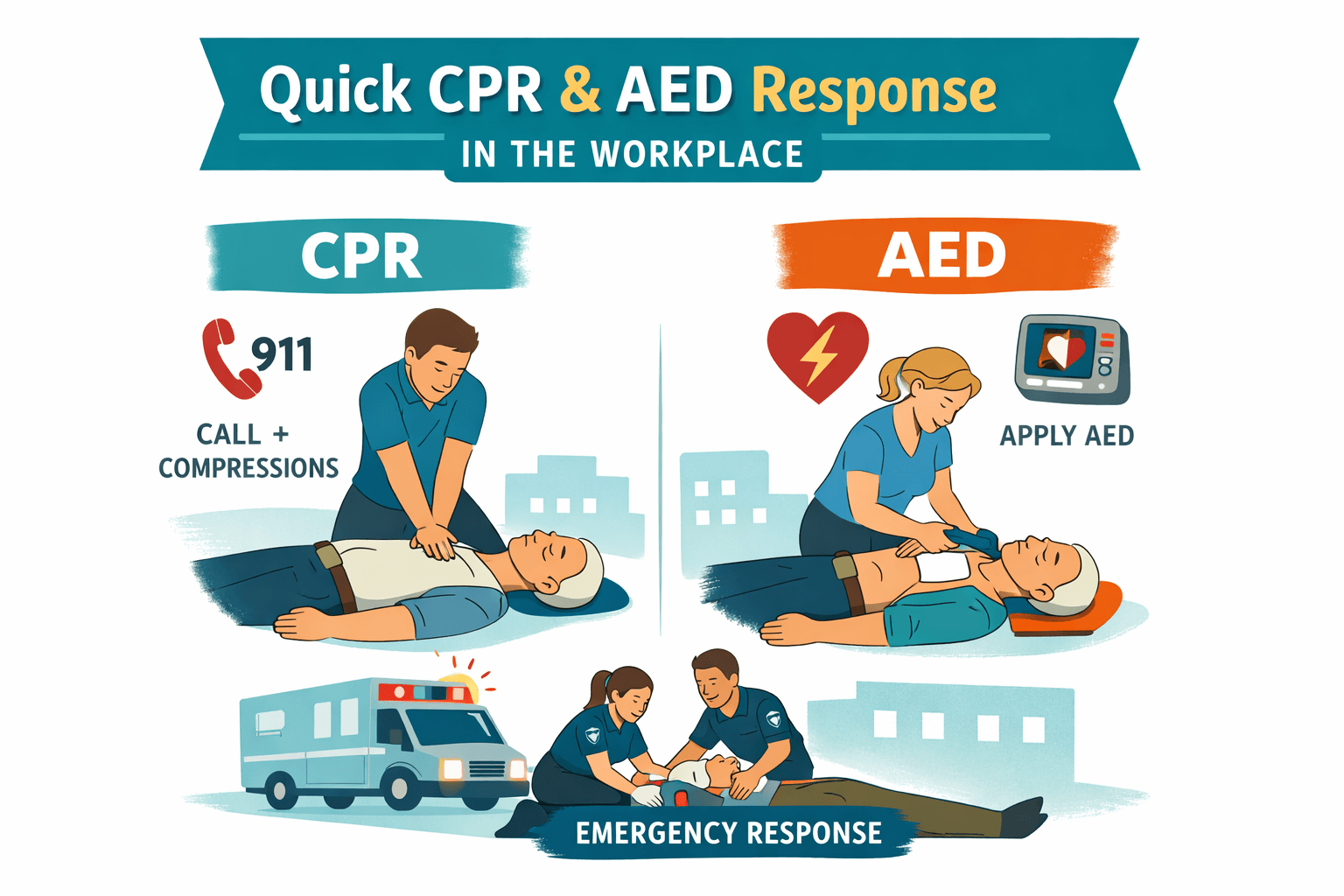
Several employees began CPR while another worker called emergency services. At the same time, a co-worker retrieved the dealership’s automated external defibrillator and applied it according to the device’s instructions.
The quick teamwork and immediate response provided vital assistance until emergency responders arrived. Ted Brown was transported to hospital in serious condition but later recovered.
According to his wife, the rapid actions of his co-workers played a major role in helping him survive the incident.
Stories like this highlight how workplace preparedness and first aid awareness can support positive outcomes during unexpected emergencies.
Recognizing Possible Signs of Cardiac Arrest
Cardiac arrest often occurs suddenly and without warning. However, common indicators may include:
-
Sudden collapse
-
Loss of responsiveness
-
Abnormal or absent breathing
-
No detectable pulse
-
Gasping or irregular breathing shortly after collapse
Recognizing these signs quickly allows bystanders to begin an emergency response and activate emergency services.
What Causes Sudden Cardiac Arrest?
Cardiac arrest is different from a heart attack, although the two can be related.
Cardiac arrest occurs when the heart’s electrical system malfunctions, causing the heart to stop pumping effectively. Possible contributing factors include:
-
Heart rhythm disturbances (arrhythmias)
-
Coronary artery disease
-
Previous heart attack
-
Structural heart conditions
-
Severe trauma or electrical injury
-
Certain medical conditions affecting the heart
Because cardiac arrest can occur without obvious warning, workplace preparedness and basic first aid knowledge are important.
CPR and AED Response During Cardiac Emergencies
When someone experiences cardiac arrest, early intervention is critical.
Basic emergency response steps taught in Canadian first aid and CPR courses generally emphasize:
-
Calling emergency services immediately
-
Beginning CPR to maintain blood circulation
-
Using an AED as soon as one becomes available
-
Continuing assistance until professional responders arrive
AED devices are designed to guide users with voice prompts and clear instructions, making them accessible for trained workplace responders.
Research and public health guidance consistently show that early CPR combined with early defibrillation significantly improves survival rates during cardiac arrest.
Prevention and Workplace Preparedness
Although cardiac emergencies cannot always be predicted, workplaces can take steps to improve emergency readiness.
Common workplace safety considerations include:
-
Providing staff with CPR and AED training
-
Ensuring first aid kits and emergency equipment are accessible
-
Installing AEDs in larger workplaces or public areas
-
Developing clear emergency response plans
-
Encouraging awareness of cardiac health and emergency response procedures
Preparedness can help employees respond confidently and quickly during medical emergencies.
Frequently Asked Questions
What is an automated external defibrillator (AED)?
An automated external defibrillator is a portable device designed to analyze heart rhythms and deliver an electrical shock when necessary to help restore a normal heartbeat during certain types of cardiac arrest.
Can AEDs be used by people without medical training?
AEDs are designed to provide step-by-step voice instructions that guide users through the process. Many workplaces include AED awareness in first aid and CPR training programs to help employees feel more comfortable using the device during emergencies.
Why is CPR important before using an AED?
CPR helps maintain circulation of oxygen-rich blood to the brain and vital organs while waiting for defibrillation or emergency responders. Early CPR can help improve the chances of survival during cardiac arrest.
Do workplaces in Canada commonly have AEDs?
Many Canadian workplaces, community centres, and public buildings have begun installing AEDs as part of broader emergency preparedness initiatives. Their presence can support faster response during cardiac emergencies.
How can employees learn CPR and AED skills?
Many organizations offer workplace first aid and CPR training that includes instruction on recognizing cardiac emergencies and responding with CPR and AED use.
Educational Note
This article is intended for general first aid awareness and workplace safety education. Cardiac emergencies require rapid response from trained individuals and emergency medical services. First aid and CPR training can help individuals better understand how to respond during medical emergencies.
About The Author

Mark Kascha
First Aid Instructor Trainer with 30+ years of experience in CPR, emergency response, and safety training across Canada.
👉 [View full credentials]🔗 View LinkedIn Profile
Last reviewed: March 2026