
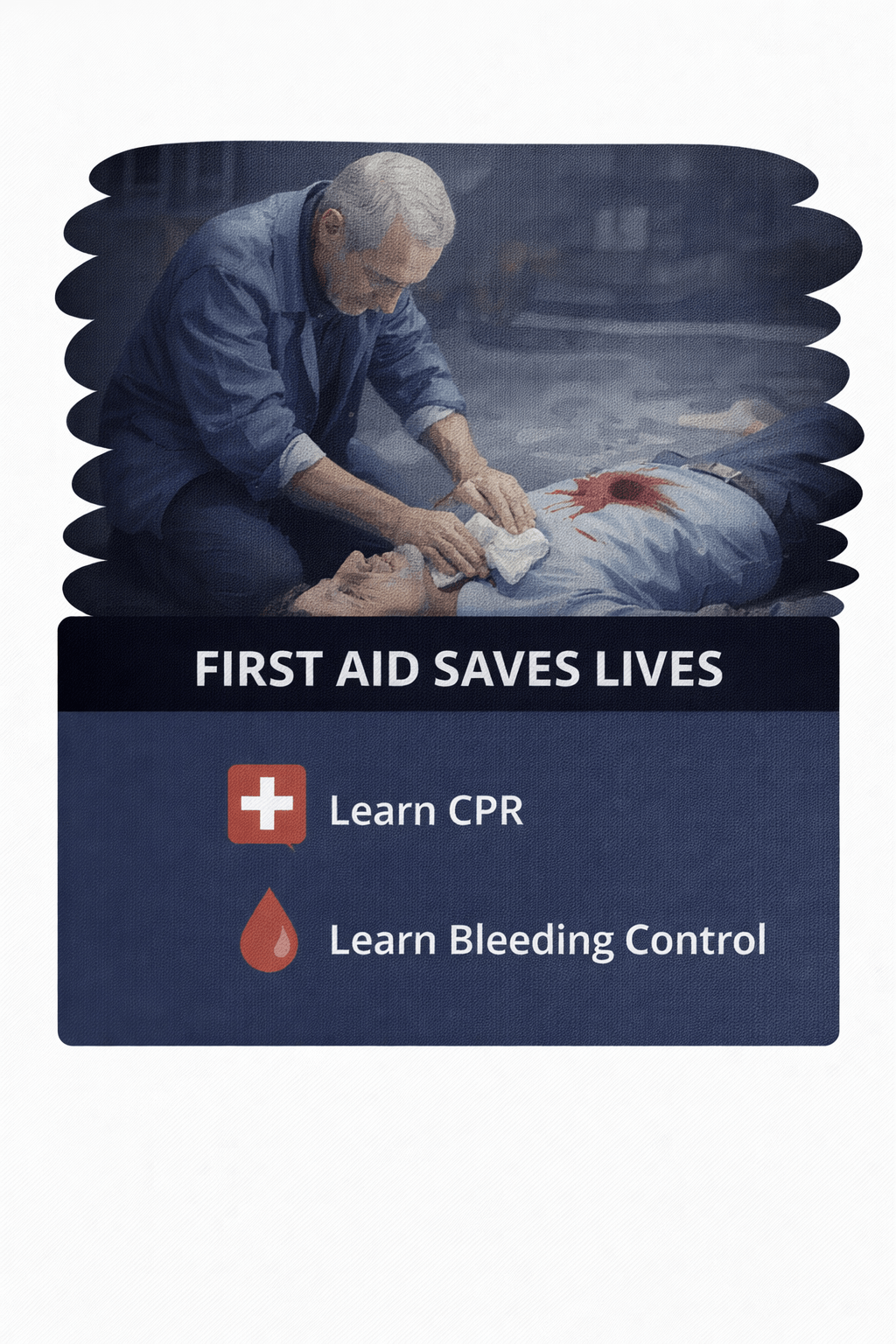
 In emergencies involving serious injuries—such as heavy bleeding—the type of first aid provided depends on the person’s condition. While cardiopulmonary resuscitation (CPR) is critical when someone is not breathing, other first aid techniques, such as bleeding control, may be the immediate priority if the person is still breathing.
Across Vancouver, Yaletown, and the Lower Mainland of British Columbia, bystanders and trained individuals may be first on scene during unexpected public emergencies. Knowing how to respond appropriately can help stabilize a person until paramedics arrive.
First Aid Awareness in British Columbia
In British Columbia, first aid training teaches individuals how to assess a situation and decide what type of care is needed. This may include:
-
Recognizing life-threatening bleeding
-
Supporting breathing
-
Deciding when CPR is appropriate
-
Providing care until emergency responders arrive
Understanding these priorities is an important part of workplace safety and community preparedness.
Scenario: Emergency Response in Downtown Vancouver
An incident in Yaletown, Vancouver, highlighted how quick thinking and proper first aid can help during a serious emergency.
During a daytime situation in a public area, an individual sustained a severe injury and collapsed on the pavement. A nearby retired emergency room doctor witnessed the incident and immediately stepped in to help.
When the responder assessed the situation, he recognized that the person was breathing but had significant bleeding. Instead of starting CPR, he focused on controlling the bleeding and supporting the person’s airway.
He used available materials—such as a towel from a nearby business—to apply pressure to the wound and help reduce blood loss. He also ensured the individual’s breathing was supported while waiting for emergency medical services.
When paramedics arrived, the responder provided a clear update on the person’s condition and the care that had already been given. The individual was then transported to hospital for further treatment and later survived the incident.
This situation demonstrates how choosing the correct first aid response—based on the person’s condition—can make a meaningful difference.
When CPR May or May Not Be Needed
CPR is used when a person is:
-
Unresponsive
-
Not breathing normally
However, if a person is:
-
Breathing
-
Conscious or semi-conscious
Other first aid priorities—such as bleeding control or airway support—may be more appropriate.
Recognizing Severe Bleeding
Severe bleeding is a medical emergency. Signs can include:
-
Continuous or heavy blood flow
-
Blood soaking through clothing or materials
-
Pale, cool, or clammy skin
-
Weakness or confusion
-
Rapid breathing
Quick action to control bleeding can help reduce further complications.
First Aid Response for Severe Bleeding
Trained individuals may assist by:
-
Calling emergency services immediately
-
Applying firm, direct pressure to the wound
-
Using available materials (cloth, bandage) to control bleeding
-
Helping the person remain still and calm
-
Monitoring breathing and responsiveness
If the person becomes unresponsive and stops breathing, CPR may then become necessary.
Importance of Situation Assessment
One of the key skills in first aid is assessing the situation before acting. Different emergencies require different responses, and acting appropriately helps avoid complications.
First aid training helps individuals:
-
Identify the most urgent problem
-
Prioritize care (breathing, bleeding, responsiveness)
-
Apply the correct technique for the situation
Community Preparedness in Vancouver
Prepared communities can respond more effectively to emergencies. Safety awareness includes:
-
Learning CPR and first aid skills
-
Understanding bleeding control techniques
-
Being aware of surroundings in public spaces
-
Acting quickly while ensuring personal safety
Across Vancouver and the Lower Mainland, first aid education plays an important role in public safety.
Frequently Asked Questions
Should CPR always be performed in emergencies?
No. CPR is used when a person is not breathing normally. If the person is breathing, other first aid measures may be more appropriate.
Why is bleeding control important?
Severe bleeding can become life-threatening quickly. Controlling bleeding helps stabilize the person until medical help arrives.
Can bystanders provide first aid?
Yes. Bystanders can assist by calling emergency services and providing first aid if they are trained and it is safe to do so.
What should someone do first in an emergency?
The first step is to assess the situation and call emergency services, then provide appropriate care based on the person’s condition.
Should people learn both CPR and first aid?
Many safety organizations recommend learning both, as different emergencies require different responses.
Educational Note
This article is intended for general public education about first aid awareness and emergency response. Learning recognized first aid skills can help individuals respond more confidently and appropriately during unexpected emergencies.
About The Author

Mark Kascha
First Aid Instructor Trainer with 30+ years of experience in CPR, emergency response, and safety training across Canada.
👉 [View full credentials]🔗 View LinkedIn Profile
Last reviewed: March 2026