
Emergency First Aid After Traumatic Injuries: Lessons from a Vancouver Incident
Understanding First Aid During Traumatic Emergencies
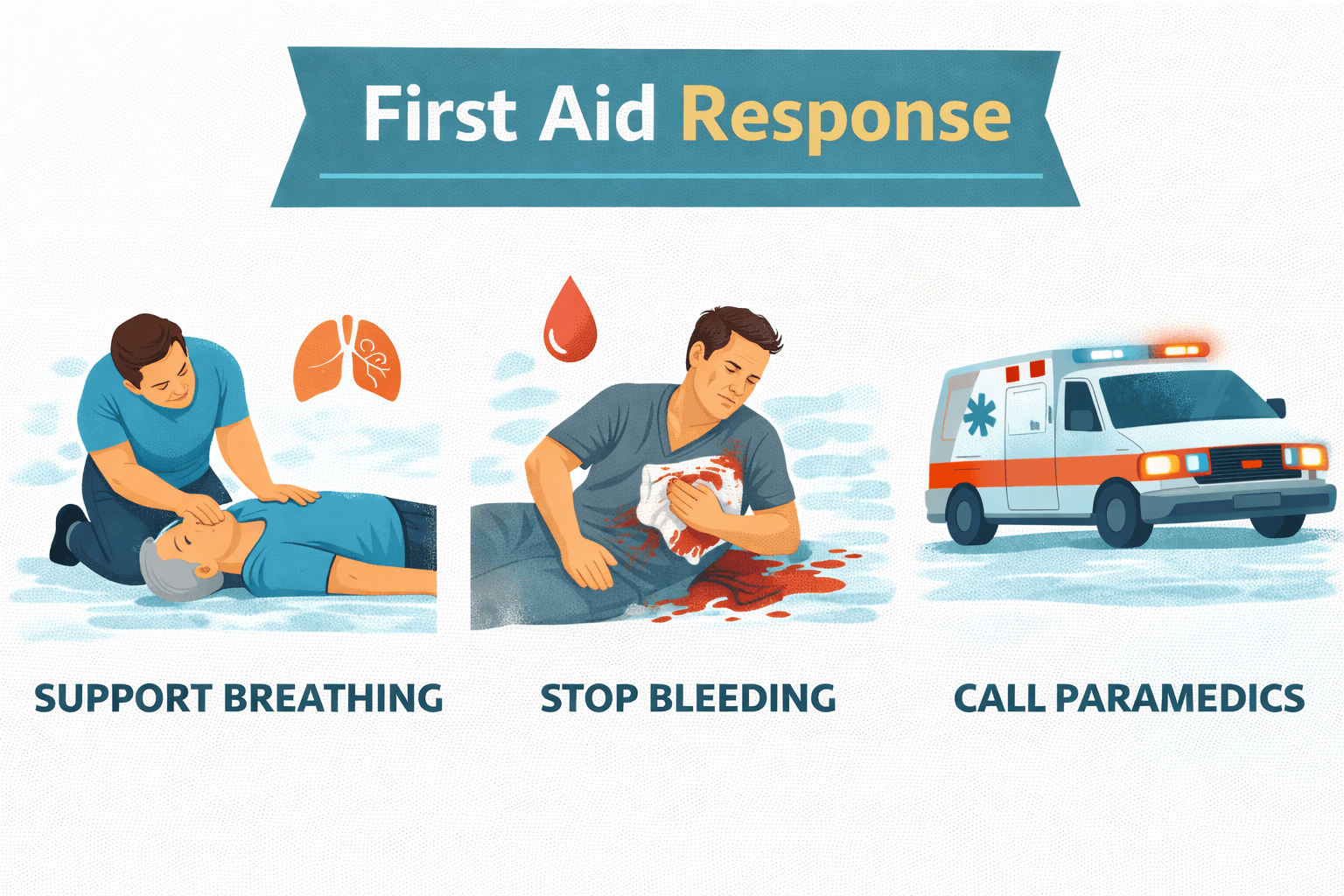 Traumatic injuries, such as those caused by falls, collisions, or violent incidents, can result in severe bleeding or breathing difficulties. In these situations, immediate first aid can help stabilize the injured person until professional medical care arrives.
Across Vancouver and throughout British Columbia, workplace first aid and CPR training programs emphasize recognizing emergencies and responding appropriately. While cardiopulmonary resuscitation (CPR) is an important life-saving technique when someone stops breathing or loses circulation, other first aid measures—such as controlling bleeding or supporting breathing—may be required depending on the situation.
Understanding how to assess an emergency and provide appropriate assistance is a key part of first aid education.
Emergency Preparedness in Urban Public Spaces
Busy areas such as downtown Vancouver, transit stations, and commercial districts bring large numbers of people together each day. When medical emergencies occur in these locations, nearby individuals may be the first to respond.
Community first aid training programs teach participants to:
-
Ensure the area is safe before approaching
-
Call emergency services immediately
-
Assess breathing and responsiveness
-
Provide appropriate assistance, such as bleeding control or CPR when necessary
-
Continue care until paramedics arrive
These skills help individuals respond calmly and effectively during unexpected emergencies.
A Shooting Incident in Downtown Vancouver
An incident in Vancouver’s Yaletown neighbourhood highlighted how quick thinking by a trained individual can help support emergency response.
Cliff Chase, a retired emergency room physician, was shopping in the area when a man opened fire in a public setting. The shooter struck his former landlord and employer, Paul Dragan, in the chest at close range.
Chase noticed the victim lying on the pavement and immediately stepped in to assist. Drawing on his medical experience, he quickly assessed the situation and began helping the injured man.
Rather than beginning CPR, Chase recognized that the victim was still breathing. In traumatic injuries involving severe bleeding, controlling blood loss and maintaining breathing can be critical early steps.
He used a towel obtained from a nearby coffee shop to help apply pressure and reduce bleeding while assisting the victim’s breathing. Chase also directed bystanders and ensured emergency responders were contacted.
When paramedics arrived, he briefed them on the victim’s condition and the assistance that had already been provided so they could continue treatment.
Despite the seriousness of the injuries, the victim survived the incident, in part due to the rapid response from those present at the scene.
Recognizing When CPR May or May Not Be Needed
CPR is typically used when a person:
-
Is unresponsive
-
Is not breathing normally
-
Shows no signs of circulation
However, if a person is still breathing and has a pulse, other first aid measures may be more appropriate. First aid training teaches participants how to assess the situation and determine the best course of action while waiting for emergency responders.
First Aid Measures for Severe Injuries
In situations involving traumatic injuries, first aid may focus on stabilizing the person until professional medical help arrives.
Common first aid priorities may include:
-
Ensuring the scene is safe
-
Contacting emergency services
-
Supporting breathing if necessary
-
Applying pressure to control severe bleeding
-
Keeping the injured person as calm and still as possible
These steps help reduce further harm and support emergency medical teams when they arrive.
Prevention and Community Preparedness
While some emergencies cannot be predicted, communities and workplaces can take steps to improve readiness:
-
Encouraging CPR and first aid training for employees and residents
-
Installing first aid kits and emergency equipment in public areas
-
Promoting awareness of emergency response procedures
-
Supporting public safety education programs
Prepared individuals can help provide assistance during the crucial moments before paramedics arrive.
Frequently Asked Questions
What is cardiopulmonary resuscitation (CPR)?
CPR is a first aid technique used when a person is unresponsive and not breathing normally. It helps maintain circulation until advanced medical care becomes available.
Is CPR always used during serious injuries?
Not always. If a person is breathing and has a pulse, first aid responders may focus on other measures such as controlling bleeding and monitoring breathing.
Why is bleeding control important during traumatic injuries?
Severe bleeding can lead to rapid loss of blood volume. Applying pressure to the wound can help slow bleeding until emergency responders arrive.
Who can provide first aid during an emergency?
First aid may be provided by trained bystanders, workplace first aid attendants, healthcare professionals, or emergency responders depending on who is present at the scene.
Where can people learn first aid and CPR in British Columbia?
Training programs are available through workplace safety providers, community organizations, and certified first aid training centres throughout British Columbia.
Educational Note
This article is intended for general first aid awareness and workplace safety education. Learning first aid and CPR can help individuals better understand how to respond during emergencies while waiting for trained emergency medical services.
About The Author

Mark Kascha
First Aid Instructor Trainer with 30+ years of experience in CPR, emergency response, and safety training across Canada.
👉 [View full credentials]🔗 View LinkedIn Profile
Last reviewed: March 2026