
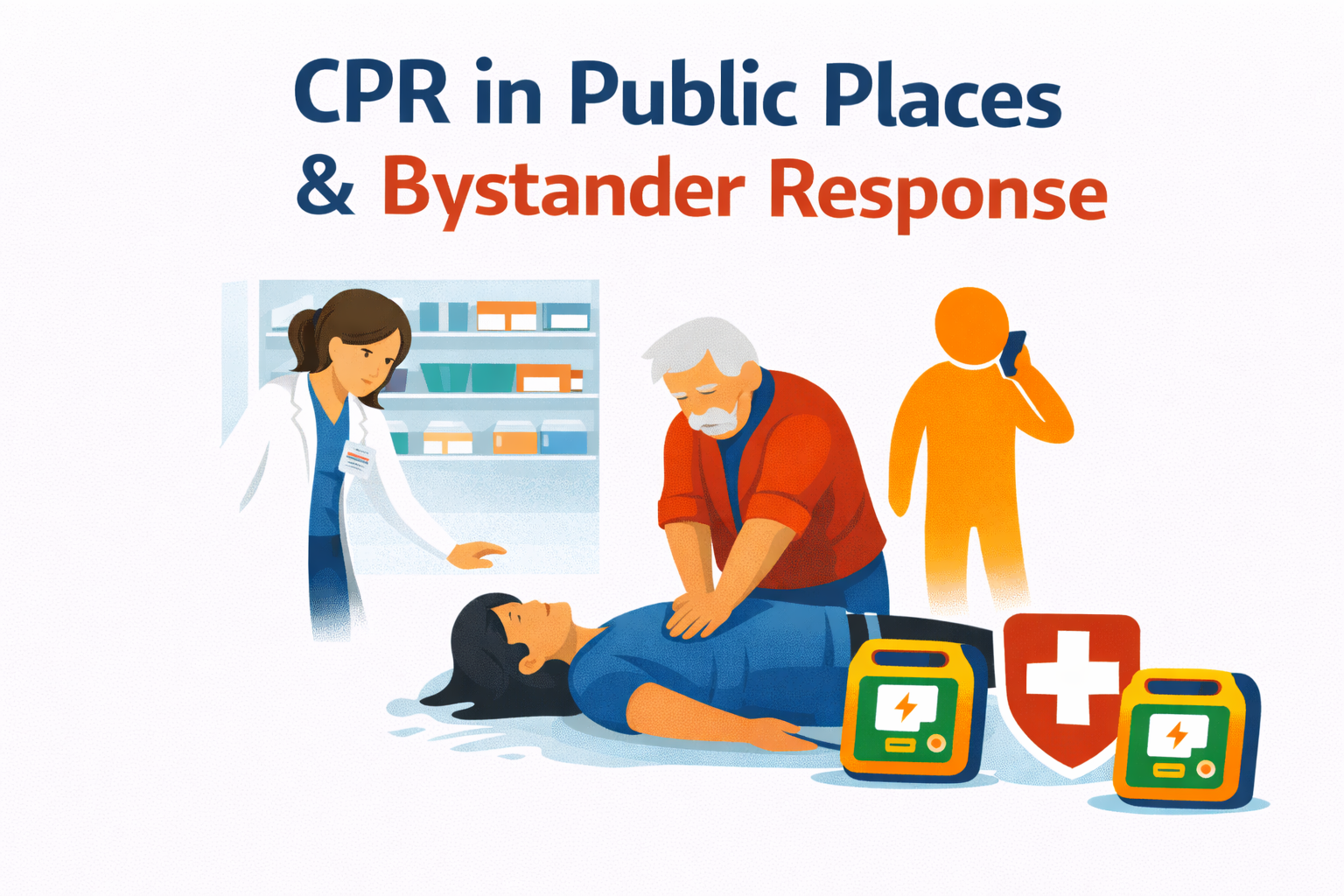
 Sudden medical emergencies can happen anywhere—including stores, workplaces, community centres, and other public locations. One of the most serious emergencies is cardiac arrest, which occurs when the heart suddenly stops pumping blood effectively.
Across Vancouver and throughout British Columbia, thousands of people gather in public spaces every day. Because emergency responders may take several minutes to arrive, bystander CPR and AED awareness can play a vital role in supporting someone experiencing cardiac arrest. Quick recognition of the emergency and immediate action from nearby individuals can improve the chances of survival.
This is why many professionals—including pharmacists, retail employees, and public service workers—receive CPR and first aid training as part of workplace safety preparation.
A Realistic Scenario: Quick Action in a Retail Store
In one reported incident, a pharmacist working in a retail store unexpectedly found herself responding to a medical emergency.
While working at a large retail store, a woman suddenly collapsed on the floor. Nearby shoppers called for help, and two individuals with first aid training quickly responded.
One responder was a pharmacist who had CPR training through her professional responsibilities, while another bystander was a volunteer firefighter and experienced first aid instructor. Recognizing the seriousness of the situation, they quickly assessed the woman’s condition.
One person called emergency services while the trained responders began CPR after noticing that the woman had no pulse and abnormal breathing. They worked together—one performing chest compressions while the other assisted with rescue breaths—until paramedics arrived.
Emergency responders then transported the woman to hospital for further medical care. Their quick actions were later recognized for helping provide early life-saving assistance.
Situations like this demonstrate how trained bystanders can make an important difference during unexpected medical emergencies in public places.
Signs of Sudden Cardiac Arrest
Cardiac arrest often occurs without warning. Recognizing the signs quickly can allow responders to begin life-saving actions sooner.
Possible signs include:
-
Sudden collapse
-
Unresponsiveness
-
No normal breathing or irregular gasping
-
Absence of a pulse
-
Pale or bluish skin tone
If these signs are present, emergency services should be contacted immediately and CPR may be started by trained individuals.
Why Cardiac Arrest Can Occur Suddenly
Cardiac arrest can be triggered by several factors affecting the heart’s electrical system or overall function.
Potential causes may include:
-
Abnormal heart rhythms (arrhythmias)
-
Heart disease or underlying cardiac conditions
-
Severe medical events or trauma
-
Electrical injuries
-
Lack of oxygen to the heart
Because cardiac arrest interrupts blood circulation to the brain and vital organs, immediate emergency response is essential.
First Aid Response: CPR and AED Use
When someone experiences cardiac arrest outside of a hospital, bystander response can play a critical role in the early stages of care.
First aid training generally teaches individuals to:
-
Ensure the environment is safe
-
Call emergency services immediately
-
Check responsiveness and breathing
-
Begin CPR if the person is unresponsive and not breathing normally
-
Use an automated external defibrillator (AED) if available
-
Continue care until emergency responders arrive
AED devices are designed to guide users through the process with clear voice instructions and can help restore a normal heart rhythm if needed.
Workplace and Public Safety Preparedness
Many workplaces and public facilities across British Columbia now include CPR and AED programs to improve emergency preparedness.
Important safety measures include:
-
Training staff in CPR and first aid
-
Installing publicly accessible AED devices
-
Developing workplace emergency response plans
-
Encouraging employees to recognize signs of cardiac arrest
-
Ensuring staff know how to contact emergency services quickly
Prepared environments help increase the likelihood that someone nearby will be able to respond during a medical emergency.
FAQ
Can cardiac arrest happen in healthy individuals?
Yes. Although underlying heart conditions are a common cause, cardiac arrest can occur unexpectedly in individuals with no known medical history.
Why is CPR important before paramedics arrive?
CPR helps maintain blood circulation and oxygen delivery to vital organs. This support can help sustain the body during the critical minutes before professional medical care arrives.
What does an AED do during a cardiac emergency?
An automated external defibrillator analyzes the heart rhythm and can deliver a controlled electrical shock if a life-threatening rhythm is detected. The device provides step-by-step prompts for users.
Why are public locations encouraged to have AEDs available?
Public spaces often host large numbers of people. Having an AED accessible can allow trained individuals to provide early defibrillation during cardiac emergencies.
Why is CPR training recommended for employees in many professions?
Workers who interact with the public may be present when emergencies occur. CPR training helps individuals recognize cardiac arrest and respond safely while waiting for emergency services.
Educational Note:
This article is intended for general first aid awareness and public safety education. Learning CPR and AED use can help individuals recognize emergencies and provide supportive care until trained emergency services arrive.
About The Author

Mark Kascha
First Aid Instructor Trainer with 30+ years of experience in CPR, emergency response, and safety training across Canada.
👉 [View full credentials]🔗 View LinkedIn Profile
Last reviewed: March 2026
 Support local, Canadian-owned businesses, with no connections to American corporations or partnerships.