
CPR and Mountain Safety: Emergency Response on Whistler Mountain
Understanding Emergencies on Ski Slopes
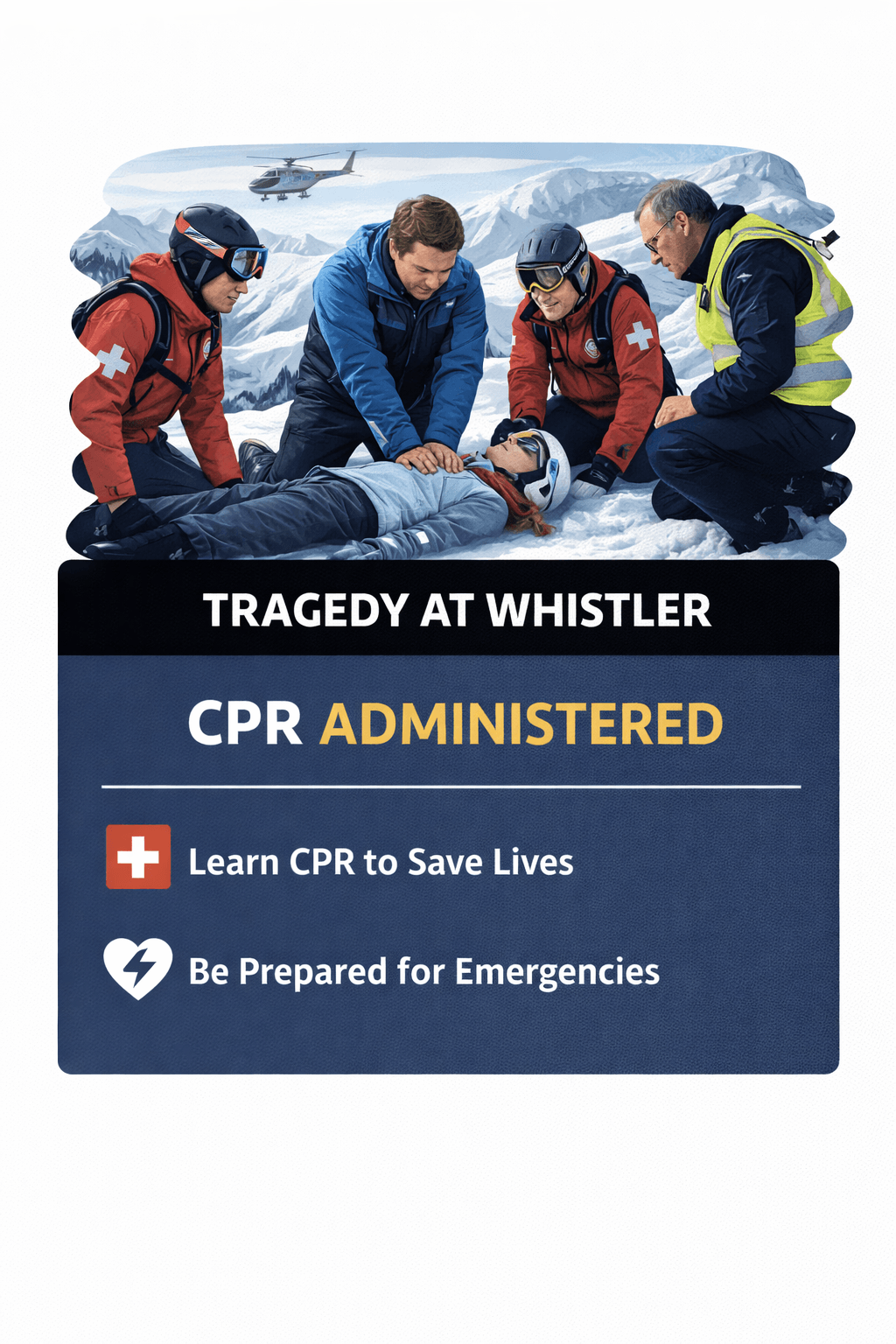 Skiing and snowboarding are popular winter activities across British Columbia, especially in well-known destinations such as Whistler, Vancouver’s North Shore mountains, and other resorts throughout the province. While ski resorts operate with trained patrol teams and safety procedures, accidents can still occur on challenging terrain.
When someone becomes unconscious or stops breathing after a fall, rapid emergency response and cardiopulmonary resuscitation (CPR) may be necessary while waiting for advanced medical care.
First Aid and Emergency Preparedness in BC Ski Areas
Major ski resorts in British Columbia, including Whistler Blackcomb, maintain highly trained ski patrol teams and mountain rescue personnel. These professionals are trained in first aid, CPR, and emergency response to assist injured skiers and snowboarders.
Because mountain terrain can be remote and difficult to access, early care from trained responders plays an important role in stabilizing injured individuals until they can be transported to medical facilities.
Scenario: Emergency on Whistler Mountain
An incident on Whistler Mountain in British Columbia highlighted the importance of emergency response teams on ski slopes.
According to reports, a skier on the West Ridge area of the mountain noticed a woman lying at the base of a cliff and alerted ski patrol. Emergency responders were quickly dispatched to the location.
When patrol members arrived, they located a 48-year-old female skier who had fallen from an area estimated to be approximately 25 metres above the slope.
Ski patrol members, along with two mountain physicians and a paramedic, assessed the situation and began emergency care. The woman was found unconscious and unresponsive, and responders immediately began cardiopulmonary resuscitation (CPR).
Despite continued efforts by the emergency team, the woman was later declared dead at the scene.
Authorities later confirmed that the RCMP and the BC Coroners Service began reviewing the circumstances surrounding the incident. Officials noted that the skier had been wearing a helmet at the time.
The investigation focused on determining what led to the fall and confirming the events surrounding the accident.
Recognizing When CPR May Be Needed
CPR may be required when someone becomes unresponsive and stops breathing normally. Warning signs can include:
-
Loss of consciousness
-
No visible breathing or only gasping breaths
-
No detectable pulse
-
Sudden collapse after a fall or injury
-
Pale or bluish skin tone
In these situations, emergency services should be contacted immediately and CPR may be started by trained responders.
How CPR Helps During Cardiac Arrest
When the heart stops pumping effectively, oxygen cannot circulate through the body. CPR helps support vital functions by:
-
Providing chest compressions to help circulate blood
-
Helping oxygen reach the brain and other organs
-
Maintaining circulation until advanced medical care arrives
-
Supporting survival during cardiac arrest
Early CPR is a critical step in the chain of survival during medical emergencies.
Ski Safety and Mountain Awareness
While ski resorts maintain safety patrols and marked trails, mountain environments still require caution and awareness. Safety considerations may include:
-
Staying within designated ski runs
-
Paying attention to posted hazard warnings
-
Wearing appropriate protective equipment such as helmets
-
Skiing within personal ability levels
-
Taking breaks to avoid fatigue
Prepared skiers and snowboarders help reduce the risk of accidents on the slopes.
Frequently Asked Questions
Why are ski patrol teams trained in CPR?
Ski patrol members are often the first responders during mountain accidents. CPR training helps them provide life-saving care until paramedics arrive.
Can CPR be performed in mountain environments?
Yes. Ski patrol teams and trained responders can perform CPR on the slopes or at rescue locations until further medical support is available.
Why is rapid response important after a fall?
Serious falls can cause injuries that affect breathing or circulation. Quick assessment and emergency care help improve response times.
Do helmets prevent all skiing injuries?
Helmets can reduce the risk of certain head injuries, but they cannot prevent all types of accidents or impacts.
Should skiers learn first aid and CPR?
Many outdoor organizations encourage first aid and CPR training because emergencies can occur during recreational activities.
Educational Note
This article is intended for general public education about CPR awareness and outdoor safety. Participating in recognized first aid and CPR training can help individuals respond more confidently during emergencies.
About The Author

Mark Kascha
First Aid Instructor Trainer with 30+ years of experience in CPR, emergency response, and safety training across Canada.
👉 [View full credentials]🔗 View LinkedIn Profile
Last reviewed: March 2026